

Coffee Pot Cleaner: Best Ways to Clean Your Pot
A good coffee pot cleaner can make a surprisingly big difference in how fresh your coffee tastes. Over time, coffee oils, mineral deposits, and dark residue can cling to a glass carafe, stainless steel pot, or reusable coffee equipment. If you are looking for the best coffee pot cleaner for home use, the right choice depends on the material, type of buildup, and whether you prefer a commercial cleaner or a simple homemade solution.
Fortunately, cleaning a coffee pot can be simple. With the right method, you can remove stubborn stains, freshen the carafe, and keep your coffee tasting cleaner without spending much time.
Best Coffee Pot Cleaner for Home Use
The best coffee pot cleaner depends on what you are trying to remove. Coffee oils and brown stains usually need a cleaner that can break down residue, while mineral buildup may require an acidic descaling solution. Therefore, choosing one product for every situation is not always the best approach.
For everyday home cleaning, many coffee lovers start with a dedicated cleaning powder, tablet, liquid cleaner, or a mild DIY solution. However, always check your coffee maker or carafe manufacturer’s instructions before using a chemical cleaner.
Here are the main options to consider:
- Coffee pot cleaner powder: Useful for stubborn coffee oils and residue.
- Coffee pot cleaner tablets: Convenient and easy to measure.
- Liquid cleaners: Helpful for commercial cleaning routines.
- DIY solutions: A practical choice for simple carafe cleaning.
- Cleaning brushes: Useful for reaching narrow openings and corners.
Why Does a Coffee Pot Need Regular Cleaning?
Coffee leaves behind more than just a pleasant aroma. Its natural oils can gradually form a sticky film inside a carafe, while old coffee residue can create dark stains. Meanwhile, hard-water minerals can accumulate in coffee equipment and affect brewing performance.
As a result, even a coffee pot that looks reasonably clean may benefit from regular maintenance. A clean pot also helps prevent old coffee flavors from mixing with a fresh brew.
For most households, a simple routine works well:
- Rinse the pot after every use.
- Wash removable parts regularly.
- Deep-clean the carafe when stains or odors appear.
- Descale the coffee maker according to its manufacturer’s instructions.
- Dry the pot thoroughly after washing.
Coffee Pot Cleaner Powder vs. Liquid Options
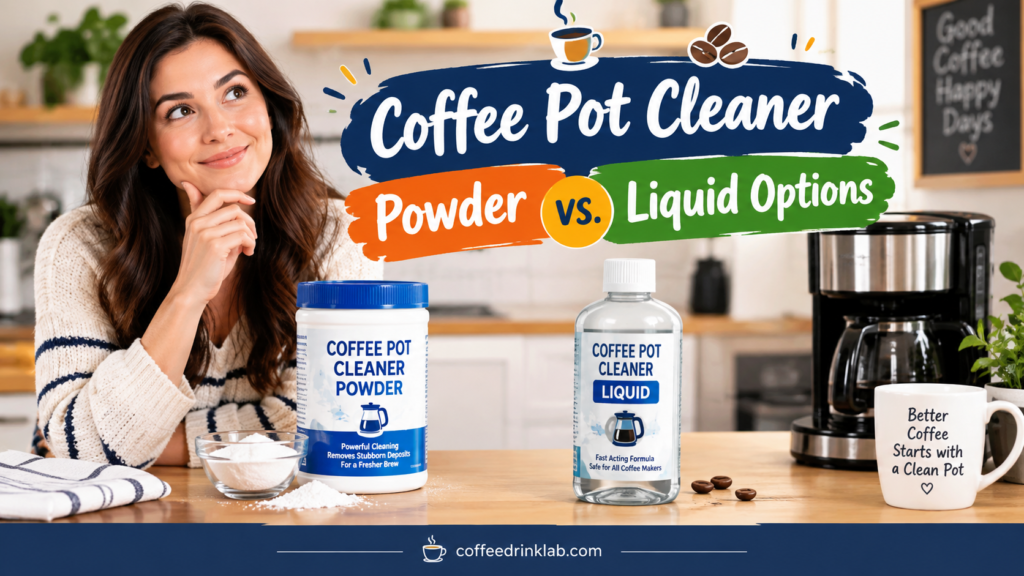
Coffee pot cleaner powder is popular because it can be measured according to the cleaning job. It is particularly useful when coffee oils have accumulated over time. However, powdered products should be dissolved and used exactly according to their label directions.
Liquid cleaners, on the other hand, can be convenient when you want a ready-to-use solution. For example, Urnex Clearly Coffee liquid coffee equipment cleaner is designed specifically for coffee equipment cleaning. Always follow the product’s instructions and rinse thoroughly after cleaning.
The important distinction is that a cleaner designed to remove coffee oils is not necessarily the same as a descaler designed to remove mineral deposits. Knowing the difference can help you choose the right product instead of simply using more cleaner.
Squeak N Clean pot-cleaning solution
Squeak N Clean coffee cleaner is another name shoppers may encounter when looking for a dedicated solution for coffee equipment. These products tackle coffee residue and buildup more effectively than ordinary dish soap.
However, availability and specific directions can vary by product. Therefore, check the label for compatible coffee makers, carafes, brewing equipment, recommended quantities, and required rinsing.
If you compare several cleaners, focus less on the brand name and more on whether the product suits your particular coffee equipment.
Affresh coffee equipment cleaner
Affresh is another cleaning brand that coffee equipment owners may come across. When considering Affresh coffee pot cleaner, make sure you distinguish between products intended for coffee makers and cleaners designed for other household appliances.
That distinction matters because different appliances can require different cleaning formulas. Additionally, always verify the product label before putting any cleaning solution through a coffee maker or using it directly inside a carafe.
For a simple glass pot, a cleaner specifically labeled for coffee equipment is generally the safer choice.
Bunn Coffee Pot Cleaner and Keurig Coffee Pot Cleaner
Different coffee makers can have different cleaning requirements. Bunn coffee pot cleaner searches commonly relate to commercial-style brewers, glass decanters, and equipment that may see frequent use. In contrast, Keurig pot-cleaning solution can refer to cleaning products or routines for Keurig-style brewing systems and their removable components.
However, a coffee maker cleaner and a coffee carafe cleaner are not always interchangeable. A carafe may need help with coffee stains and oils, while the internal brewing system may need descaling or a manufacturer-approved cleaning cycle.
Before using a cleaner, check:
- Whether the product works with your machine.Whether the product suits carafes or internal components.How much product you should use.How many rinse cycles you should run.
- Whether the manufacturer recommends a specific cleaner.
1. Stainless Steel Coffee Pot Cleaner

Cleaning stainless steel requires a little more care because abrasive materials can scratch the surface. A good stainless steel coffee pot cleaner should help loosen coffee residue without requiring aggressive scrubbing.
Start by filling the pot with warm water and using a cleaner suitable for stainless steel. Let the solution work for the recommended time, then rinse thoroughly. For stubborn areas, use a soft bottle brush rather than steel wool or an abrasive scouring pad.
1. Best Coffee Pot Cleaner for Home Use on Stainless Steel
For routine stainless-steel cleaning, a dedicated coffee-equipment cleaner can be useful when coffee oils have built up. A mild homemade method may also work for lighter residue.
Most importantly, avoid assuming that stronger means better. Excessive scrubbing or harsh abrasive products can damage the finish, so patience is often more effective than force.
DIY Coffee Pot Cleaner: Simple Homemade Method
A DIY coffee pot cleaner can be useful when your glass carafe has ordinary coffee stains and you want a simple cleaning method. One common approach is to use baking soda with warm water to help loosen residue.
Add warm water to the carafe, mix in a small amount of baking soda, and gently agitate the solution. Let it sit for a short period, then scrub with a soft bottle brush and rinse thoroughly.
This homemade coffee pot cleaner is best viewed as a basic carafe-cleaning method rather than a universal replacement for manufacturer-approved cleaners. It also should not automatically be used inside an electric coffee maker unless the manufacturer specifically permits it.
Urnex Clearly Coffee Liquid Coffee Pot Cleaner
Urnex is well known among coffee professionals and home enthusiasts for coffee-equipment cleaning products. Urnex Clearly Coffee liquid coffee pot cleaner is designed for removing coffee residue and oils from coffee equipment.
Liquid formulas can be convenient because they are easy to portion and distribute. Nevertheless, follow the package directions carefully, particularly regarding dilution, contact time, and rinsing.
For a heavily stained carafe, a dedicated cleaner can be more convenient than repeatedly scrubbing with dish soap.
Coffee Pot Cleaner Tablets: Are They Worth It?
Coffee pot cleaner tablets are convenient because the cleaning dose is already portioned. You simply use the number of tablets recommended for your equipment and follow the manufacturer’s cleaning instructions.
Tablets can be especially useful for people who want a repeatable cleaning routine without measuring powder or liquid. They are also easy to store in a kitchen cabinet.
Still, convenience should not replace compatibility. Check whether the tablets are intended for your coffee maker, carafe, or both before use.
How to Clean a Coffee Pot Without Vinegar
If you prefer not to use vinegar, you have several alternatives. A dedicated coffee-equipment cleaner is one option, while baking soda may work for light residue on a suitable carafe.
For a glass coffee pot, begin by rinsing away loose coffee. Then use warm water with an appropriate cleaner, allow it to work as directed, scrub gently with a soft brush, and rinse several times.
For the coffee maker itself, however, do not assume a carafe-cleaning method is suitable for the machine’s internal water system. Manufacturer instructions should take priority, especially when descaling is involved.
1. How to Clean a Glass Coffee Carafe
Glass carafes are generally straightforward to clean, but dark coffee stains can become stubborn when they are left for days. First, empty and rinse the pot, then add warm water and your chosen coffee-equipment cleaner.
Let the solution loosen the residue before gently brushing the inside. Finally, rinse the carafe thoroughly until there is no remaining cleaner or unusual odor.
A soft bottle brush is particularly helpful around the bottom and narrow neck of the carafe.
1. Coffee Pot Cleaner Brush for Hard-to-Reach Areas
A coffee pot cleaner brush can make a noticeable difference because your hand cannot always reach the bottom or corners of a carafe. Choose a brush with soft or non-abrasive bristles that can reach the shape of your particular pot.
A long handle is especially useful for tall glass or stainless-steel carafes. Meanwhile, smaller brushes can help clean lids, spouts, and other narrow components.
How Often Should You Use a Coffee Pot Cleaner?

The ideal cleaning frequency depends on how often you brew coffee. If you use your coffee pot every day, rinse it after each use and give it a deeper cleaning regularly rather than waiting until stains become severe.
A practical routine is to wash the carafe frequently and perform a deeper cleaning whenever you notice visible coffee oils, persistent stains, odors, or changes in taste. Coffee makers may also require periodic descaling based on water hardness and manufacturer recommendations.
In other words, regular light cleaning is usually easier than trying to remove months of accumulated residue at once.
Choosing the Right Coffee Pot Cleaner
When comparing products, consider the type of buildup first. Coffee oils, burnt-looking residue, and mineral deposits are different cleaning problems, so the most effective solution can vary.
| Cleaning need | Good option | Best for |
|---|---|---|
| Light coffee residue | Dish soap + warm water | Everyday cleaning |
| Coffee oils | Dedicated cleaner | Deep carafe cleaning |
| Heavy stains | Cleaning powder or tablet | Stubborn buildup |
| Light carafe residue | Baking soda method | Simple DIY cleaning |
| Mineral deposits | Approved descaler | Hard-water buildup |
| Narrow carafe | Coffee pot cleaner brush | Corners and bottom |
Most importantly, match the product to the equipment. A glass carafe, stainless-steel pot, drip machine, and pod brewer can all have different cleaning requirements.
The Final Talk
The right coffee pot cleaner does more than make your carafe look shiny. It helps remove old coffee oils, stains, and residue that can interfere with the clean flavor of your next brew. For everyday maintenance, warm water and regular washing may be enough, while a dedicated powder, liquid cleaner, or tablet can be more useful when buildup becomes stubborn.
If you have a stainless-steel pot, choose a non-abrasive approach, and if you have a glass carafe, a soft cleaning brush can make those hard-to-reach areas much easier to handle. Meanwhile, DIY methods such as baking soda can be useful for simple carafe cleaning, provided the method is appropriate for the material.
Most importantly, don’t choose a cleaner simply because it is powerful. Check compatibility, follow the manufacturer’s instructions, and rinse thoroughly. With a little regular care, your coffee pot can stay cleaner, fresher, and ready for the next great cup.
FAQs:
A cleaner specifically labeled for coffee equipment is usually the easiest choice for beginners because the instructions explain how much to use and how to rinse the equipment. For a basic glass carafe, regular washing followed by occasional deep cleaning can also be a simple starting routine.
First, identify whether you are dealing with coffee stains, oily residue, or mineral buildup. Then check the cleaner’s compatibility with your glass, stainless-steel, drip, or pod-brewing equipment and follow the manufacturer’s instructions.
Yes. Coffee equipment cleaners are commonly designed for home use, provided they are used according to their labels. You can also use appropriate homemade methods for some carafes, but avoid putting DIY mixtures through a coffee maker unless its manufacturer specifically allows them.
The most popular options include dedicated cleaning powders, liquid coffee-equipment cleaners, tablets, and simple homemade solutions. Commercial cleaners are convenient for stubborn coffee oils, while DIY methods can work well for lighter residue on suitable carafes.
The main difference is the cleaning formula and the type of buildup each product is designed to remove. Some products target coffee oils and residue, while descaling products are intended for mineral deposits caused by hard water.
Discover More Blends
Coffee Patron: Meaning, Tequila, Caffeine & Drinks Guide (2026)
Series A Coffee: Menu, Hours & Best Drinks
Boundaries Coffee: Menu, Reviews, Locations & Owner (2026)







2 Comments