
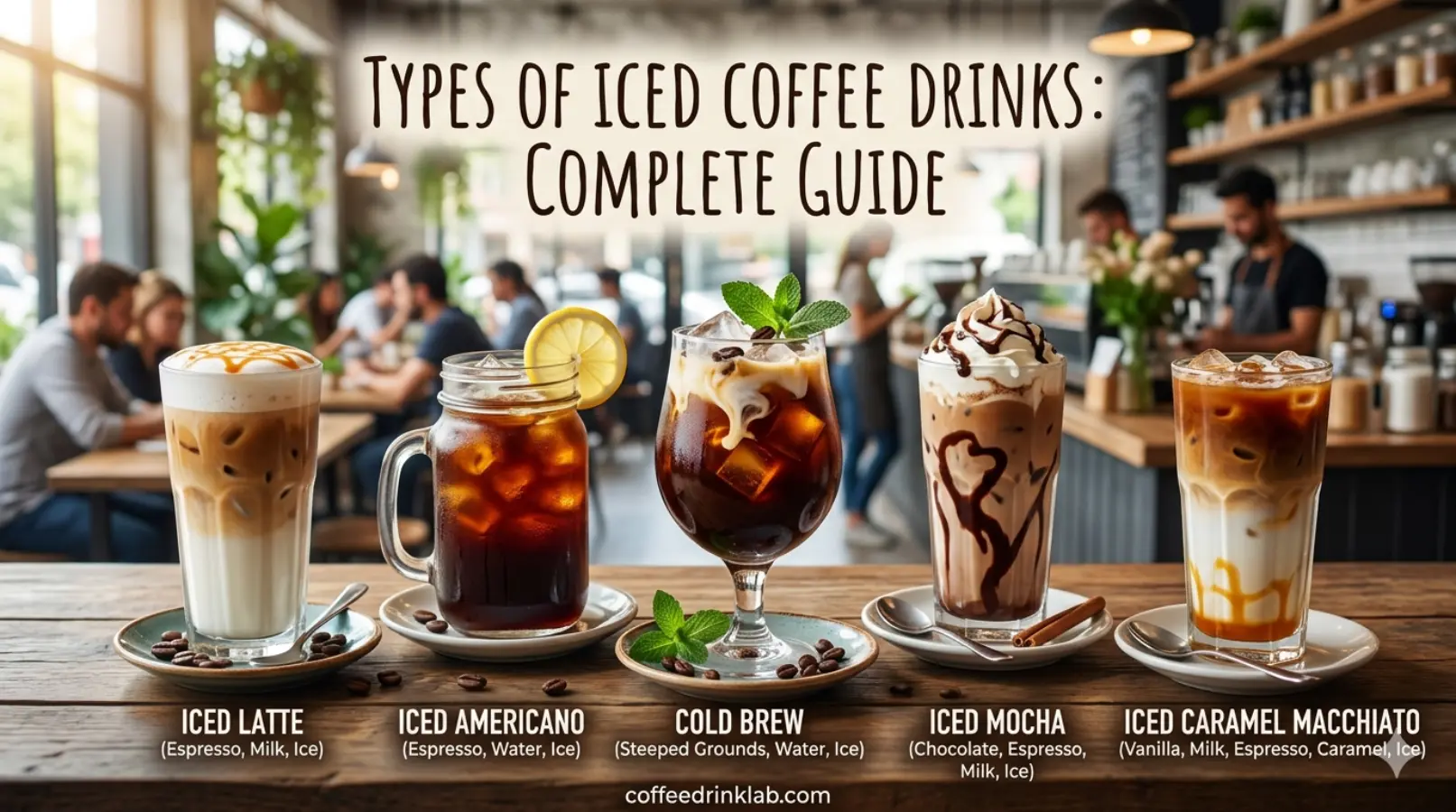
Top 15 Types of Iced Coffee Drinks (2026) | Ice Coffee Types, Starbucks & Dunkin Guide
Types of iced coffee drinks come in many refreshing styles, from classic brewed iced coffee to smooth cold brew, creamy lattes, and bold espresso beverages. Whether you’re searching for ice coffee types, cold coffee types, types of ice coffee, or the best café favorites, this guide covers everything you need.
You’ll also discover the most popular Starbucks iced coffee drinks, Dunkin iced coffee drinks, an easy iced coffee drinks chart, and expert tips to help you choose the perfect drink.
What Is an Iced Coffee?
The iced coffee definition is simple: it is coffee that has been brewed and then served chilled over ice. It can be made using hot-brewed coffee that is cooled or by preparing cold brew coffee using cold water over several hours.
Depending on personal preference, iced coffee may include milk, cream, sweeteners, flavored syrups, or whipped cream. This broad iced coffee definition includes many popular café drinks enjoyed around the world..
Types of Cold Coffee
Many people use the terms types of cold coffee and types of iced coffee drinks interchangeably. However, cold coffee is a broader category that includes iced coffee, cold brew, frappés, frozen coffee drinks, and espresso-based iced beverages.
If you’re looking for refreshing coffee options, these are the most popular types of cold coffee enjoyed around the world.
Although many people use the terms interchangeably, types of cold coffee include a wider variety of beverages than traditional iced coffee. In fact, cold coffee types range from brewed iced coffee and cold brew to frozen frappés, espresso-based drinks, and creamy milk coffees. Learning the difference makes it easier to choose the right drink for your taste
What Are Ice Coffee Types?
Ice coffee types refer to the different styles of coffee served over ice or chilled before serving. While many people use the terms ice coffee and iced coffee interchangeably, they generally describe refreshing coffee beverages enjoyed cold.
The most popular ice coffee types include traditional iced coffee, cold brew, nitro cold brew, iced latte, iced Americano, iced mocha, iced macchiato, Vietnamese iced coffee, and affogato. Each drink differs in brewing method, milk content, sweetness, and flavor, making it easy to find one that suits your taste.
Iced Coffee Names You Should Know
If you’ve ever looked at a café menu and wondered about the different iced coffee names, you’re not alone. Coffee shops often serve many varieties, each with its own brewing method, milk ratio, and flavor profile.
Some of the most popular iced coffee names include:
- Iced Coffee
- Cold Brew
- Nitro Cold Brew
- Iced Latte
- Iced Cappuccino
- Iced Americano
- Iced Mocha
- Iced Macchiato
- Vietnamese Iced Coffee
- Affogato
These are among the most common types of iced coffee you’ll find in cafés around the world.
Popular Starbucks Iced Coffee Drinks
Starbucks offers one of the largest selections of iced coffee drinks. Whether you enjoy espresso-based beverages or refreshing cold brew, there are plenty of options to explore. Some of the most popular Starbucks iced coffee drinks include:
- Iced Caffè Latte
- Iced Americano
- Vanilla Sweet Cream Cold Brew
- Nitro Cold Brew
- Iced Caramel Macchiato
- Brown Sugar Oatmilk Shaken Espresso
- Iced White Chocolate Mocha
- Classic Iced Coffee
These Starbucks iced coffee drinks range from bold black coffee to creamy milk-based beverages, making them suitable for almost every coffee lover.
Dunkin Iced Coffee Drinks
For coffee lovers seeking affordable and flavorful beverages, Dunkin’ offers an excellent selection of refreshing iced coffee drinks. The menu features both classic brewed iced coffee and espresso-based favorites with customizable flavors and milk options. Popular choices include Original Iced Coffee, French Vanilla Iced Coffee, Butter Pecan Iced Coffee, Caramel Swirl Iced Coffee, Mocha Swirl Iced Coffee, Cold Brew, Iced Latte, and Iced Macchiato. Compared with Starbucks, the brand focuses on smooth, easy-to-drink iced coffees at budget-friendly prices.
Popular Dunkin iced coffee drinks include:
- Original Iced Coffee
- French Vanilla Iced Coffee
- Butter Pecan Iced Coffee
- Mocha Swirl Iced Coffee
- Caramel Swirl Iced Coffee
- Cold Brew
- Iced Latte
- Iced Macchiato
If you’re comparing Starbucks and Dunkin iced coffee drinks, Starbucks offers a wider espresso menu, while Dunkin focuses on smooth, flavorful iced coffee at affordable prices.
Different Types of Ice Coffee & Cold Coffee Drinks
There are many different types of iced coffee drinks, and each offers a unique experience. Some drinks are made with brewed coffee, while others use espresso as the base. Some are rich and creamy, whereas others highlight bold coffee flavors.
The most common categories include:
- Black iced coffee drinks
- Espresso-based iced drinks
- Milk-based iced coffee drinks
- Sweet dessert-style coffee drinks
- Specialty cold brew beverages
Understanding these categories makes it easier to choose the perfect drink for your taste.

Types of Iced Coffee Drinks You Should Know
1. Iced Coffee
Traditional iced coffee is one of the simplest and most popular cold coffee beverages. It starts as hot-brewed coffee that is cooled and poured over ice. Because it’s brewed hot first, it often has a familiar coffee flavor with a refreshing finish.
Many coffee drinkers enjoy it black, while others add milk, cream, flavored syrups, or sweeteners for extra richness.
Key Details:
- Brewed hot, then chilled
- Medium to high caffeine
- Customizable sweetness
- Available at nearly every coffee shop
2. Cold Brew Coffee
Cold brew has become a modern coffee favorite, and for good reason. Instead of using hot water, coffee grounds steep in cold water for 12–24 hours. As a result, the drink develops a naturally smooth flavor with lower perceived acidity.
Furthermore, cold brew tends to taste slightly sweeter and less bitter than regular iced coffee, making it appealing even to people who usually avoid black coffee.
- Steeped in cold water
- Smooth, mellow flavor
- Low acidity
- Often served black or with milk
3. Iced Americano
An iced Americano combines espresso shots with cold water and ice. Unlike iced coffee, which is brewed traditionally, the espresso gives this drink a richer aroma and more concentrated coffee character.
Consequently, it’s a popular choice among coffee lovers who enjoy bold flavors without adding milk or cream.
Key Details:
- Espresso-based
- Strong coffee taste
- Low calorie option
- Usually served black
4. Iced Latte
An iced latte is one of the most approachable coffee drinks available. It combines espresso with cold milk and ice, creating a smooth and creamy texture that softens the intensity of espresso.
Additionally, iced lattes work beautifully with flavored syrups such as vanilla, caramel, hazelnut, or mocha.
Key Details:
- Espresso and milk
- Creamy texture
- Beginner-friendly
- Easy to customize
5. Iced Cappuccino
While similar to a latte, an iced cappuccino includes more foam and a slightly stronger espresso flavor. Many coffee shops use cold milk foam or frothed milk to create the signature texture.
As a result, you get a drink that feels lighter than a latte while still delivering creamy satisfaction.
Key Details:
- Espresso-based
- More foam than a latte
- Balanced flavor
- Refreshing texture
6. Iced Mocha
If you enjoy coffee and chocolate together, an iced mocha deserves your attention. This drink blends espresso, milk, ice, and chocolate syrup into a rich, dessert-like experience.
Furthermore, many coffee shops top iced mochas with whipped cream for extra indulgence.
Key Details:
- Espresso and chocolate
- Sweet flavor profile
- Popular among new coffee drinkers
- Dessert-inspired
7. Iced Macchiato
An iced macchiato offers a layered presentation that’s as visually appealing as it is delicious. Typically, milk and ice go into the cup first, followed by espresso poured over the top.
Because the layers gradually mix while you drink, each sip can taste slightly different.
Key Details:
- Layered espresso drink
- Balanced sweetness
- Strong espresso finish
- Popular at specialty cafés
8. Nitro Cold Brew
Nitro cold brew takes cold brew coffee to another level. Infused with nitrogen gas, it pours with a creamy, cascading appearance similar to a stout beer.
Most importantly, the nitrogen creates a silky mouthfeel without requiring milk or cream.
Key Details:
- Nitrogen infused
- Velvety texture
- Naturally smooth
- Usually served unsweetened

9. Vietnamese Iced Coffee 🇻🇳
Vietnamese iced coffee is famous for its rich flavor and sweet finish. Traditionally made with strong coffee and sweetened condensed milk, it creates a bold yet creamy beverage.
In contrast to many American iced coffee drinks, this style emphasizes sweetness alongside intense coffee character.
Key Details:
- Uses condensed milk
- Strong coffee flavor
- Sweet and creamy
- Highly caffeinated
10. Affogato
Although technically a dessert, many coffee enthusiasts consider affogato one of the most enjoyable iced coffee experiences. It consists of a scoop of vanilla ice cream topped with hot espresso.
Consequently, you get a beautiful contrast between hot and cold, sweet and bitter.
Key Details:
- Espresso over ice cream
- Dessert-style coffee
- Rich flavor combination
- Ideal after meals

Best Types of Iced Coffee Drinks for Summer
During hot weather, certain iced coffee drinks stand out for their refreshing qualities.
- Cold Brew
- Nitro Cold Brew
- Iced Americano
- Iced Latte
- Vietnamese Iced Coffee
These drinks offer excellent cooling refreshment while still delivering the caffeine boost many coffee lovers seek. Meanwhile, those who prefer sweeter beverages often gravitate toward iced mochas and flavored lattes.
How to Choose the Right Iced Coffee Drink
Choosing among the many types of iced coffee drinks comes down to your personal preferences.
If you enjoy creamy beverages, start with an iced latte, iced mocha, or iced cappuccino. On the other hand, if you prefer bold coffee flavors without milk, cold brew, nitro cold brew, and iced Americanos are excellent options.
Additionally, think about sweetness. Some drinks, such as Vietnamese iced coffee and mochas, are naturally sweeter, while others focus more on showcasing the coffee itself.
The Final Talk
Whether you’re looking for classic brewed coffee, espresso-based beverages, or creamy café favorites, exploring the many types of iced coffee drinks helps you discover new flavors. From simple black coffee to specialty creations at Starbucks and independent cafés, there’s an iced coffee for every preference.
Use this guide and the iced coffee types chart above whenever you want to compare drinks and choose your next refreshing cup.
As you experiment with new drinks, pay attention to flavor profile, caffeine strength, sweetness level, and texture. Furthermore, don’t hesitate to customize your drinks with oat milk, almond milk, flavored syrups, or different roast levels.
The beauty of iced coffee is its versatility. So next time you’re standing in line at your favorite coffee shop, try something new you may discover a refreshing favorite that becomes part of your daily routine.
FAQs:
The most popular Starbucks iced coffee drinks include the Iced Caffè Latte, Iced Caramel Macchiato, Vanilla Sweet Cream Cold Brew, Nitro Cold Brew, Iced Americano, Brown Sugar Oatmilk Shaken Espresso, Iced White Chocolate Mocha, and Classic Iced Coffee. These drinks range from bold black coffee to creamy, flavored espresso beverages, making Starbucks a popular choice for every type of coffee lover.
The best Dunkin iced coffee drinks include Original Iced Coffee, French Vanilla Iced Coffee, Butter Pecan Iced Coffee, Caramel Swirl Iced Coffee, Mocha Swirl Iced Coffee, Cold Brew, Iced Latte, and Iced Macchiato. These drinks offer a variety of bold, smooth, creamy, and sweet flavors to suit different coffee preferences.
The most popular ice coffee types include traditional iced coffee, cold brew, nitro cold brew, iced Americano, iced latte, iced cappuccino, iced mocha, iced macchiato, Vietnamese iced coffee, and affogato. Each type offers a unique flavor, caffeine level, and texture, ranging from bold black coffee to creamy, milk-based beverages.
Start by considering whether you prefer black coffee or milk-based drinks. Then think about sweetness, caffeine strength, and texture. Trying a few different styles is often the best way to discover your favorite.
Absolutely. Most iced coffee drinks can be prepared at home using brewed coffee, espresso, milk, ice, and simple flavorings. In fact, homemade iced coffee is often more affordable and allows complete control over ingredients.
Discover More Blends
Chart Types of Coffee Beans: Complete Bean Guide (2026)
Types of Coffee Roasters
Most Popular Types of Flavored Coffee







10 Comments