

what are the different types of coffee Explained
If you’ve ever wondered what are the different types of coffee, you’re definitely not alone—especially when standing in front of a café menu full of espresso, latte, cold brew, and more. In this complete guide to different types of coffee drinks and beans, we’ll break everything down in a simple, friendly way so you can confidently choose your next cup.
Understanding coffee isn’t just about names—it’s about flavor, caffeine strength, milk options, roast levels, and brewing methods. Furthermore, once you know how each type works, you’ll start ordering with more confidence and actually enjoy coffee based on your personal taste.
So, let’s explore what are the different types of coffee and uncover what makes each one unique, delicious, and worth trying
What are the different types of coffee drinks (Espresso & Café Classics)
Coffee drinks are where most people begin their journey. However, each drink starts with a base—usually espresso—and changes based on milk, water, or foam.
Espresso-based drinks are the backbone of café culture. Meanwhile, black coffee options highlight pure coffee flavor without distractions.
The foundation of everything
Espresso is a small but powerful shot of coffee brewed under high pressure. It’s strong, rich, and slightly thick in texture. Most coffee drinks actually start here, making it essential to understand when exploring what are the different types of coffee.
Key traits:
- Strong flavor and high concentration
- Small serving size (1–2 oz)
- Base for latte, cappuccino, americano
Americano Smooth and simple
An Americano is espresso diluted with hot water. As a result, it tastes closer to drip coffee but still carries espresso depth. It’s perfect if you want something lighter but still bold.
- Milder than espresso
- Smooth, clean finish
- Great for black coffee lovers
Latte Creamy and milk-forward
A latte combines espresso with steamed milk and a thin layer of foam. Additionally, it’s one of the most popular café drinks in the US due to its smooth, mild taste.
- High milk content
- Light coffee flavor
- Perfect for flavor syrups like vanilla or caramel

Cappuccino Balanced foam and espresso
A cappuccino is similar to a latte but with more foam and a stronger coffee punch. On the other hand, it feels lighter due to its airy texture.
- Equal parts espresso, milk, and foam
- Stronger than latte
- Frothy and textured
What are the different types of coffee beans and roasts
To fully understand what are the different types of coffee, you also need to look at the beans themselves. In fact, beans and roast levels heavily influence flavor before brewing even begins.
Arabica vs Robusta Smooth vs strong
Arabica beans are smoother, slightly sweet, and widely used in specialty coffee. Robusta, meanwhile, is stronger, more bitter, and contains more caffeine.
| Feature | Arabica | Robusta |
|---|---|---|
| Flavor | Smooth, sweet | Bold, bitter |
| Caffeine | Lower | Higher |
| Price | Higher | Lower |
| Use | Specialty coffee | Instant coffee blends |
Therefore, if you prefer smooth taste, Arabica is ideal. However, if you want a stronger kick, Robusta works better.
Light, Medium, and Dark Roast Flavor intensity levels
Roast level determines how long beans are roasted, which directly affects taste.
Light roast preserves original bean flavors, medium roast balances acidity and body, while dark roast delivers bold, smoky notes.
- Light roast: Fruity, acidic, bright
- Medium roast: Balanced and smooth
- Dark roast: Bold, smoky, intense
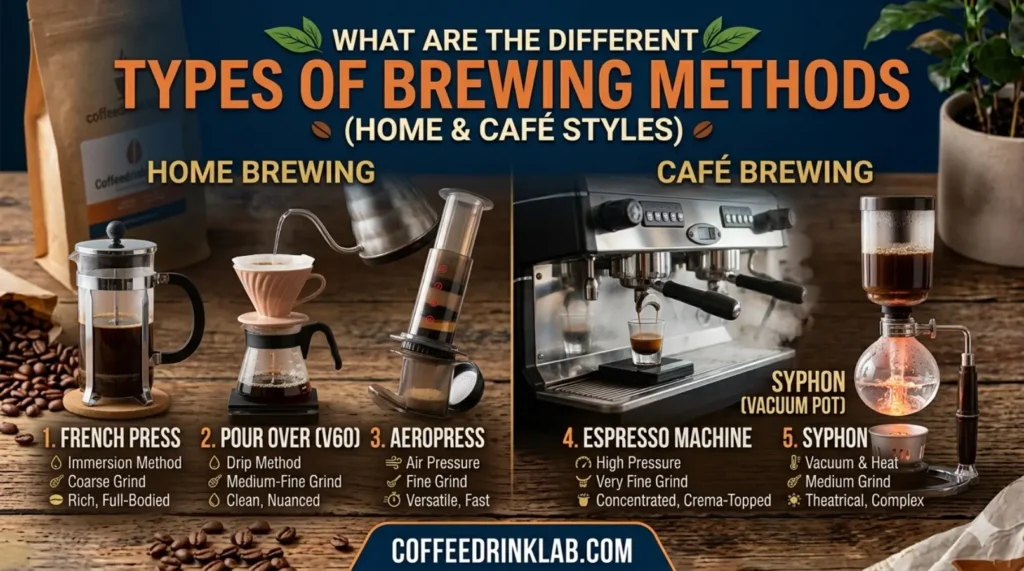
What are the different types of coffee brewing methods (Home & café styles)
Brewing methods shape how coffee tastes in your cup. Moreover, different tools extract flavors differently, creating unique experiences.
Drip Coffee Maker Everyday convenience
Drip machines are common in US homes and offices. They automatically brew large batches, making them practical and consistent.
- Easy to use
- Great for multiple servings
- Mild, balanced flavor
French Press Full-bodied richness
French press coffee is steeped, not filtered, which results in a bold and heavy texture. Consequently, it preserves natural oils from the beans.
- Coarse grind required
- Strong flavor
- Rich and textured body
Pour Over Clean and controlled
Pour over brewing gives you full control over water flow and extraction. As a result, it produces a clean, aromatic cup.
- Requires medium grind
- Bright flavor clarity
- More hands-on brewing
Espresso Machine Café-style at home
An espresso machine forces hot water through fine coffee grounds. Therefore, it produces concentrated shots used in many café drinks.
- Fine grind required
- Strong pressure brewing
- Used for lattes, cappuccinos, etc.
What are the different types of coffee milk options
Milk plays a huge role in modern coffee culture. In fact, it can completely change texture, sweetness, and overall flavor.
Whole milk Classic creamy taste
Whole milk is rich and naturally sweet, making it perfect for lattes and cappuccinos. Additionally, it creates stable foam for latte art.
Oat milk Barista favorite
Oat milk has become extremely popular because it froths well and adds a slightly sweet, neutral flavor.
Almond milk Light and nutty
Almond milk is lower in calories and has a subtle nutty taste. However, it doesn’t foam as thick as dairy milk.
What are the different types of coffee pods and grounds
Coffee preparation also depends on convenience. Therefore, pods and pre-ground coffee are popular for quick brewing.
Coffee Pods (Keurig, Nespresso)
Pods are pre-measured coffee capsules designed for single-serve machines. As a result, they offer speed and consistency.
- Easy cleanup
- Consistent taste
- Limited customization
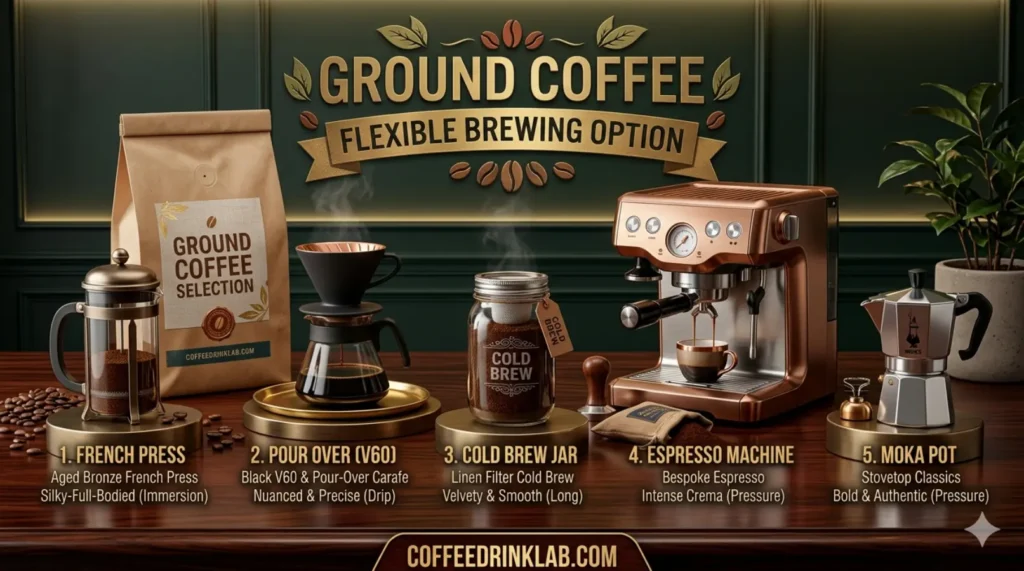
Ground Coffee Flexible brewing option
Ground coffee works with drip machines, French press, and pour over. However, grind size matters a lot.
- Fine grind: Espresso
- Medium grind: Drip coffee
- Coarse grind: French press
Summary Table: what are the different types of coffee
| Category | Type | Flavor Profile | Best For |
|---|---|---|---|
| Drinks | Espresso | Strong, bold | Quick caffeine |
| Drinks | Latte | Creamy, mild | Beginners |
| Beans | Arabica | Smooth, sweet | Specialty coffee |
| Beans | Robusta | Bitter, strong | Energy boost |
| Brewing | French Press | Rich, heavy | Deep flavor lovers |
Conclusion
Understanding what are the different types of coffee opens the door to a much richer coffee experience. Instead of guessing, you now know how drinks, beans, roasts, and brewing methods all work together to create flavor. Moreover, this knowledge helps you choose coffee that actually matches your mood—whether you want something strong, creamy, smooth, or refreshing.
Ultimately, coffee is personal. Therefore, don’t hesitate to experiment with different styles, milk options, and brewing methods. In fact, your perfect cup might be something you haven’t even tried yet. So next time you visit a café or brew at home, you’ll feel more confident exploring new flavors and combinations.
Frequently Asked Questions (FAQs)
What are the most popular what are the different types of coffee?
The most popular types include espresso, latte, cappuccino, americano, and cold brew. Additionally, these drinks form the base of most café menus in the US.
What is the difference between what are the different types of coffee?
The main difference comes from ingredients and brewing methods. For example, espresso is concentrated, while latte includes milk, making it much milder.
Which what are the different types of coffee is best for beginners?
Latte or cappuccino is best for beginners because they are smooth, milk-based, and less bitter than black coffee or espresso.
How do I choose the right what are the different types of coffee?
Start by considering flavor strength, milk preference, and caffeine level. Furthermore, try different roast levels to find your taste.
Can I use what are the different types of coffee at home?
Yes, you can easily recreate most coffee types at home using machines like drip brewers, French press, or espresso makers.
Types of Coffee Machines: Complete Buying Guide
Types of Coffee Drinks Chart: Ultimate Guide
[aitorbox]