

Can coffee cause bloating: Causes & Relief
If you’ve ever felt unusually full, gassy, or uncomfortable after your morning cup, you may wonder: can coffee cause bloating? The short answer is yes, coffee can contribute to bloating or other digestive symptoms in some people, although it does not affect everyone the same way. In particular, can coffee cause bloating and stomach discomfort may depend on caffeine, what you add to your drink, how much you consume, and your individual digestive sensitivity.
Coffee can also stimulate intestinal activity, which may explain why some people need to use the bathroom soon after drinking it. Research suggests that coffee can affect bowel motility, although digestive responses vary considerably from person to person.
Can Coffee Cause Bloating? What the Research Suggests
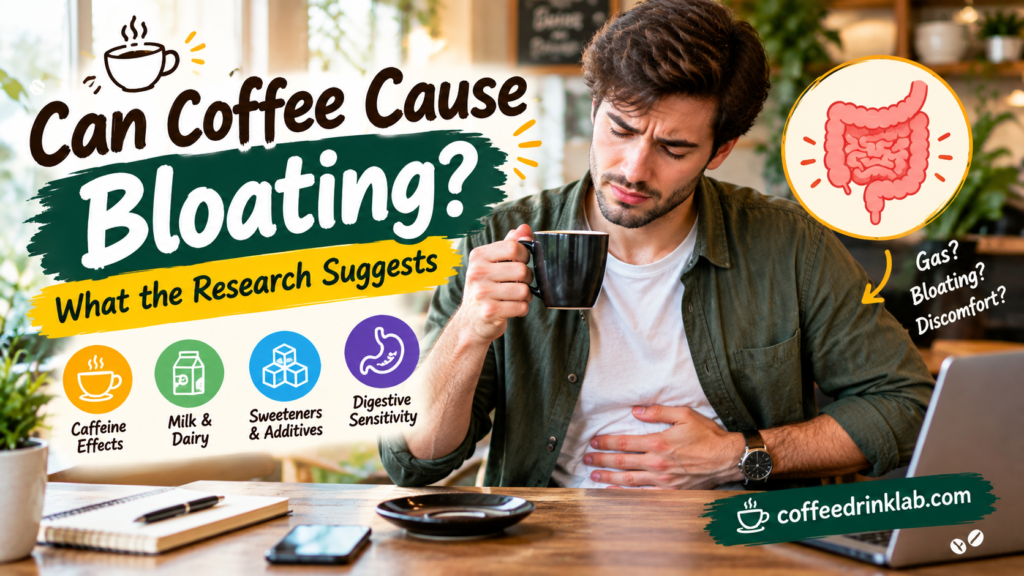
Yes, can coffee cause bloating is a reasonable question because some people experience bloating, gas, abdominal discomfort, or changes in bowel habits after drinking coffee. However, coffee itself is not automatically a cause of bloating for everyone.
Coffee may stimulate the digestive tract and, in some people, increase intestinal activity. Studies have found that both caffeinated and decaffeinated coffee can stimulate colonic motor activity, suggesting that caffeine is not the only factor involved.
At the same time, research is not completely consistent. One study involving adults with functional gastrointestinal symptoms actually found coffee consumption was associated with a lower risk of bloating and abdominal pain.
Therefore, your own response matters. If bloating repeatedly appears after coffee but not after other beverages, the coffee itself or something added to it may be worth examining.
3. Why Coffee May Cause Bloating and Gas
There are several possible reasons coffee may leave you feeling bloated or gassy. Importantly, the cause isn’t always the coffee beans themselves.
1. Caffeine and digestive activity
Caffeine can stimulate the gastrointestinal system. In controlled research, coffee increased colonic motor activity in some healthy participants, while other research has found mixed effects on overall intestinal transit.
That stimulation can make some people feel abdominal movement, urgency, or discomfort. If your digestive system is particularly sensitive, those sensations may be interpreted as bloating or cramping.
2. Milk and creamers
Sometimes the coffee isn’t the main problem.
A latte, cappuccino, flavored iced coffee, or creamy coffee can contain milk or ingredients that don’t agree with everyone. If you are sensitive to lactose, for example, the dairy component may contribute to gas, abdominal discomfort, or bloating.
Plant-based creamers can also contain ingredients that some people find difficult to tolerate. Therefore, checking the entire ingredient list can be more useful than blaming the coffee alone.
3. Sweeteners and flavored syrups

Sugar, sugar alcohols, and certain flavored additives may also affect digestion in sensitive people. Research examining food and symptom diaries has found associations between artificial sweeteners and gastrointestinal symptoms such as bloating and gas.
As a result, switching from a heavily sweetened coffee to a simpler preparation can help you identify whether the drink itself is responsible.
Can Coffee Cause Bloating and Diarrhea?
Yes, coffee can sometimes be associated with diarrhea, particularly in people who are sensitive to caffeine or coffee’s effects on the digestive system. Coffee can stimulate intestinal activity, and some people experience a strong urge to have a bowel movement after drinking it.
A large analysis of food-symptom diaries also found a strong association between caffeinated coffee and diarrhea occurring within a few hours among the people studied. However, this type of evidence shows an association rather than proving that coffee causes diarrhea in every person.
If diarrhea happens frequently, lasts for several days, or occurs with other concerning symptoms, it is better to discuss it with a healthcare professional rather than assuming coffee is the only explanation.
Can Coffee Cause Bloating and Constipation?
Interestingly, can coffee cause bloating and constipation does not have a simple yes-or-no answer. Coffee often stimulates bowel activity, but individual responses differ.
Research has found that coffee can increase colonic motor activity in some people. However, clinical research on caffeine and constipation has produced mixed results, so coffee should not be treated as a guaranteed solution for constipation.
If constipation is accompanied by bloating, consider your overall diet, fluid intake, activity level, and regular eating pattern rather than focusing on coffee alone. Persistent constipation deserves medical attention, especially when it is new or worsening.
Can Coffee Cause Bloating and Stomach Pain?
Coffee may contribute to stomach discomfort in some people, particularly when they are sensitive to caffeine or other components of the beverage. However, stomach pain has many possible causes, so it would be inaccurate to assume that coffee is always responsible.
Some people notice more discomfort when they drink coffee on an empty stomach. Others may react to large servings, very strong coffee, acidic beverages, dairy, sweeteners, or flavored syrups.
If coffee consistently causes significant pain rather than mild temporary discomfort, stop trying to push through the symptom and talk with a healthcare professional. Severe or persistent abdominal pain should not simply be attributed to coffee.
Can Coffee Cause Bloating and Weight Gain?
Can coffee cause bloating and weight gain? These are two different questions.
Bloating usually refers to a temporary feeling of fullness, pressure, or abdominal distension. It should not automatically be interpreted as an increase in body fat or permanent weight gain.
However, a coffee drink can contain substantial calories when it includes large amounts of sugar, cream, flavored syrup, whipped toppings, or other additions. In that situation, the overall drink may contribute calories to the diet, but that is different from coffee directly causing bloating.
For a simpler option, try black coffee or a coffee with an ingredient combination you know you tolerate.
Can Coffee Cause Bloating in the Face?
People sometimes search for can coffee cause bloating in face, but facial puffiness is not the same thing as digestive bloating.
A temporary change in facial appearance can have many possible explanations, including normal fluid shifts, sleep, allergies, dietary factors, or other health issues. There is not good evidence that ordinary coffee consumption universally causes facial bloating.
If facial swelling is sudden, severe, persistent, or accompanied by breathing difficulties or other concerning symptoms, seek medical attention rather than assuming coffee is responsible.
4. How to Avoid Bloating From Coffee
If coffee seems connected with your symptoms, you don’t necessarily have to assume that you can never enjoy it again. Instead, make one change at a time so you can better understand your personal response.
1. Try a smaller serving
A large coffee may deliver more caffeine and other compounds than your digestive system comfortably handles. Try reducing the serving size and see whether your symptoms change.
2. Check what you’re adding
Consider whether the symptoms appear after plain black coffee or only after drinks containing milk, creamer, syrup, or artificial sweeteners.
For example, you might compare:
- Black coffee
- Coffee with a small amount of milk
- Coffee with a dairy-free milk
- Unsweetened coffee
- A heavily flavored coffee drink
Changing one ingredient at a time makes the comparison much more useful.
3. Avoid drinking it too quickly
Slowly enjoying a smaller cup may feel easier than consuming a large coffee rapidly. Additionally, drinking water throughout the day supports normal hydration.
4. Consider decaf

Because coffee’s digestive effects are not explained by caffeine alone, decaf may not eliminate symptoms for everyone. Still, comparing caffeinated and decaffeinated coffee can help identify whether caffeine appears to be an important trigger for you. Research has shown that both forms can influence colonic activity, although effects differ.
Which Coffee Is Least Likely to Cause Bloating?
There is no single coffee variety that is guaranteed to prevent bloating. Your response may depend more on caffeine level, serving size, additives, and personal digestive sensitivity than on whether the beans are Arabica or Robusta.
A useful approach is to keep the preparation simple. Try a modest serving of coffee without multiple syrups or rich toppings, then pay attention to how your body responds.
| Coffee choice | What to consider | Good experiment for |
|---|---|---|
| Black coffee | Few added ingredients | Testing the coffee itself |
| Decaf coffee | Lower caffeine | Comparing caffeine sensitivity |
| Coffee with milk | Contains dairy | Checking dairy tolerance |
| Plant-based coffee | Depends on ingredients | Testing dairy alternatives |
| Sweetened coffee | More added sugar | Testing sweeteners |
| Large specialty drink | More ingredients and volume | Identifying multiple triggers |
There is no need to make the comparison complicated. Keeping your coffee routine simple can make it easier to identify what agrees with you.
When Should You Stop Blaming Coffee?
If bloating continues even when you don’t drink coffee, coffee may not be the main explanation. Digestive symptoms can have many causes, including food intolerances, constipation, gastrointestinal disorders, infections, and other health conditions.
Likewise, recurring diarrhea, persistent constipation, significant abdominal pain, unexplained vomiting, blood in the stool, or other concerning symptoms should be evaluated by a healthcare professional.
Most importantly, don’t eliminate large groups of foods unnecessarily based on a single symptom. A healthcare professional can help determine whether a particular food or beverage is actually contributing to your symptoms.
The Final Talk
So, can coffee cause bloating? It can for some people, but it is not a universal reaction. Coffee can influence intestinal activity, while caffeine, milk, creamers, sweeteners, serving size, and individual digestive sensitivity can all affect how a particular coffee drink feels. Research also shows that people’s responses vary, so there isn’t one explanation that applies to every coffee drinker.
If you notice bloating after coffee, start by simplifying your drink and reducing the serving size. Next, consider whether dairy, sweeteners, or flavored additives are contributing.
Most importantly, don’t assume temporary bloating means permanent weight gain. If symptoms are frequent, severe, or continue without coffee, it’s worth discussing them with a healthcare professional. Coffee can still be an enjoyable part of your routine; the goal is simply to understand what works comfortably for your body.
FAQs:
There isn’t one coffee that is best for everyone with digestive sensitivity. A small, simple serving with minimal added ingredients can make it easier to identify what your body tolerates.
Start by looking at the entire drink rather than just the beans. Consider serving size, caffeine, milk or creamer, sweeteners, syrups, and how quickly you drink it. Making one change at a time can help identify a possible trigger.
You may be able to find a preparation that feels more comfortable, but recurring symptoms shouldn’t be ignored. Experimenting with a smaller serving or fewer added ingredients can help, while persistent or significant symptoms should be discussed with a healthcare professional.
No. Some people experience bloating or digestive discomfort after coffee, while others have no noticeable symptoms. Research on coffee and gastrointestinal symptoms is mixed, which supports the idea that individual responses vary.
Bloating generally describes a feeling of abdominal fullness, pressure, or distension, while normal fullness can simply occur after eating or drinking. Coffee-related discomfort may also involve gas, bowel urgency, or stomach sensations depending on the individual.
Discover More Blends
How Much Ground Coffee Per Cup in Grams
Cute Coffee Shops Near Me: Cozy Local Cafés
Luckin Coffee NYC: Locations, Menu & Prices







2 Comments