
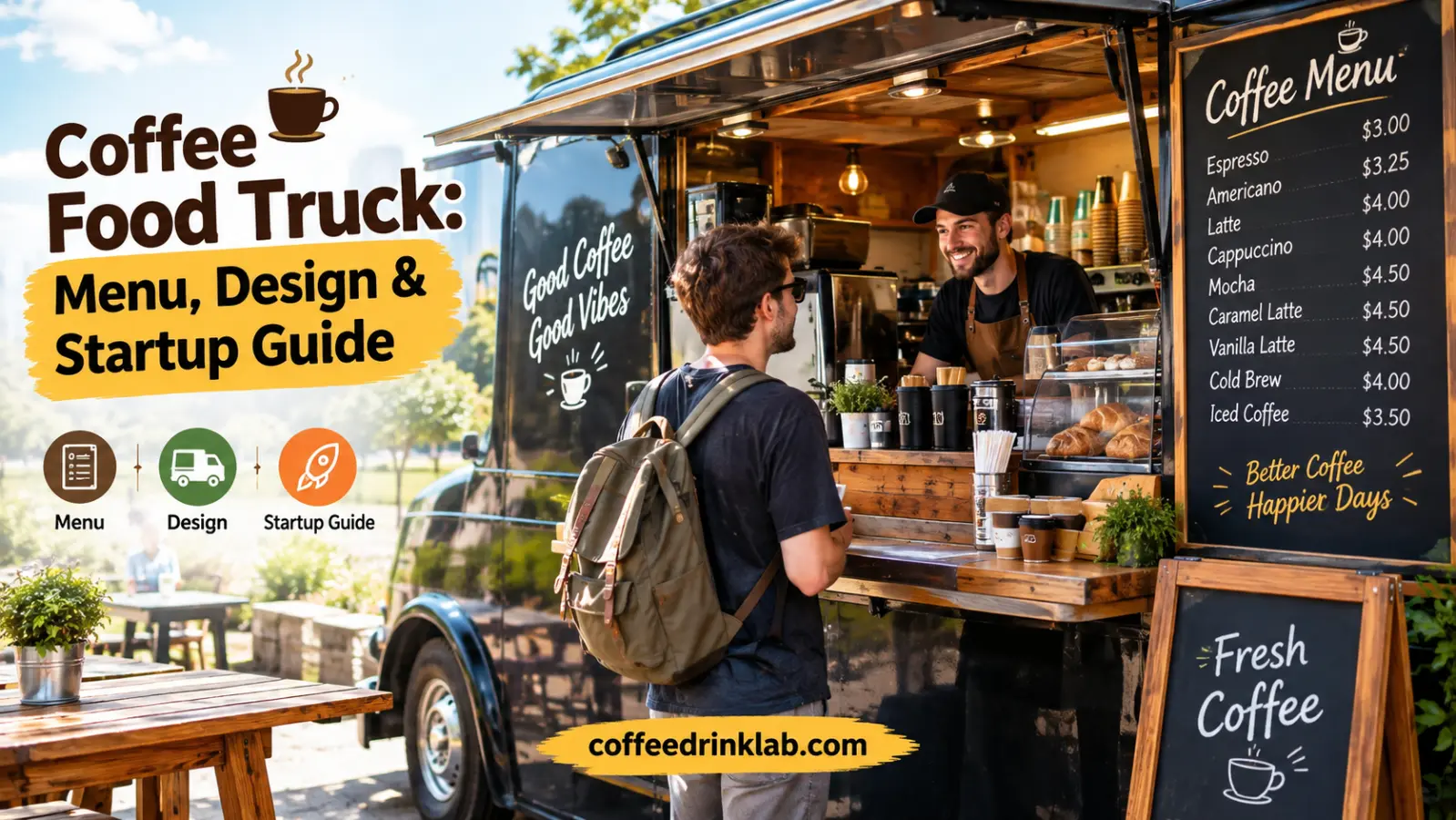
Coffee Food Truck: Menu, Design & Startup Guide
A coffee food truck brings the café experience directly to offices, festivals, weddings, markets, campuses, and neighborhood events. For anyone researching the best coffee food truck for events, the biggest advantage is flexibility: you can serve espresso drinks, cold coffee, tea, and specialty beverages without maintaining a traditional storefront.
Whether you want to start a business or simply find a great mobile café, understanding the menu, equipment, interior, design, and operating model makes the decision much easier.
Coffee Food Truck: What Is a Mobile Coffee Business?
A coffee food truck is a mobile café designed to prepare and sell beverages from a vehicle or trailer. Unlike a conventional coffee shop, it can move between locations and follow customer demand, making it especially useful for morning business districts, farmers markets, festivals, private parties, and community gatherings.
A mobile coffee food truck typically includes an espresso machine, grinders, refrigeration, water and wastewater systems, storage, electrical equipment, and a service counter. However, the exact setup varies depending on the menu and local health requirements.
For coffee lovers, the appeal is simple: you can get many familiar café drinks while enjoying a more casual and convenient experience. For an owner, meanwhile, mobility creates opportunities to test different locations before committing to a permanent storefront.
How to Start a Coffee Food Truck
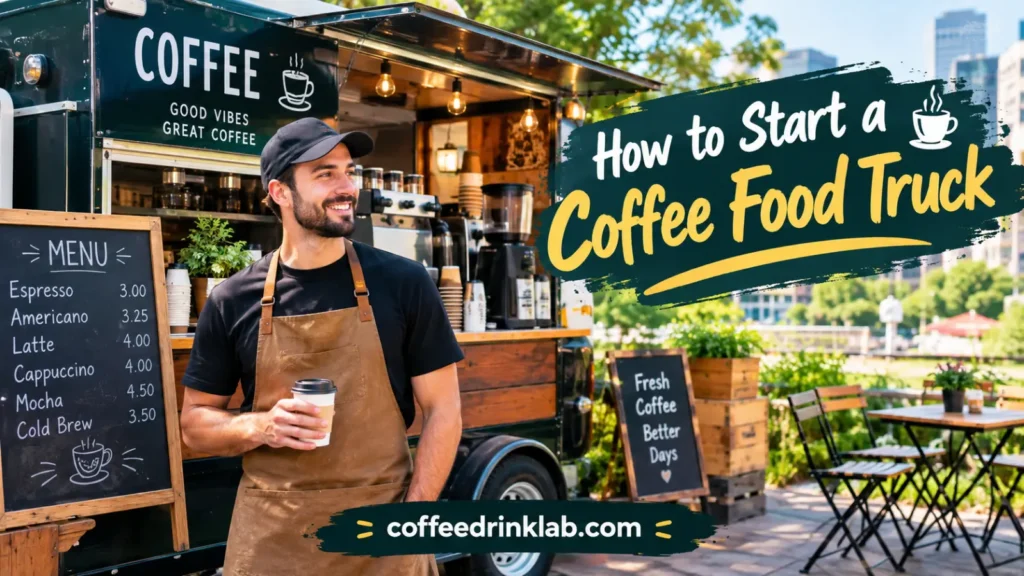
If you’re wondering how to start a coffee food truck, begin with the business concept rather than buying equipment immediately. Your menu, expected customer volume, operating locations, and local regulations should determine the size and layout of the truck.
First, research your local market and identify where potential customers already gather. Then create a realistic business plan covering vehicle costs, equipment, ingredients, permits, insurance, staffing, marketing, fuel, maintenance, and daily operating expenses.
You should also check city and county requirements before opening. Mobile food and beverage businesses can face different rules for health permits, food handling, business licenses, parking, vending locations, water systems, wastewater disposal, and inspections.
A practical startup sequence looks like this:
- Define your concept and target customers.
- Build a focused coffee and beverage menu.
- Research local permits and health requirements.
- Choose a truck or trailer that fits your workflow.
- Purchase commercial-grade coffee equipment.
- Design the service window and interior for speed.
- Establish suppliers for beans, milk, syrups, cups, and ice.
- Test the workflow before your first public event.
- Promote your opening through local marketing and social media.
Most importantly, don’t underestimate workflow. A beautiful truck can still struggle if the grinder, espresso machine, refrigerator, sink, and serving area are positioned poorly.
Best Coffee Food Truck for Events: What Should It Offer?
The best coffee food truck for events usually has a menu that is easy to understand and fast to produce. At a busy festival or wedding, customers generally don’t want to stand in a long line while a complicated drink is prepared.
A strong menu can include espresso, Americano, latte, cappuccino, mocha, cold brew, iced coffee, and flavored specialty drinks. Additionally, offering oat milk, almond milk, and whole milk gives customers useful choices without making the menu unnecessarily large.
For a private event, you can also create a limited menu around the host’s preferences. For example, a wedding might feature signature lattes, while a corporate event could focus on espresso, drip coffee, and iced drinks.
Popular menu categories include:
- Espresso and double espresso
- Americano
- Latte and flavored latte
- Cappuccino
- Mocha
- Cold brew
- Iced latte
- Hot chocolate
- Chai or tea
- Dairy-free milk options
- Seasonal specialty drinks
Keeping ingredients versatile is particularly helpful. A few quality syrups and sauces can create several drinks without requiring dozens of separate ingredients.
Coffee Food Truck Interior: Building an Efficient Workspace
The coffee food truck interior matters just as much as the exterior because baristas need to work quickly in a limited space. Instead of thinking only about appearance, consider how every movement happens from order to handoff.
A practical layout usually places frequently used equipment within easy reach. The espresso machine, grinder, milk refrigerator, cup storage, sink, and point-of-sale system should work together rather than forcing employees to repeatedly cross the workspace.
For example, a basic workflow could move from:
Order → Payment → Grinding → Espresso → Milk/Flavoring → Lid → Customer Pickup
Good lighting also makes a difference, especially when the truck operates early in the morning or after sunset. Furthermore, adequate ventilation, washable surfaces, organized storage, and safe electrical connections are important parts of a professional setup.
Coffee Food Truck Design Ideas That Actually Work
Great coffee food truck design should communicate the brand from a distance while making the service window easy to find. A clean logo, readable menu board, strong typography, and consistent colors can make a small truck much easier to recognize.
There are plenty of coffee food truck ideas to explore, from rustic coffeehouse styling to modern minimalist designs. Some businesses use wood-inspired finishes and warm café aesthetics, while others choose bold graphics that stand out at festivals.
When planning your exterior, consider:
- Large, readable business name
- Clearly visible coffee menu
- Simple brand colors
- Attractive service window
- Nighttime lighting
- Social media handle or website
- Easy-to-read pricing
- Professional food-safe finishes
However, design should never sacrifice functionality. A beautiful truck with poor storage or a cramped service counter can create operational problems during busy periods.
Coffee Food Truck Menu: Drinks Customers Actually Want
A good coffee food truck menu balances familiar favorites with a few memorable specialty drinks. Customers should immediately recognize their favorite latte or Americano while also seeing something new worth trying.
Hot drinks work particularly well during cool mornings and outdoor events. Meanwhile, cold brew, iced lattes, and other chilled coffee beverages can become major sellers during warm weather.
Milk choices can also broaden your audience. Whole milk provides a traditional creamy texture, while oat milk has become a popular plant-based option. Almond milk offers another dairy-free choice, although its lighter texture can behave differently in espresso drinks.
Seasonal drinks can keep the menu interesting, too. Pumpkin-inspired beverages in fall, peppermint flavors during winter, and refreshing iced coffee creations in summer can give returning customers another reason to visit.
Coffee Food Truck Columbus Ohio and Other Local Markets
Searches such as coffee food truck Columbus Ohio show how location-specific this business model can be. Customers often search by city because mobile coffee businesses may operate at particular markets, offices, festivals, campuses, or private events rather than maintaining one permanent address.
If you’re searching for a coffee food truck near me, check the business’s current social media pages, website, event calendar, or local listings before traveling. Mobile businesses can change locations and operating hours more frequently than traditional cafés.
For an owner, location research is equally important. Look for areas with consistent foot traffic, complementary businesses, suitable parking or vending arrangements, and events where customers already expect to purchase food and drinks.
Coffee Food Truck Franchise vs. Independent Business
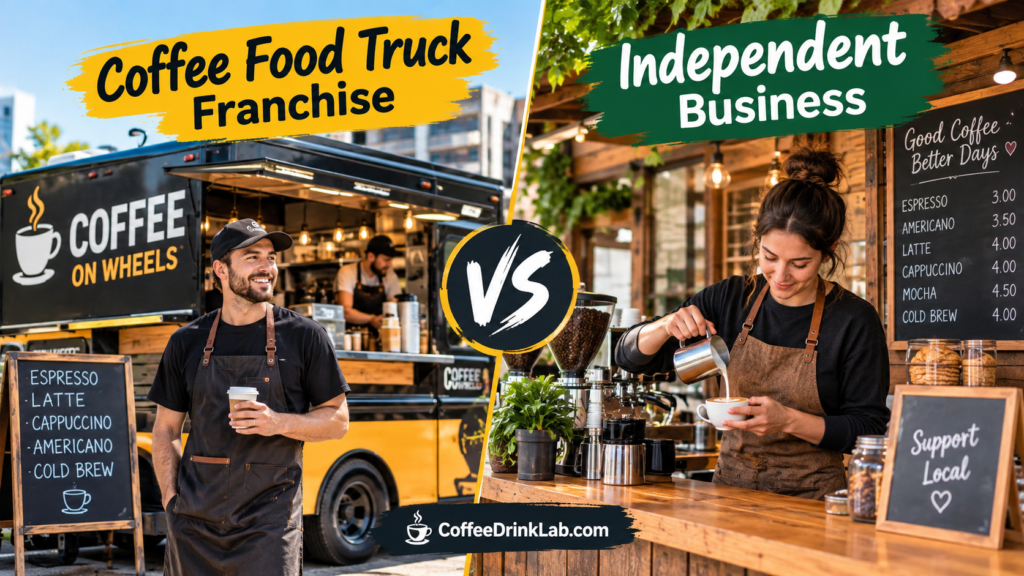
A coffee food truck franchise can provide an established brand, operating procedures, menu concepts, and training. For a first-time entrepreneur, that structure can be appealing because you don’t have to develop every business element completely from scratch.
On the other hand, an independent truck gives you much more creative freedom. You can select your own coffee beans, create your own menu, build a unique brand, and adjust prices and products according to your market.
The better choice depends on your goals, budget, experience, and willingness to follow a franchisor’s system. Before signing anything, carefully review franchise fees, ongoing royalties, territory restrictions, equipment requirements, supplier rules, and contract terms.
Mobile café for Sale: What Should You Check?
If you’re searching for a coffee food truck for sale, don’t judge the vehicle solely by its appearance or asking price. The existing equipment, electrical system, plumbing, ventilation, refrigeration, water tanks, and overall condition can have a major effect on your real startup cost.
Ask for documentation about the vehicle and equipment whenever possible. Also, have qualified professionals inspect major mechanical, electrical, and plumbing systems before making a purchase.
Consider these factors:
| Factor | Why It Matters |
|---|---|
| Vehicle condition | Reduces unexpected repair costs |
| Espresso equipment | Determines drink quality and speed |
| Electrical capacity | Must support commercial equipment |
| Water system | Important for sanitation and operation |
| Refrigeration | Keeps milk and ingredients properly stored |
| Storage | Prevents clutter during service |
| Service window | Affects customer flow |
| Maintenance history | Helps identify future expenses |
Because prices vary dramatically by vehicle age, equipment, customization, and location, it’s better to compare the complete setup rather than relying on a single advertised price.
Tom’s coffee truck business and Local Brand Searches
Searches for Tom’s coffee food truck illustrate another important point: customers may search for a specific mobile coffee brand rather than a general category. If a local truck has built a recognizable reputation, its name can become the primary way people find it online.
For business owners, this makes local SEO particularly valuable. A Google Business presence where eligible, consistent business information, location-focused website pages, event listings, customer reviews, and active social profiles can help people discover a mobile coffee business.
Likewise, if you’re trying to find a particular truck, search its exact business name along with its city or upcoming event. Because mobile locations change, always confirm the latest schedule.
Coffee Food Truck Ideas for Growing the Business
Once the core operation is working, there are several ways a mobile café can expand. Private catering is especially interesting because one booking can bring the truck directly to a workplace, wedding, birthday, school event, or community gathering.
Another option is to create branded seasonal menus. Limited-time beverages can encourage repeat visits without permanently expanding the menu.
You could also offer:
- Corporate coffee catering
- Wedding beverage service
- Festival and farmers-market appearances
- Office morning coffee service
- Private-party packages
- Seasonal specialty drinks
- Branded merchandise
- Pre-booked event packages
The key is to grow without making operations unnecessarily complicated. A small, efficient menu can often be more profitable and easier to manage than an enormous list of drinks.
How to Choose the Right coffee truck business
Choosing the right coffee food truck depends on whether you’re a customer, event organizer, or prospective owner. Customers should focus on drink quality, menu variety, cleanliness, convenience, and current location information.
Event organizers should additionally consider service capacity, menu customization, setup requirements, power and water needs, serving time, and pricing structure. A truck that works beautifully at a small office gathering may not have enough capacity for a large festival.
If you’re starting a business, think beyond the truck itself. Your coffee beans, espresso recipe, customer service, branding, workflow, marketing, and location strategy will collectively shape the experience.
Can You Use a Coffee Food Truck at Home?
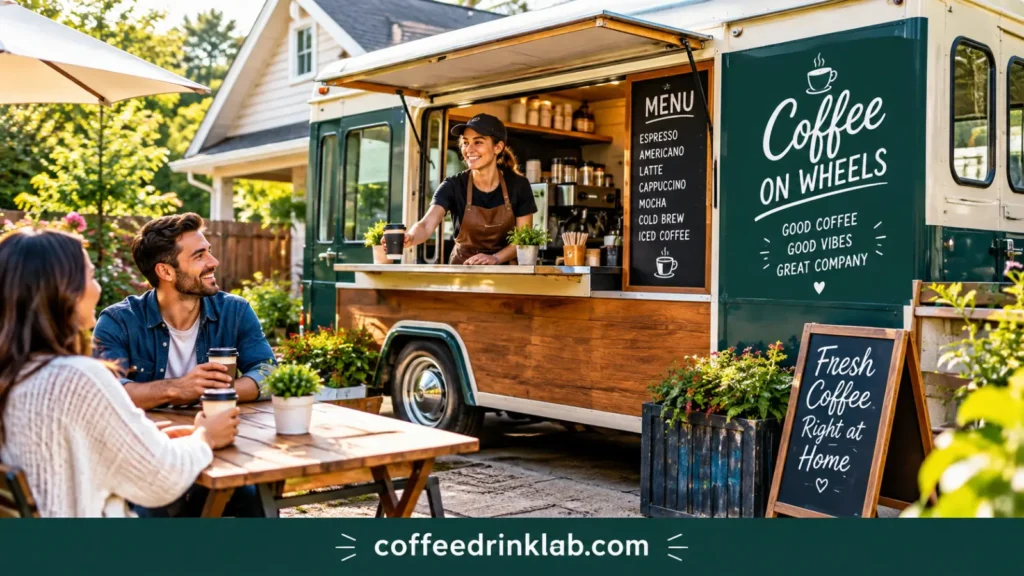
Yes, but usually not in the same way you would use a home coffee machine. A coffee food truck is designed as a mobile commercial operation, so using one at home would depend on local property rules, parking restrictions, utilities, and whether you intend to sell drinks.
For a private gathering, hiring a mobile coffee business to visit your home can be a fun alternative to setting up a full coffee bar yourself. However, confirm that the operator serves residential events and ask about setup space, power, water, guest capacity, and minimum booking requirements.
The Final Talk
A coffee food truck combines the personality of a neighborhood café with the flexibility of a mobile business. Whether you’re searching for a nearby truck, planning an event, comparing a coffee food truck for sale, or researching how to start a coffee food truck, the fundamentals remain the same: quality coffee, efficient workflow, smart design, a focused menu, and dependable service.
For customers, the best mobile coffee experience feels convenient without sacrificing drink quality. For entrepreneurs, meanwhile, the model offers a flexible way to reach different audiences and test new locations. From a thoughtfully planned coffee food truck interior to creative coffee food truck design ideas, every detail can influence the customer experience.
Most importantly, don’t rush the setup. Research your local requirements, understand your customers, test your workflow, and choose equipment that matches your actual menu. With the right planning, a mobile café can turn a simple coffee stop into a memorable experience.
FAQs:
For beginners, a truck with a focused menu and straightforward workflow can be easier to manage than a highly complicated operation. A compact setup that prioritizes espresso, drip coffee, cold drinks, and a few milk choices can provide variety without excessive inventory.
Consider the menu, drink quality, location, pricing, service speed, cleanliness, and customer reviews. If you’re buying one for business, also examine the vehicle’s mechanical condition, plumbing, electrical capacity, refrigeration, storage, equipment, permits, and expected operating costs.
A coffee food truck can potentially visit a home for a private event, but the operator must follow applicable local rules. Before booking, confirm parking, access, power or generator requirements, water needs, setup space, and the number of guests the truck can serve.
The most popular options commonly include espresso, Americano, latte, cappuccino, mocha, cold brew, and iced lattes. Many trucks also offer oat milk, almond milk, flavored syrups, and seasonal specialties to give customers more choices without creating an oversized menu.
Coffee food truck options can differ in vehicle size, menu, equipment, service capacity, design, and business model. Some focus primarily on espresso beverages, while others add tea, pastries, cold drinks, or specialty seasonal menus.
Discover More Blends
Wolf Coffee Maker: Complete 2026 Guide
Best Pour Over Coffee Maker: 2026 Guide
Drink Coffee, Talk Fast: Release Date & Where to Watch






2 Comments