
Wolf Coffee Maker: Complete 2026 Guide
If you’re researching a wolf coffee maker, you’re probably looking for more than a basic drip machine. Wolf’s built-in coffee systems are designed for people who want espresso-style drinks, fresh brewed coffee, adjustable settings, and a polished kitchen setup in one appliance.
In this guide, I’ll explain the best Wolf coffee maker for home use, including models, prices, water filters, cleaning, descaling, replacement parts, and everyday maintenance.
1. Wolf Coffee Maker Instructions and Built-In Coffee System Basics
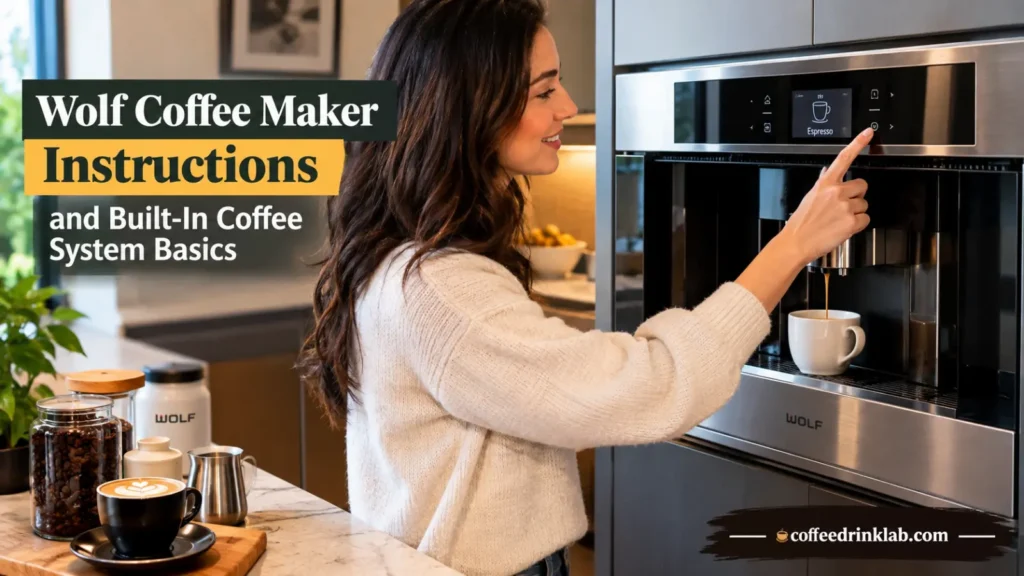
A Wolf coffee maker is better understood as a premium built-in coffee system rather than a conventional countertop brewer. Wolf has offered integrated systems designed to prepare coffee drinks at the touch of a button, making them particularly appealing for kitchens where the appliances are designed to match. The exact controls and features can vary by model, so checking the correct Wolf coffee maker manual for your appliance is important.
The Wolf Coffee System documentation includes features such as drink settings, coffee temperature adjustment, water hardness settings, rinsing, automatic start, energy-saving controls, and water-filter management.
For homeowners who enjoy several styles of coffee, that flexibility is a major advantage. Instead of keeping an espresso maker, milk frother, and separate coffee machine on the counter, a built-in system can bring several functions together.
1. What Can a Wolf Coffee Maker Make?
The system is intended for coffee drinks rather than just a single style of brewed coffee. Depending on the model and configuration, users can adjust coffee strength, temperature, milk settings, and other drink preferences.
Common coffee-house-style options can include:
- Espresso-style coffee
- Regular coffee
- Long coffee drinks
- Milk-based beverages
- Hot water for tea and other drinks
- Adjustable coffee strength and temperature
That makes the system especially interesting for households where one person prefers strong espresso while another wants a larger morning coffee.
1. Wolf Coffee Maker Review: Is It Worth It?
A Wolf coffee maker stands out primarily because of its built-in design, convenience, and premium positioning. Rather than choosing a machine simply because it produces coffee, you are paying for an integrated appliance that becomes part of the kitchen itself.
The biggest advantage is convenience. Once the system is properly installed and configured, making a coffee drink can be considerably easier than setting up several separate appliances.
However, there is a trade-off. A built-in appliance usually requires more planning than a countertop coffee maker, and servicing or replacing components can be more involved. Therefore, it makes the most sense for someone already planning a high-end kitchen or renovation.
1. Main Advantages
The Wolf system is attractive because it offers:
- Built-in kitchen integration
- Multiple coffee drink options
- Adjustable coffee settings
- Automatic cleaning and rinsing functions
- Water-filter support
- Premium appliance construction
- A cohesive look alongside other Wolf appliances
For a casual coffee drinker, however, a simpler drip machine may provide better value.
Wolf Coffee Maker Price and Value
The price of a Wolf coffee maker can vary considerably depending on the model, installation requirements, configuration, and whether you are buying new or considering an older or discontinued unit.
That is why it is risky to judge the appliance from one advertised price alone. Built-in coffee systems also involve installation considerations that do not apply to a basic countertop machine.
If you are comparing prices, look at the complete cost rather than just the appliance:
| Cost factor | What to consider |
|---|---|
| Coffee system | Model and configuration |
| Installation | Cabinet and electrical requirements |
| Water filter | Ongoing replacement |
| Descaler | Required maintenance product |
| Cleaning supplies | Milk and system cleaning |
| Parts | Possible future replacement |
| Service | Certified service if needed |
For a luxury kitchen, the convenience and integrated appearance can make the investment easier to justify. On the other hand, someone simply looking for affordable morning coffee may be happier with a conventional machine.
1. Wolf Coffee Maker Water Filter
The Wolf coffee maker water filter is an important part of regular maintenance because water quality affects both coffee flavor and mineral buildup. Wolf explains that its charcoal water filter helps reduce scale while removing impurities and odors that can interfere with taste.
For compatible Wolf Coffee Systems, the manufacturer identifies replacement filter part 830406 and recommends replacing the filter every two months.
The filter installation process involves preparing the filter under running water, allowing air bubbles to escape, placing it into the water tank, and securing it in its housing. The touchscreen can then guide you through the replacement process.
1. Wolf Coffee Maker Water Filter Reset
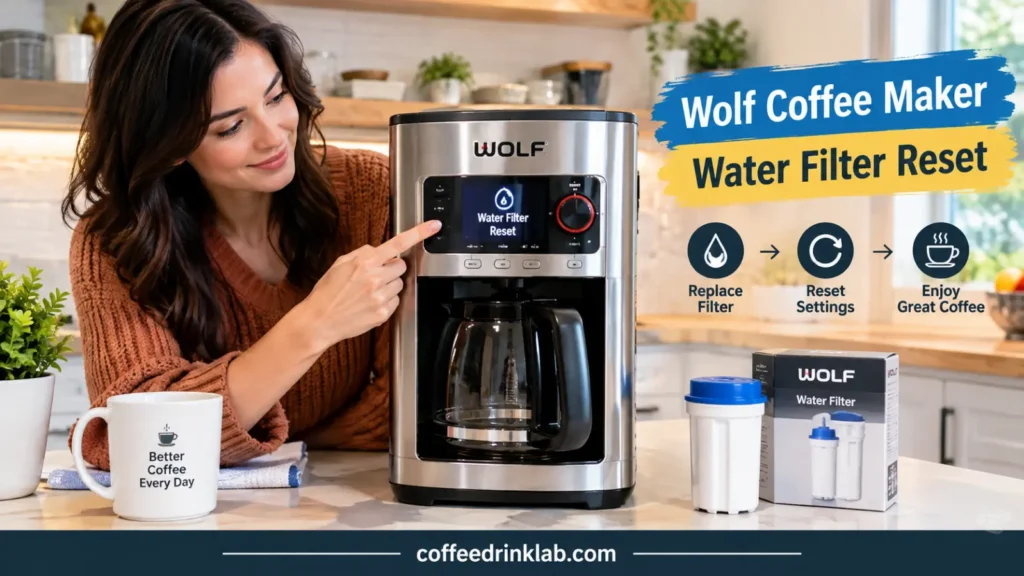
If your machine displays a filter reminder, use the water-filter menu rather than trying random button combinations. On compatible models, the touchscreen provides a Water Filter option where you can set the replacement period and confirm the replacement.
The exact menu wording can differ between generations, so your Wolf coffee maker manual should be the final reference for your specific appliance. Wolf’s documentation also indicates that the water-filter reminder can be turned on or off through the user settings.
1. Wolf Coffee Maker Descaler and Descaling Instructions
Descaling is different from everyday cleaning. It removes mineral buildup that develops inside the coffee system as water passes through it.
Wolf specifically recommends EcoDecalk descaling solution for its Coffee Systems. Its official instructions say the system monitors water usage in relation to water hardness and displays a descaling message when maintenance is needed.
For compatible systems, the general process involves removing the water filter, adding the specified descaling solution and water, placing a large container under the coffee and water outlets, and starting the built-in descale program. After the descaling stage, the machine requires a thorough water-rinsing cycle.
1. How Often Should You Descale a Wolf Coffee Maker?
There is no single calendar schedule that works for every Wolf Coffee System. Wolf states that descaling frequency depends on usage and water hardness. The appliance’s water-hardness setting can influence when the system requests descaling.
Most importantly, don’t ignore the machine when it asks for descaling. Wolf notes that coffee quality and functionality can be affected when mineral buildup is allowed to remain.
How to Clean Wolf Coffee Maker With Vinegar
If you’re searching for how to clean Wolf coffee maker with vinegar, there is an important distinction to understand: Wolf’s official instructions do not recommend replacing its specified descaling solution with vinegar.
For the coffee system’s infuser, Wolf specifically says not to use vinegar because it may harm interior parts. Instead, the manufacturer recommends removing the infuser, soaking it in water for about five minutes, rinsing it, and drying it.
For descaling, Wolf says to use EcoDecalk rather than substituting another descaler. Therefore, vinegar may be a common home-cleaning suggestion for other coffee machines, but it should not be treated as the recommended cleaning method for a Wolf Coffee System.
Wolf Coffee Maker Cleaning Instructions
Regular cleaning helps maintain flavor and keeps coffee residue, milk residue, and mineral buildup from becoming bigger problems.
The cleaning routine depends on the component. For example, Wolf recommends cleaning the infuser at least once a month. The manufacturer also cautions against detergent on the infuser because it can remove lubricant from internal parts.
A simple maintenance routine looks like this:
- Empty and clean the grounds container regularly.
- Clean the drip tray when it becomes dirty.
- Rinse removable coffee components according to the manual.
- Clean the infuser at least monthly.
- Replace the water filter approximately every two months when using the compatible filter.
- Run the official descaling program when the appliance requests it.
- Clean milk-system components according to the manufacturer’s instructions.
Wolf also sells a Coffee System Care Kit containing descaler, milk-cleaning solution, a cleaning brush, microfiber cloth, and water-hardness test strip.
Wolf Coffee Maker Parts and Replacement Parts
Like any complicated appliance, a Wolf coffee maker contains multiple components that may eventually need maintenance or replacement. The exact Wolf coffee maker parts available depend on your model and production generation.
Common serviceable or replaceable components can include:
- Water filters
- Milk-system components
- Water tanks
- Drip trays
- Grounds containers
- Coffee spouts
- Infuser-related components
- Cleaning accessories
When ordering Wolf coffee maker replacement parts, identify the exact model first. This is particularly important with older machines because a component that looks similar may not be compatible with another generation.
For example, Wolf identifies charcoal water filter part 830406 for compatible EC2450 and EC3050 systems.
Wolf Coffee Maker Manual: Why You Need the Correct One
A Wolf coffee maker manual is more useful than a generic internet troubleshooting guide because different generations can have different displays, menus, maintenance procedures, and components.
The manual can help you find:
- Correct operating instructions
- Drink settings
- Water-hardness setup
- Filter replacement
- Cleaning procedures
- Descaling instructions
- Troubleshooting information
- Installation requirements
In fact, Wolf’s official Use and Care documentation includes dedicated sections for water filters, user setup, descaling, cleaning, and coffee-system operation.
If your appliance displays a warning that doesn’t match instructions you find online, use the model-specific documentation before attempting a workaround.
Wolf Coffee Maker Built-In vs. Countertop Machines
The biggest difference between a Wolf coffee maker built in to your kitchen and a traditional countertop coffee maker is the installation and overall role of the appliance.
A countertop machine can usually be moved, replaced, or upgraded relatively easily. A built-in Wolf Coffee System, meanwhile, is intended to become part of the kitchen cabinetry and appliance design.
| Feature | Built-in Wolf Coffee System | Countertop Coffee Maker |
|---|---|---|
| Installation | Professional planning may be required | Usually simple |
| Kitchen appearance | Integrated | Sits on counter |
| Convenience | High once installed | High |
| Portability | Low | High |
| Maintenance | More specialized | Usually simpler |
| Kitchen integration | Excellent | Limited |
| Best for | Premium kitchens | Flexible home use |
Therefore, a built-in Wolf system is most appealing if kitchen design and convenience matter as much as the coffee itself.
Wolf Built-In Coffee System Reviews: What Buyers Should Consider
When reading Wolf built-in coffee system reviews, don’t focus only on the taste of one cup of coffee. Think about the entire ownership experience.
First, consider how often you drink coffee and which beverages you actually make. Secondly, think about whether you want a permanent built-in appliance or the flexibility of a countertop machine.
Finally, consider maintenance. The Wolf system requires filter replacement, cleaning, and periodic descaling. Those tasks are manageable, but they should be part of the ownership decision rather than an afterthought.
Are Wolf Coffee Makers Discontinued?
Search results for Wolf coffee maker discontinued can be confusing because Wolf has produced multiple coffee-system generations and model configurations over time.
An older model may no longer be actively marketed while replacement parts or service information remain available. Consequently, seeing an older Wolf Coffee System on a resale marketplace does not automatically mean that every part or service option has disappeared.
Before buying an older unit, check the model number, availability of compatible filters and parts, installation requirements, and access to certified service.
How to Choose the Best Wolf Coffee Maker for Home Use
Choosing the best Wolf coffee maker for home use really comes down to your kitchen and drinking habits.
If you’re building or remodeling a premium kitchen and want an integrated appliance, a Wolf Coffee System can be compelling. However, if you rent, move frequently, or mainly drink simple drip coffee, a countertop brewer may be more practical.
Before buying, consider:
- Kitchen layout: Is a built-in appliance appropriate for your cabinetry?
- Drink preferences: Do you want espresso-style and milk drinks?
- Maintenance: Are you comfortable replacing filters and descaling?
- Service: Is certified service available in your area?
- Budget: Does the complete installed cost fit your kitchen plan?
- Model age: If buying used, can you still obtain compatible parts?
Most importantly, choose based on how you actually drink coffee rather than buying the most expensive appliance simply because it looks impressive.
The Final Talk
A wolf coffee maker can be an excellent choice for coffee lovers who want a premium, integrated appliance rather than another machine sitting on the kitchen counter. The built-in design, adjustable coffee settings, water-filter system, and automated maintenance features make the Wolf Coffee System especially appealing in a carefully designed kitchen.
At the same time, it isn’t the right choice for everyone. A countertop brewer can be cheaper, easier to replace, and more practical for someone who mainly wants a simple cup of coffee each morning. Therefore, think about your kitchen, drinking habits, budget, and willingness to maintain the machine before buying.
If you do choose Wolf, keep the correct manual nearby, replace the water filter when required, clean the infuser regularly, and use the manufacturer’s recommended descaling solution. That simple routine can help your system deliver better-tasting coffee while keeping its internal components in good working order.
FAQs:
For a beginner, the best model is generally the one that fits the kitchen installation and offers the controls and drink options you actually need. A built-in Wolf system is easier to enjoy once installed, but its maintenance requirements should be understood before purchase.
Start with your kitchen space and installation requirements, then consider your preferred coffee drinks, budget, maintenance expectations, and access to replacement parts. If you are buying used, verify the exact model and part availability before paying.
Yes. Wolf Coffee Systems are designed for residential kitchen use. However, built-in models require appropriate installation and should be operated and maintained according to the manufacturer’s instructions.
Wolf has produced several Coffee System configurations, including models such as the EC24, EC2450, and EC3050. The exact features and controls vary by generation, so the model number is important when comparing systems or ordering parts.
The main differences can involve the model generation, size, controls, installation configuration, and available features. For that reason, compare the specifications and Use and Care Guide for the exact model rather than assuming every Wolf Coffee System works identically.
Discover More Blends
Brown Bee Coffee: Menu, Hours & Reviews
Stray Dogs Coffee: Menu & Riverside Guide
Shadow Box Coffee Table: Styles & Storage







3 Comments