
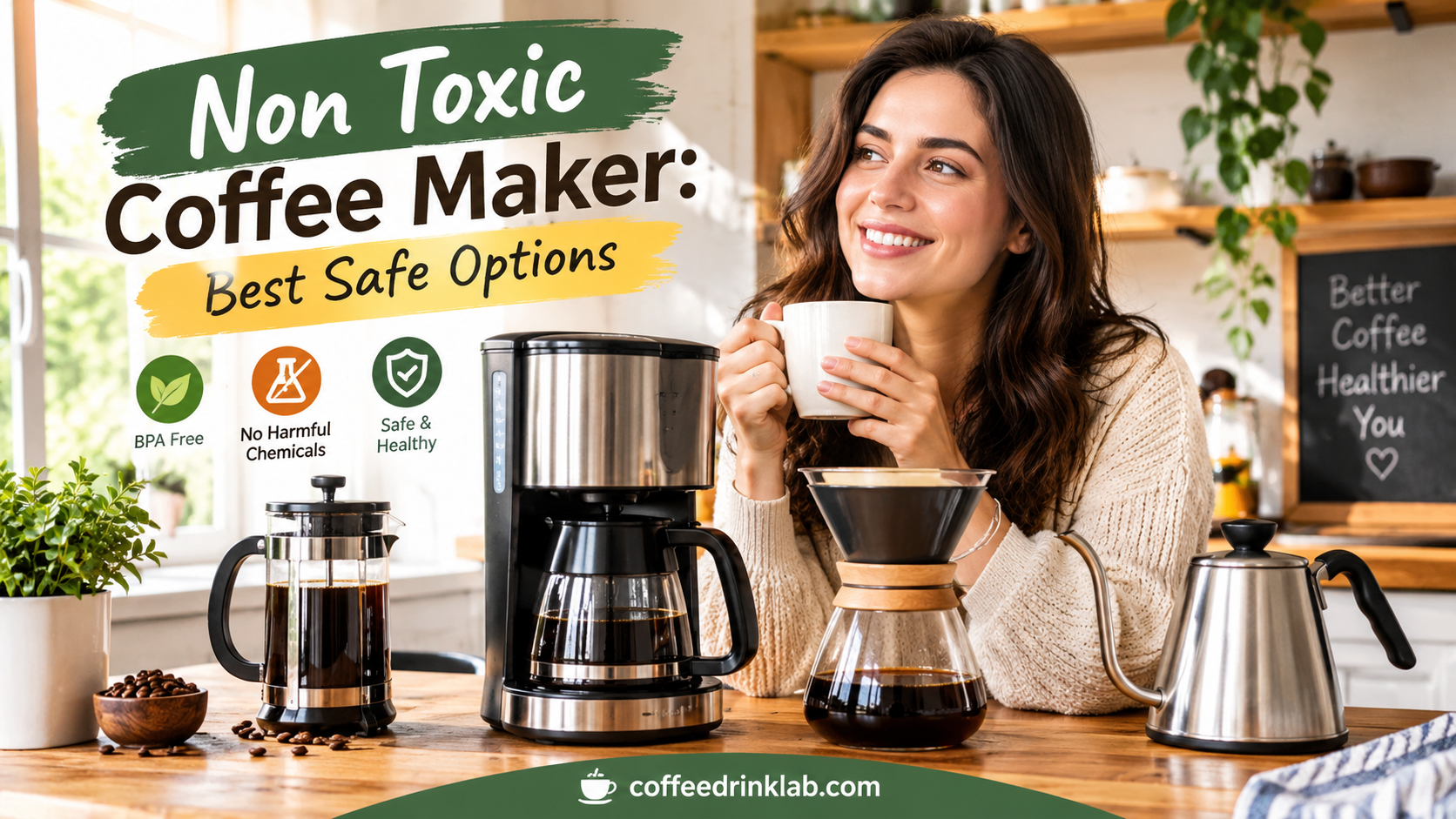
Non Toxic Coffee Maker: Best Safe Options
Choosing a non toxic coffee maker is becoming increasingly important for coffee drinkers who want to pay closer attention to the materials that touch their coffee and water. For many buyers, the goal is a best non toxic coffee maker no plastic or at least a brewer that minimizes plastic in the hot-water and coffee path.
Fortunately, there are several options using stainless steel, glass, BPA-free materials, and durable components. In this guide, we’ll look at what actually makes a coffee maker a better choice, which features matter, and how to choose one for your kitchen.
Best Non Toxic Coffee Maker No Plastic: What Should You Look For?
The phrase best non toxic coffee maker no plastic sounds simple, but finding a completely plastic-free automatic brewer can be surprisingly difficult. Most electric coffee makers contain at least some plastic components, even when the carafe, filter basket, or exterior uses stainless steel or glass.
Therefore, instead of assuming that a stainless-steel exterior means the entire brewer is plastic-free, check which materials come into contact with heated water and brewed coffee. Look for clear manufacturer information about BPA-free materials, stainless steel, borosilicate glass, silicone seals, and other components.
A good checklist includes:
- Stainless steel or glass where practical
- BPA-free water-contact components
- No unnecessary plastic in the hot-water pathway
- Replaceable or washable filters
- Easy cleaning and descaling
- Reliable manufacturer material information
- Durable construction and available replacement parts
Technivorm Moccamaster, for example, says its brewers use plastics that are BPA, BPS, BPF, and phthalate-free. The company also emphasizes durable construction and replaceable parts.
2. What Is the Best Non Toxic Coffee Maker for Most Homes?
There is no single machine that is automatically the safest non toxic coffee maker for every household. Your best choice depends on whether you prefer drip coffee, espresso, single-serve brewing, or freshly ground beans.
For traditional drip coffee, a brewer with a glass carafe, stainless-steel components, and clearly documented food-contact materials is a strong starting point. Meanwhile, espresso drinkers may prefer a machine with a stainless-steel portafilter and metal components in the brewing system.
Most importantly, don’t judge a machine solely by its exterior. A coffee maker can have a stainless-steel body while still containing plastic in the reservoir, tubing, filter basket, or internal water path.
1. Best Non Toxic Coffee Maker No Plastic for Drip Coffee
For a drip non toxic coffee maker, focus particularly on the brew basket, water path, carafe, and heating system. A glass carafe can be appealing because the finished coffee is stored in glass rather than a plastic container.
Moccamaster is worth considering because the company documents its material standards and says its plastics are BPA/BPS/BPF- and phthalate-free. It also uses a copper boiling element and durable metal housing.
However, “plastic-free” should not be confused with “BPA-free.” A BPA-free machine can still contain plastic, so shoppers who want to minimize plastic should examine the complete construction rather than relying on one label.
2. Stainless Steel Non Toxic Coffee Maker for Everyday Brewing
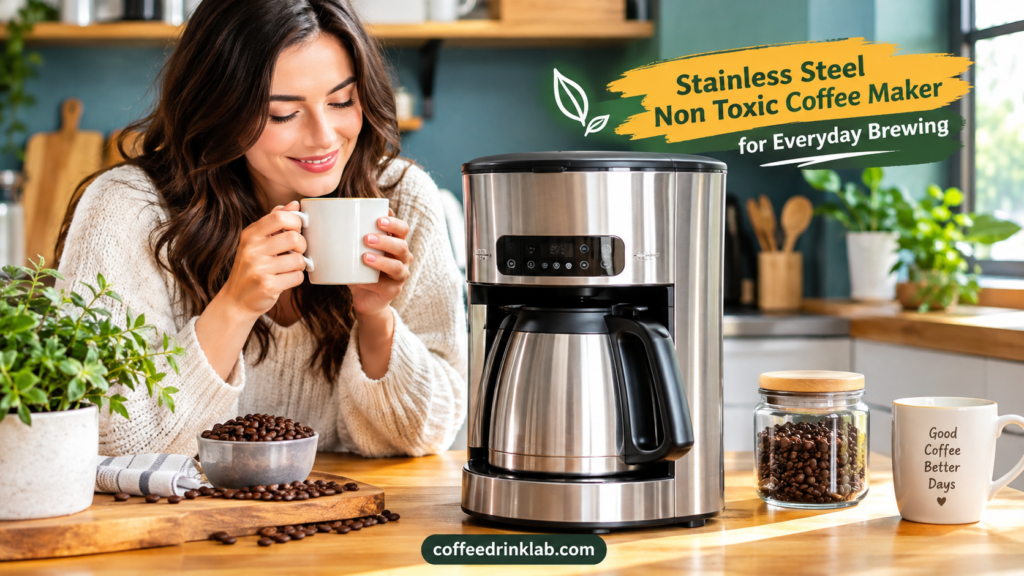
A stainless steel non toxic coffee maker can be a practical choice because stainless steel is durable and commonly used in coffee equipment. It can also reduce reliance on plastic for visible structural components and coffee-contact parts.
Still, stainless steel alone does not prove that a machine is completely free of other materials. Seals, tubing, reservoirs, lids, and electrical components may use different materials, so manufacturer specifications are important.
For example, Cuisinart describes its Brew Central 12-Cup Programmable Coffee Maker as BPA-free and features a stainless-steel carafe and gold-tone filter.
3. Safest Non Toxic Coffee Maker Materials to Consider
When people search for the safest non toxic coffee maker, they are usually trying to identify materials that make sense for repeated contact with hot water and coffee. The safest approach is to look for transparent manufacturer documentation instead of relying on marketing language alone.
1. Glass
Borosilicate glass is popular in coffee equipment because it is durable, heat-resistant, and does not require a plastic surface for storing brewed coffee. For example, OXO’s cold-brew system uses a borosilicate glass carafe and stainless-steel mesh filter, while the manufacturer identifies the product as BPA-free.
Glass is especially useful when your main concern is the material touching the finished coffee.
2. Stainless Steel
Stainless steel is another common material for coffee makers, carafes, portafilters, and filters. It is durable, reusable, and easy to clean when properly maintained.
However, stainless steel doesn’t automatically make an appliance “non-toxic.” Look at the complete product construction and the manufacturer’s disclosures.
3. BPA-Free Plastics
Sometimes plastic is unavoidable in an automatic machine. In that situation, clearly documented BPA-free components can be preferable to products that provide no material information.
Moccamaster goes further by stating that its plastics are free of BPA, BPS, BPF, and phthalates.
Breville Non Toxic Coffee Maker Options
A Breville non toxic coffee maker can appeal to people who want espresso-style brewing, integrated grinding, or stainless-steel components. However, Breville’s machines are not universally plastic-free, so buyers should evaluate the specific model rather than the brand as a whole.
For instance, the Breville Barista Touch includes a stainless-steel portafilter, stainless-steel milk jug, and brushed stainless-steel construction, while its water tank is identified as BPA-free.
Breville’s Grind Control manual also states that parts contacting coffee and water are BPA-free and identifies features such as an integrated burr grinder and stainless-steel thermal carafe.
As a result, Breville can be a reasonable option for someone prioritizing documented materials and functionality, but it should not be described as completely plastic-free.
Best Non Toxic Coffee Maker With Grinder
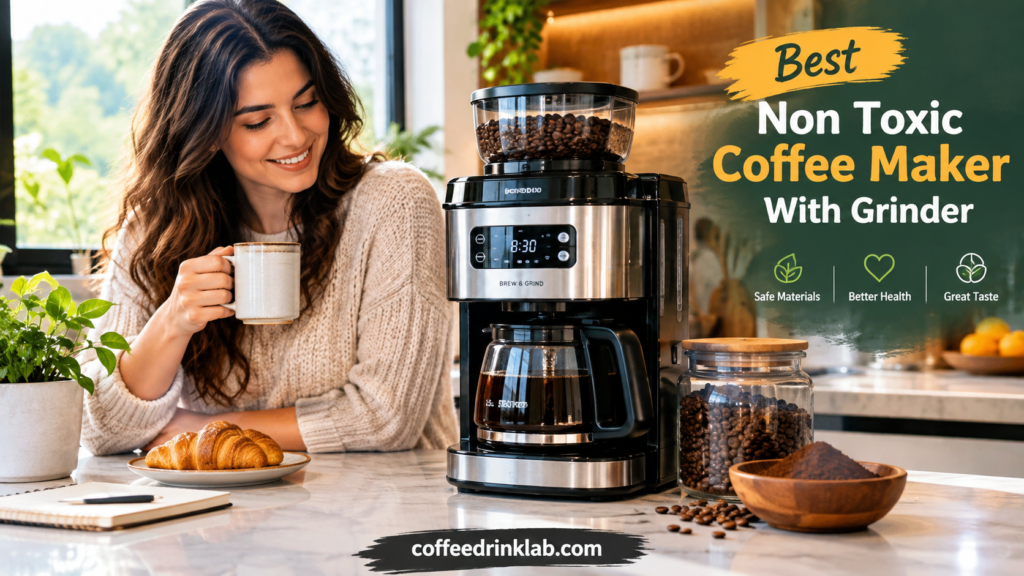
A best non toxic coffee maker with grinder combines two jobs: grinding whole beans and brewing the coffee. This can be convenient because freshly ground beans generally offer better aroma and flavor than coffee that has been sitting pre-ground.
When shopping for this type of machine, check both the grinder and brewing components. The bean hopper, grind chute, water reservoir, filter basket, and carafe may all use different materials.
Breville’s Grind Control is one example of an integrated grinder-and-brewer design, with a 12-cup water tank, adjustable burr grinder, removable gold-tone filter, and stainless-steel thermal carafe. The manufacturer states that coffee- and water-contact parts are BPA-free.
Therefore, this category can be excellent for convenience, but buyers who want the absolute minimum plastic should carefully inspect the specific model’s construction.
Cuisinart Non Toxic Coffee Maker Choices
A Cuisinart non toxic coffee maker can make sense for shoppers who want traditional drip brewing, espresso, or single-serve convenience. The company offers several coffee makers marketed as BPA-free, but individual models differ in design and materials.
For example, Cuisinart’s Brew Central 12-Cup model is BPA-free and includes a stainless-steel carafe and gold-tone filter.
Cuisinart also lists BPA-free single-serve machines. Its Premium Single Serve Brewer has a stainless-steel finish, removable water reservoir, reusable filter cup, and charcoal water filter.
Consequently, Cuisinart can be worth considering when BPA-free construction and familiar drip or single-serve designs are your priorities.
Single Cup Non Toxic Coffee Maker: Is It Possible?
A single cup non toxic coffee maker is useful for people who usually prepare one serving rather than a full carafe. However, single-serve machines often use more plastic because pods, reservoirs, brewing chambers, and internal components need to be compact.
If you want a single-cup setup with fewer plastic components, consider a simple manual brewer made with glass and stainless steel. On the other hand, if convenience is more important, look for a machine that clearly documents BPA-free coffee- and water-contact parts.
Cuisinart’s Premium Single Serve Brewer, for example, is listed as BPA-free and includes a reusable filter cup for ground coffee or tea.
Plastic Free Non Toxic Coffee Maker vs BPA-Free
These terms are often treated as if they mean the same thing, but they do not.
A plastic free non toxic coffee maker aims to minimize or eliminate plastic, while a BPA-free coffee maker simply indicates that bisphenol A is not used in specified components. A BPA-free machine may still contain other plastics.
| Feature | Plastic-Minimized Brewer | BPA-Free Brewer |
|---|---|---|
| Plastic use | Lower | May still be significant |
| BPA | Should be absent | Specifically excluded |
| Glass option | Often available | May or may not be available |
| Stainless steel | Common | Common |
| Best for | Minimizing plastic | Avoiding BPA |
| What to check | Entire material list | Manufacturer BPA statement |
Therefore, if your goal is best non toxic coffee maker no plastic, read the manufacturer’s specifications instead of treating “BPA-free” as a synonym for plastic-free.
Most Non Toxic Coffee Maker: Features That Matter
The most non toxic coffee maker is not necessarily the most expensive model. Instead, look for transparency, durable materials, easy maintenance, and minimal unnecessary contact between hot coffee and plastic.
Before buying, consider these factors:
- Coffee-contact materials: Check the basket, carafe, filter, and dispensing path.
- Water-contact materials: Pay particular attention to the reservoir and heated water pathway.
- Temperature: Hot water makes material selection especially relevant.
- Cleaning: Mineral buildup and coffee residue can affect taste and machine performance.
- Replacement parts: Long-lasting machines reduce the need for frequent replacement.
- Manufacturer transparency: Prefer brands that clearly identify materials.
Additionally, don’t overlook maintenance. Even a well-designed machine needs regular cleaning, because old coffee oils and mineral deposits can affect flavor and performance.
How to Choose the Best Non Toxic Coffee Maker for Your Kitchen?
Start with your brewing style. If you make a full pot every morning, a drip machine with a glass carafe or stainless-steel thermal carafe may make the most sense. If you drink espresso, focus on the portafilter, brew group, water path, and materials documented by the manufacturer.
Next, decide how much plastic you actually want to avoid. If your goal is simply to avoid BPA, many mainstream coffee makers offer documented BPA-free components. If you want the best safer coffee maker plastic, however, you will need to inspect the specific materials much more closely.
Finally, consider convenience. A simple glass-and-stainless manual brewer may minimize materials, while an automatic grinder-and-brewer saves time. The right choice is ultimately the one that balances your material preferences with how you actually make coffee every day.
Non Toxic Coffee Maker Maintenance Tips
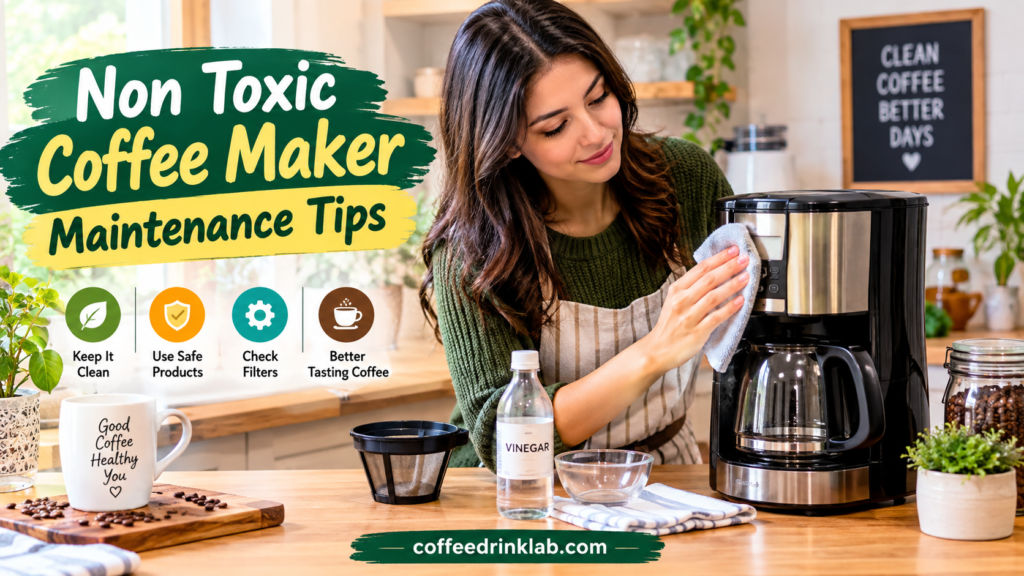
Even the best machine needs proper care. Regular cleaning helps preserve coffee flavor and prevents residue from building up inside the brewing system.
First, follow the manufacturer’s cleaning instructions rather than using random household chemicals. Secondly, clean removable coffee-contact parts regularly and descale the machine according to its instructions and water conditions.
Furthermore, replace filters and worn components when recommended. A durable coffee maker with replaceable parts can be a better long-term choice than an inexpensive appliance that must be discarded when one small component fails.
The Final Talk
Choosing a non toxic coffee maker is less about finding a machine with a perfect “non-toxic” label and more about understanding what your coffee and water actually touch. Glass, stainless steel, documented BPA-free components, durable construction, and transparent manufacturer information are all useful factors to consider. For example, Moccamaster documents BPA/BPS/BPF- and phthalate-free plastics, while Breville and Cuisinart provide BPA-free information for various models.
Ultimately, the best safer coffee maker is the one that matches your brewing routine while meeting your material preferences. Whether you choose drip coffee, a single-cup machine, an espresso maker, or a grinder-and-brew system, take a few minutes to check the manufacturer’s specifications. That small step can help you buy with more confidence and enjoy your daily coffee with one less thing to worry about.
FAQs:
For beginners, a straightforward drip brewer with a glass or stainless-steel carafe is usually easiest to understand and maintain. Look for clearly documented BPA-free components and simple cleaning requirements rather than choosing a machine based only on a “non-toxic” marketing label.
Begin by deciding whether you want drip, espresso, single-serve, or grinder-and-brew functionality. Then compare the water path, coffee-contact materials, carafe, filter, cleaning process, and manufacturer’s material disclosures. Most importantly, decide whether you want BPA-free construction or genuinely minimal plastic.
Yes. These coffee makers are designed for normal home brewing when used according to the manufacturer’s instructions. A home setup can include anything from a simple glass-and-stainless manual brewer to an automatic machine with documented BPA-free components.
Popular choices generally include stainless-steel or glass drip brewers, BPA-free automatic coffee makers, and espresso machines with stainless-steel coffee-contact components. Moccamaster, Breville, Cuisinart, and other established brands offer models with documented material features, although individual machines should always be checked separately.
The main difference is how they brew coffee and which materials are used around water and coffee. Drip machines are designed for multiple cups, single-serve models make individual servings, and espresso machines use pressure to produce concentrated coffee. Material construction can vary significantly within each category.
Discover More Blends
Baladi Coffee: Menu, Prices & Locations
Amai Coffee: Glendale, Torrance & Santa Monica
Sinners and Saints Coffee: Menu & Drinks Guide



2 Comments