
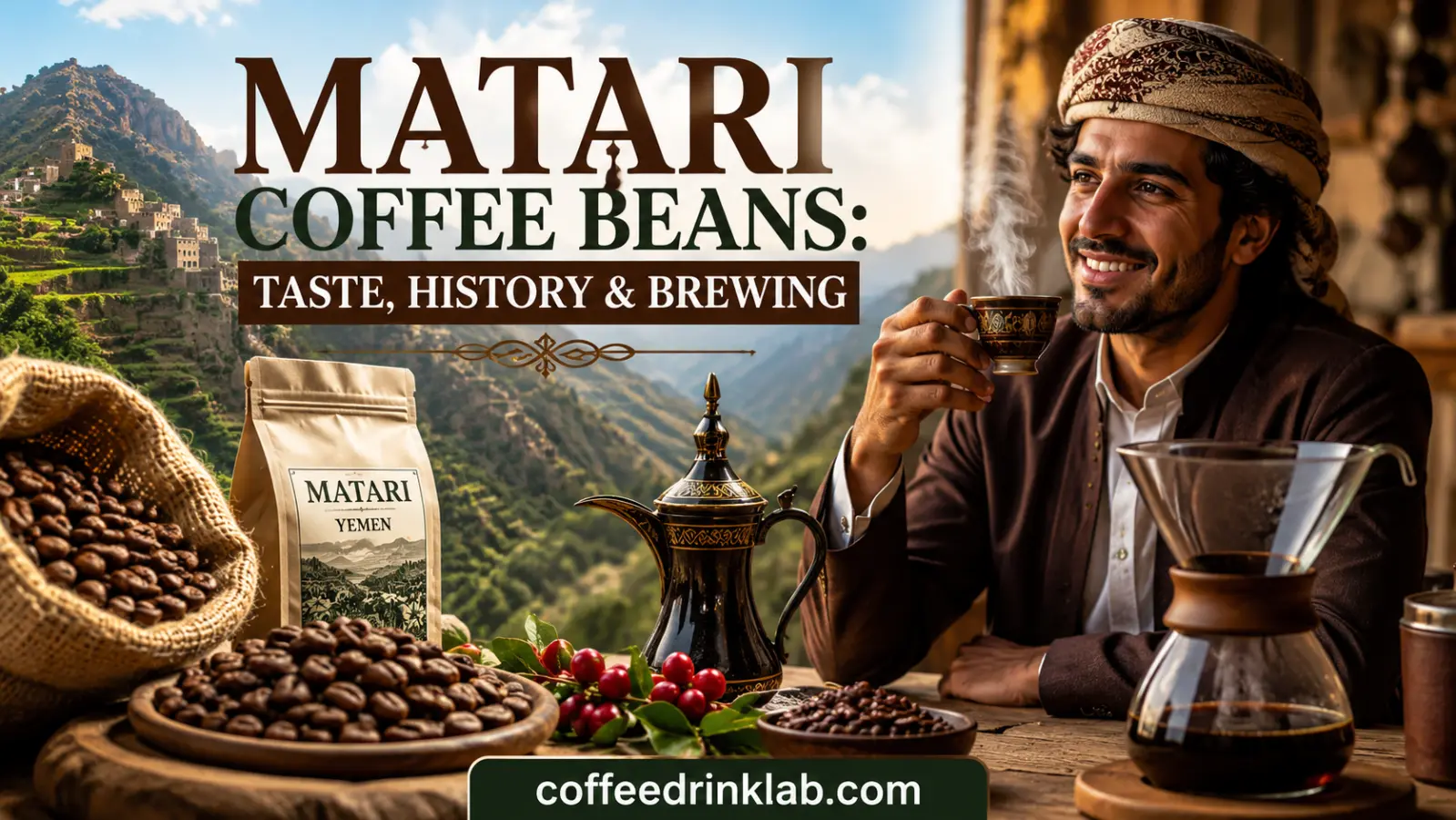
Matari Coffee Beans: Taste, History & Brewing(2026)
If you’ve been searching for matari coffee, you’ve probably discovered that it’s considered one of the world’s most prized coffees. In fact, the best Matari coffee beans from Yemen are celebrated for their bold flavor, natural sweetness, and centuries-old growing traditions. Unlike many modern coffees, Matari coffee reflects Yemen’s rich coffee heritage, where beans are grown on mountain terraces and processed using traditional methods.
Whether you’re new to specialty coffee or an experienced enthusiast, understanding Matari coffee will help you appreciate why it remains one of the most sought-after coffees in the world.
What Is Matari Coffee? ☕
Matari coffee is a premium coffee grown in Yemen’s Bani Matar region, located west of the capital city, Sana’a. This mountainous area is famous for producing exceptional Arabica coffee beans that develop complex flavors because of the region’s high elevation, dry climate, and mineral-rich soil.
Unlike mass-produced coffee, Matari coffee is usually harvested by hand. Farmers carefully select ripe coffee cherries before naturally drying them under the sun. As a result, the beans develop an intense sweetness and distinctive fruit-forward character that coffee enthusiasts immediately recognize.
Today, Matari coffee continues to represent some of the finest examples of traditional Yemeni coffee cultivation, making it highly respected among specialty coffee roasters worldwide.
Why the Best Matari Coffee Beans from Yemen Are So Special
The best this Yemeni specialty coffee beans from Yemen stand apart because nearly every step of production follows traditional methods that have changed very little over hundreds of years.
Several natural factors contribute to their remarkable quality:
- High elevations of 6,000–8,000 feet
- Ancient terraced mountain farms
- Hand-picked ripe coffee cherries
- Natural sun-drying process
- Predominantly Arabica varieties
- Limited annual production
- Rich volcanic soil
Furthermore, Yemen’s dry climate helps produce dense coffee beans with concentrated sugars, leading to remarkably complex cups.
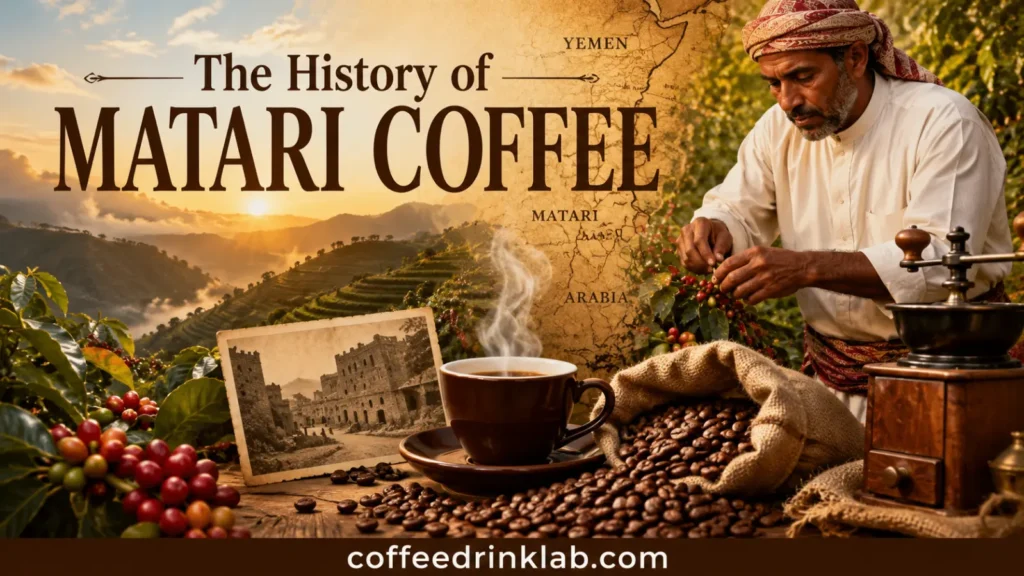
The History of Matari Coffee
Yemen holds a unique place in coffee history. Long before coffee spread across Europe and the Americas, Yemeni traders exported beans through the historic port of Mocha. Consequently, coffee from Yemen became famous worldwide.
The Bani Matar region soon earned recognition for producing especially flavorful beans. Even today, many coffee experts consider this single-origin coffee one of the closest connections to coffee’s earliest commercial history.
Moreover, generations of farming families continue cultivating coffee using methods passed down through centuries, preserving both quality and tradition.
Flavor Profile of Matari Coffee ☕
One sip ofthis single-origin coffee quickly reveals why it has developed such a loyal following. Instead of tasting simple or one-dimensional, it offers layers of flavors that continue evolving as the coffee cools.
Most drinkers notice a combination of:
| Characteristic | What to Expect |
|---|---|
| Roast Preference | Medium to Medium-Dark |
| Body | Full and syrupy |
| Acidity | Bright but balanced |
| Sweetness | Natural caramel and dried fruit |
| Flavor Notes | Chocolate, raisins, dates, berries, spice |
| Aroma | Earthy, floral, cocoa |
| Aftertaste | Long, rich, wine-like |
Meanwhile, every harvest may taste slightly different because traditional farming relies heavily on natural growing conditions rather than standardized commercial production.
Best Matari Coffee Beans from Yemen for Different Brewing Methods
Choosing the best the beans beans from Yemen also means selecting the brewing method that highlights their complex flavors. Fortunately, these beans perform beautifully across several brewing styles.
Pour Over
Pour over brewing allows Matari coffee’s fruity sweetness and floral aroma to shine. Because extraction happens slowly and evenly, subtle tasting notes become much more noticeable.
Best for:
- Fruity flavors
- Floral aromas
- Medium roast beans
- Single-origin appreciation
French Press
The French press creates a rich, heavy-bodied cup that complements Matari coffee’s chocolate and spice notes. Additionally, the metal filter allows more natural oils to remain in the cup.
Best for:
- Full body
- Rich mouthfeel
- Bold chocolate flavors
- Cozy morning coffee
Espresso ☕
Although this premium coffee isn’t traditionally grown specifically for espresso, many specialty roasters produce outstanding espresso blends featuring Yemeni beans.
Espresso lovers often enjoy:
- Dense crema
- Berry sweetness
- Cocoa finish
- Complex aroma
- Balanced acidity
Cold Brew
Cold brewing softens Matari coffee’s brighter acidity while emphasizing its natural sweetness. As a result, you’ll often taste chocolate, dates, and caramel much more prominently.
This brewing style works especially well during warmer months or for iced coffee lovers.
Growing Conditions That Make Matari Coffee Unique
Several environmental factors contribute to Matari coffee’s exceptional quality.
High Elevation
Coffee grown at higher elevations matures more slowly. Consequently, beans become denser and develop more complex sugars that enhance sweetness.
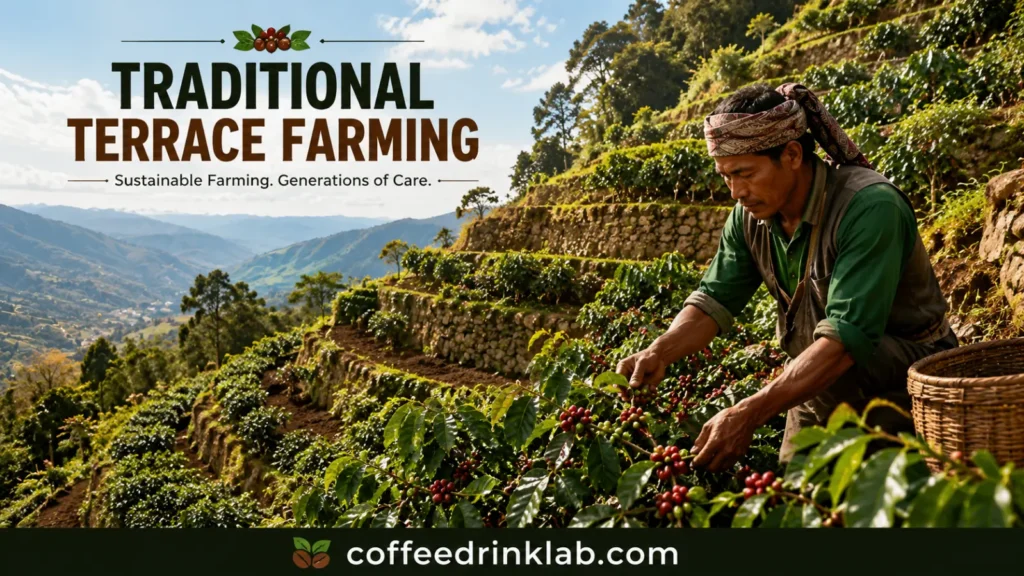
Traditional Terrace Farming
Unlike large commercial plantations, Yemeni farmers cultivate coffee on ancient mountain terraces. These terraces reduce erosion while allowing coffee trees to thrive in challenging terrain.
Dry Climate
The dry climate naturally slows bean development and drying. Therefore, the coffee develops concentrated flavors without excessive bitterness.
Natural Processing
Instead of washing the beans immediately after harvest, producers allow coffee cherries to dry naturally in the sun. This process transfers fruity sugars from the cherry into the bean, creating the signature wine-like sweetness that these Yemeni beans is famous for.
Roast Levels for Matari Coffee
Although personal preference matters, certain roast levels highlight different aspects of this coffee
| Roast Level | Flavor Experience | Best Brewing Method |
|---|---|---|
| Light Roast | Floral, berry, citrus | Pour Over |
| Medium Roast | Chocolate, caramel, dried fruit | Drip Coffee |
| Medium-Dark Roast | Cocoa, spice, rich body | French Press |
| Dark Roast | Smoky chocolate, lower acidity | Espresso |
Many specialty roasters recommend a medium roast because it balances sweetness, acidity, and complexity without masking the bean’s natural character.
How to Buy Authentic Matari Coffee
Finding authentic matari coffee can take a little extra effort because genuine Yemeni coffee is produced in relatively small quantities. As demand for specialty coffee grows, some products use the name “Mocha” or “Yemeni-style” without actually coming from the Bani Matar region.
When shopping, look for these signs of quality:
- Clearly labeled origin: Bani Matar, Yemen
- Single-origin Arabica beans
- Fresh roast date (within the last 4–6 weeks)
- Whole beans instead of pre-ground coffee
- Specialty coffee roaster with transparent sourcing
- Flavor notes that mention chocolate, dried fruit, berries, or spice
Furthermore, reputable roasters often share information about the farmers or cooperatives they work with, giving you greater confidence in the coffee’s authenticity.
Best Matari Coffee Beans from Yemen: Storage Tips
Even the best Matari coffee beans from Yemen can lose their remarkable flavor if stored incorrectly. Freshness plays a major role in preserving the coffee’s delicate aromas and natural sweetness.
For the best results:
- Store whole beans in an airtight container.
- Keep them in a cool, dark cabinet away from sunlight.
- Avoid the refrigerator, as moisture and food odors can affect flavor.
- Grind only the amount you need before brewing.
- Use the beans within 4–8 weeks after roasting for peak quality.
Most importantly, protecting the beans from air, heat, light, and moisture will help maintain their rich flavor profile.

Is Matari Coffee Worth the Price?
Because matari coffee is grown in limited quantities and harvested using traditional methods, it often costs more than everyday supermarket coffee. However, many coffee enthusiasts believe the price reflects its exceptional quality and unique heritage.
Several factors contribute to its premium cost:
| Factor | Why It Matters |
|---|---|
| Limited production | Smaller harvests increase rarity. |
| Hand harvesting | Careful picking improves quality. |
| Mountain farming | Difficult terrain limits large-scale production. |
| Traditional processing | Natural drying enhances flavor complexity. |
| Specialty demand | Coffee lovers value its distinctive taste and history. |
If you enjoy exploring single-origin coffees, this coffee offers an experience that is very different from standard commercial blends.
Who Should Try Matari Coffee?
Whether you’re just beginning your coffee journey or have years of brewing experience, matari coffee has something special to offer.
It is especially suited for:
- Specialty coffee enthusiasts
- Fans of single-origin Arabica beans
- Pour-over and French press brewers
- Coffee drinkers who enjoy fruity and chocolatey flavor notes
- Anyone interested in coffee history and traditional farming
Meanwhile, if you usually drink very dark, smoky coffees, you may appreciate Matari coffee even more with a medium roast that showcases its natural sweetness.
Conclusion ☕
Matari coffee is much more than a premium coffee bean—it’s a connection to the birthplace of coffee’s global journey. From the mountain terraces of Yemen’s Bani Matar region to your favorite brewing method at home, every cup tells a story of tradition, craftsmanship, and remarkable flavor. Whether you prefer pour over, French press, espresso, or cold brew, Matari coffee delivers layers of chocolate, dried fruit, spice, and floral notes that make every sip memorable.
If you’re looking to expand your coffee experience, give Matari coffee a try. Start with freshly roasted whole beans, experiment with different brewing methods, and pay attention to the subtle flavors that unfold as the coffee cools. With proper storage and careful brewing, you’ll discover why this legendary Yemeni coffee continues to captivate coffee lovers around the world. ☕
FAQs:
Q1.What are the most popular matari coffee?
The most popular matari coffee options are single-origin coffees sourced directly from Yemen’s Bani Matar region. Many specialty coffee roasters offer medium-roast whole beans because they highlight the coffee’s natural sweetness, chocolate notes, and fruity complexity.
Q2.What is the difference between matari coffee and other coffees?
The biggest difference is origin and processing. Matari coffee comes from Yemen’s Bani Matar region, where beans are grown at high elevations and naturally sun-dried. This creates a richer, fruitier, and more wine-like flavor than many commercially grown coffees.
Q3.Which matari coffee is best for beginners?
A medium-roast Matari coffee is usually the best choice for beginners. It provides a balanced cup with chocolate, caramel, and dried fruit notes without overwhelming acidity or bitterness.
Q4.How do I choose the right matari coffee?
Choose freshly roasted whole beans from a reputable specialty coffee roaster that clearly lists Bani Matar, Yemen as the origin. Also, consider your preferred brewing method and roast level to match your taste preferences.
Q5.Can I use matari coffee at home?
Absolutely. Matari coffee works wonderfully in home brewing equipment, including pour-over brewers, French presses, drip coffee makers, espresso machines, and even cold brew systems. Grinding the beans just before brewing will produce the best flavor.
Discovers More Blends
Where to Buy Fresh Coffee Beans Near You
Best Flavored Coffee Beans for Home Brewing(2026)
How Long Does Coffee Beans Last After Opening?(2026)