
Types of Coffee Grounds: 7 Grind Sizes Explained for Better Coffee
If you’ve ever wondered why the same coffee beans can taste completely different depending on how they’re ground, you’re not alone. Understanding types of coffee grounds is one of the most important steps toward brewing better coffee at home. In fact, choosing the best types of coffee grounds for different brewing methods can dramatically improve flavor, aroma, and extraction.
Whether you use a French press, drip machine, espresso maker, or cold brew setup, the grind size directly affects how water interacts with coffee. As a result, learning about different grind sizes can help you avoid bitter, sour, or weak coffee and consistently enjoy a delicious cup.
If you’re comparing different types of coffee grounds, it also helps to understand how grind size changes extraction, brewing time, and the final taste of your coffee.
Why Types of Coffee Grounds Matter
Coffee grounds are not all the same. While many beginners focus on beans or roast levels, grind size is equally important. Different brewing methods require different extraction rates, and grind size controls how quickly water pulls flavor from the coffee.
If the grounds are too fine, your coffee may become bitter and over-extracted. However, if they are too coarse, the coffee can taste weak and under-extracted. Therefore, matching the grind size to your brewing method is essential.
7. What Are the Types of Coffee Grounds? A Complete Guide

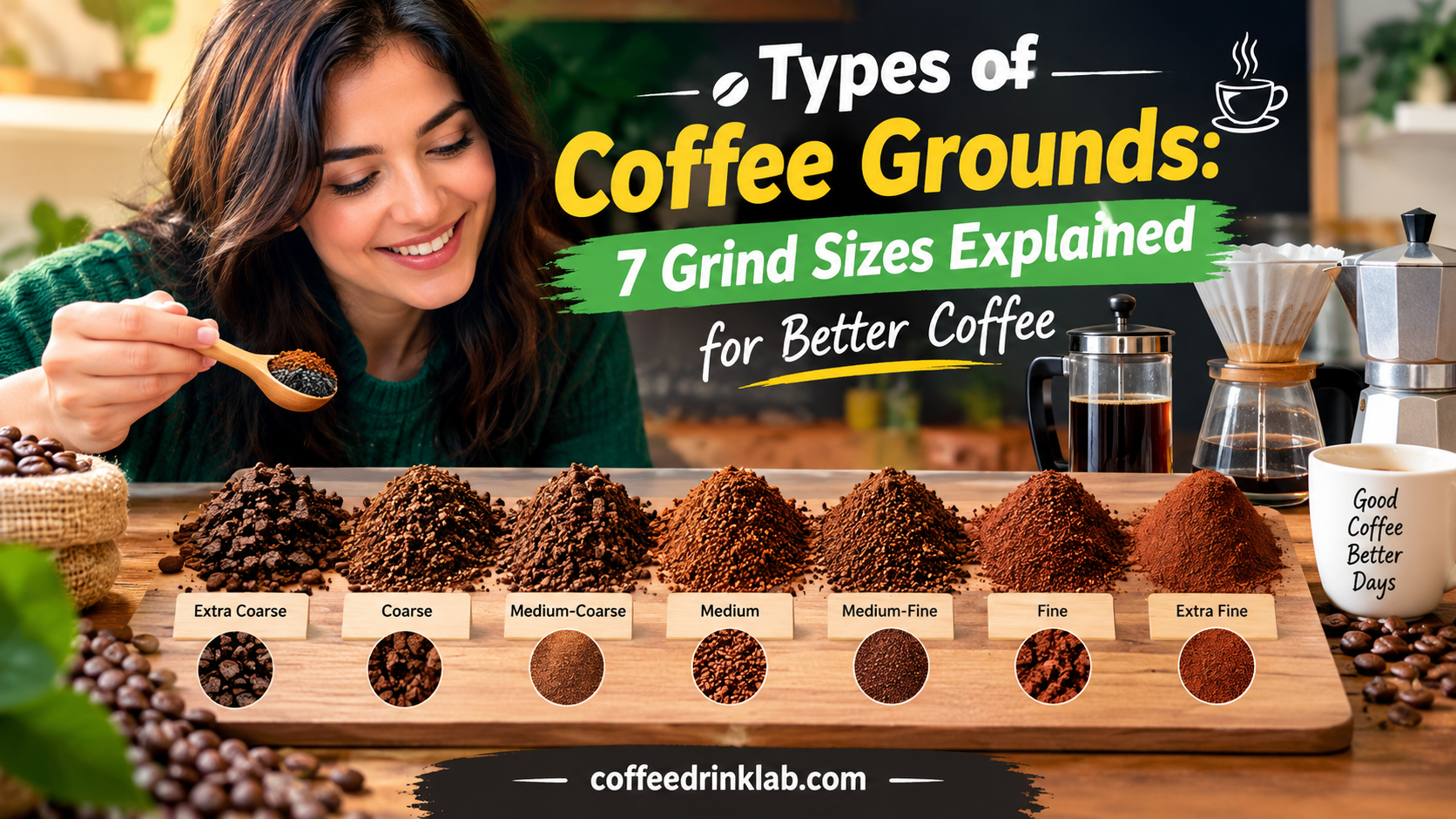
The terms types of coffee grounds and types of coffee grinds are often used interchangeably. Both refer to the particle size created when whole coffee beans are ground. The main differences range from extra coarse to extra fine, with each size suited to specific brewing methods.
1. Extra Coarse Grind
Extra coarse coffee grounds resemble peppercorns or small chunks of sea salt. They are among the largest grind sizes available and allow water to move slowly around the coffee.
This grind works exceptionally well for cold brew because coffee steeps in water for many hours. Since extraction happens gradually, the large particles prevent over-extraction and create a smooth flavor profile.
Best for:
- Cold brew coffee
- Long steeping methods
Characteristics:
- Very large particles
- Low extraction speed
- Smooth, less acidic flavor
2. Coarse Grind
A coarse grind looks similar to coarse sea salt. It’s slightly smaller than extra coarse but still provides plenty of space between particles.
Many coffee enthusiasts prefer coarse grounds for French press brewing. Because the coffee remains in contact with water for several minutes, larger particles help maintain balance and reduce bitterness.
Best for:
- French press
- Coffee cupping
- Percolators
Characteristics:
- Large particles
- Easy filtration
- Rich body and flavor
3. Medium-Coarse Grind
Medium-coarse grounds sit between coarse and medium sizes. They have a texture similar to rough sand.
This grind is particularly popular for pour-over methods such as Chemex. Furthermore, it provides a balanced extraction that highlights subtle flavor notes in single-origin coffees.
Best for:
- Chemex
- Clever Dripper
- Some pour-over brewers
Characteristics:
- Balanced extraction
- Clear flavor notes
- Smooth finish
4. Medium Grind
Medium grind is one of the most common types of coffee grounds sold in grocery stores. It resembles regular beach sand and works well with a wide variety of brewing methods.
Because it offers a good balance between extraction speed and flavor development, many drip coffee makers are designed specifically for medium-ground coffee.
Best for:
- Drip coffee makers
- Automatic brewers
- Flat-bottom pour-over brewers
Characteristics:
- Versatile grind size
- Consistent extraction
- Beginner-friendly
5. Medium-Fine Grind
Medium-fine coffee grounds have a texture slightly finer than table salt. They create a more concentrated extraction while still allowing proper water flow.
Many coffee lovers use this grind for cone-shaped pour-over brewers. Additionally, it helps emphasize sweetness and complexity in specialty coffee beans.
Best for:
- Hario V60
- AeroPress
- Cone-shaped drippers
Characteristics:
- Enhanced flavor clarity
- Moderate extraction speed
- Bright and balanced taste
6. Fine Grind
Fine grounds feel similar to powdered sugar or fine table salt. Because they have a larger surface area, water extracts flavors very quickly.
Espresso machines rely on fine coffee grounds to create rich, concentrated shots in a short period. Consequently, grind consistency becomes extremely important when brewing espresso.
Best for:
- Espresso machines
- Moka pots
Characteristics:
- Fast extraction
- Strong flavor intensity
- Rich crema potential
7. Extra Fine Grind

Extra fine coffee grounds resemble flour or powdered cocoa. This grind creates maximum surface area and extremely rapid extraction.
Traditional Turkish coffee requires this ultra-fine grind because the coffee is brewed directly in water without filtering.
Best for:
- Turkish coffee
Characteristics:
- Powder-like texture
- Very fast extraction
- Intense flavor
Best Types of Coffee Grounds for Different Brewing Methods
The easiest way to choose the right grind is by matching it to your brewing equipment.
| Brewing Method | Recommended Grind Size | Flavor Result |
|---|---|---|
| Cold Brew | Extra Coarse | Smooth, low acidity |
| French Press | Coarse | Rich and full-bodied |
| Chemex | Medium-Coarse | Clean and balanced |
| Drip Coffee Maker | Medium | Consistent and smooth |
| V60 Pour Over | Medium-Fine | Bright and complex |
| Espresso Machine | Fine | Strong and concentrated |
| Turkish Coffee | Extra Fine | Intense and bold |
Choosing between the different types of coffee grounds becomes easier when you match the grind size to your brewing method rather than choosing based only on the coffee brand or roast. Most importantly, using the proper grind size helps unlock the best flavor profile from your coffee beans, whether they are arabica, robusta, single-origin, or blends.
Types of Coffee Grounds at Starbucks
When exploring types of coffee grounds Starbucks offers, the best choice depends on the brewing method and product you buy. Starbucks sells whole-bean and ground coffee in different roast profiles, and many of its ground coffees are designed for common home brewing methods.
For a standard drip coffee maker, a medium grind is generally a practical choice because it allows balanced extraction. If you buy Starbucks whole beans, you can also grind them at home and adjust the particle size for a French press, pour-over, or espresso machine.
Before buying, check the package instructions and choose a grind that matches your coffee maker. This helps you get better extraction without relying only on the roast level.
How Grind Size Affects Flavor
The relationship between grind size and flavor is surprisingly powerful. Smaller particles expose more surface area to water, leading to faster extraction. Meanwhile, larger particles slow the process.
The particle size of the grounds of coffee determines how much surface area comes into contact with water. This is why changing the grind can quickly change the strength, clarity, and overall balance of a brewed cup.
If the grind is too fine:
- Bitter taste
- Harsh finish
- Over-extraction
If the grind is too coarse:
- Sour taste
- Weak body
- Under-extraction
Therefore, even premium coffee beans can taste disappointing if the grind size is incorrect.
Fresh Ground Coffee vs Pre-Ground Coffee
Many coffee drinkers wonder whether grinding beans at home is worth the effort. From personal experience, freshly ground coffee delivers noticeably better aroma and flavor.
Pre-ground coffee is convenient, but it begins losing freshness shortly after grinding. On the other hand, whole beans preserve their flavor notes much longer.
| Factor | Fresh Ground Coffee | Pre-Ground Coffee |
|---|---|---|
| Freshness | Excellent | Moderate |
| Aroma | Strong | Reduced |
| Flavor Complexity | High | Lower |
| Convenience | Moderate | High |
| Customization | Full Control | Limited |
As a result, many coffee enthusiasts invest in a quality burr grinder for maximum freshness.
2. Choosing the Right Coffee Grinder
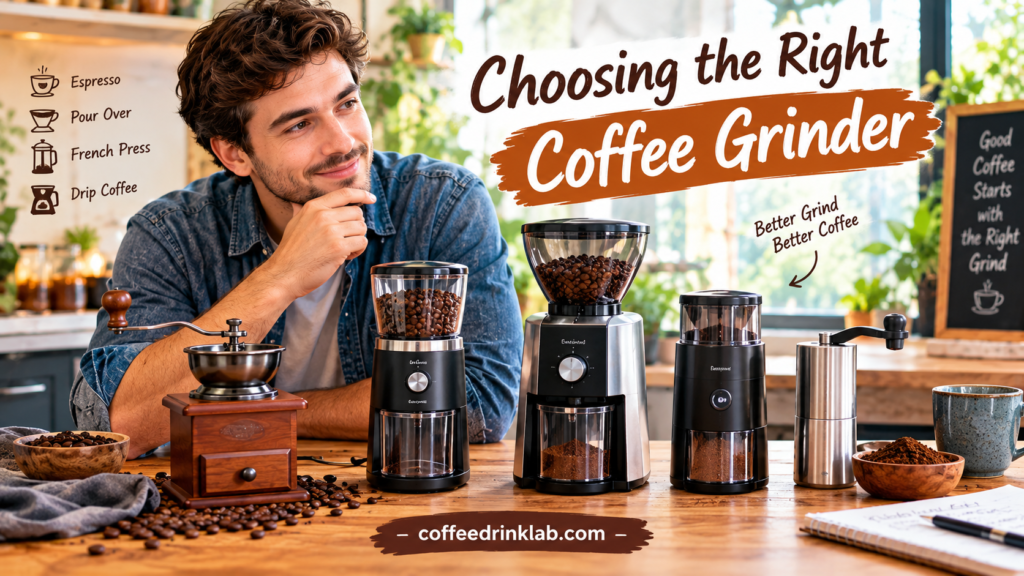
The grinder you use can be just as important as the grind size itself.
1. Blade Grinders
Blade grinders are affordable and easy to find. However, they often produce inconsistent particle sizes, which can lead to uneven extraction.
2. Burr Grinders
Burr grinders crush coffee beans uniformly, creating more consistent grounds. Consequently, they are considered the gold standard among serious coffee lovers.
Benefits of burr grinders:
- Consistent grind size
- Better extraction
- More brewing control
- Improved flavor quality
Common Mistakes When Using Different Types of Coffee Grounds
Even experienced coffee drinkers occasionally make grind-related mistakes.
Some of the most common include:
- Using espresso grounds in a drip machine
- Brewing French press coffee with fine grounds
- Using stale pre-ground coffee
- Ignoring grinder calibration
- Choosing grind size based only on appearance
Fortunately, a little experimentation can quickly help you find the perfect grind for your preferred brewing method.
The Final Talk
Understanding the different types of coffee grounds can completely transform your coffee experience. Whether you’re brewing a smooth cold brew, a rich French press, or a concentrated espresso, choosing the correct grind size ensures proper extraction and better flavor.
Ultimately, coffee is about exploration and enjoyment. As you experiment with various grind sizes, you’ll discover how dramatically they influence aroma, body, sweetness, and balance. Furthermore, investing in freshly ground coffee and matching the grind to your brewing method can elevate every cup. So the next time you brew coffee at home, pay close attention to your grind size you might be surprised by how much better your coffee tastes.
FAQs:
The main difference is particle size. Coarse grounds extract more slowly and usually work well for French press, while finer grounds extract more quickly and are commonly used for espresso. Choosing the correct size helps control extraction and flavor.
The main types of coffee grounds are extra coarse, coarse, medium-coarse, medium, medium-fine, fine, and extra fine. Each grind size is designed for different brewing methods, from cold brew and French press to drip coffee, pour-over, espresso, and Turkish coffee.
Medium grind is generally the best option for beginners because it works well with most drip coffee makers and automatic brewers. It is forgiving, versatile, and easy to find in stores.
Choose coffee grounds based on your brewing method. French press requires coarse grounds, espresso needs fine grounds, and drip coffee makers typically perform best with medium grounds. Matching the grind size to your brewer is the key to great coffee.
Absolutely. Home coffee enthusiasts can use every type of coffee ground as long as they have the appropriate brewing equipment. Many people even grind their own beans to achieve optimal freshness and flavor.
Discover More Blends
10 Types of Coffee with Milk You Must Try
Most Popular Types of Flavored Coffee
Two Types of Coffee







3 Comments