
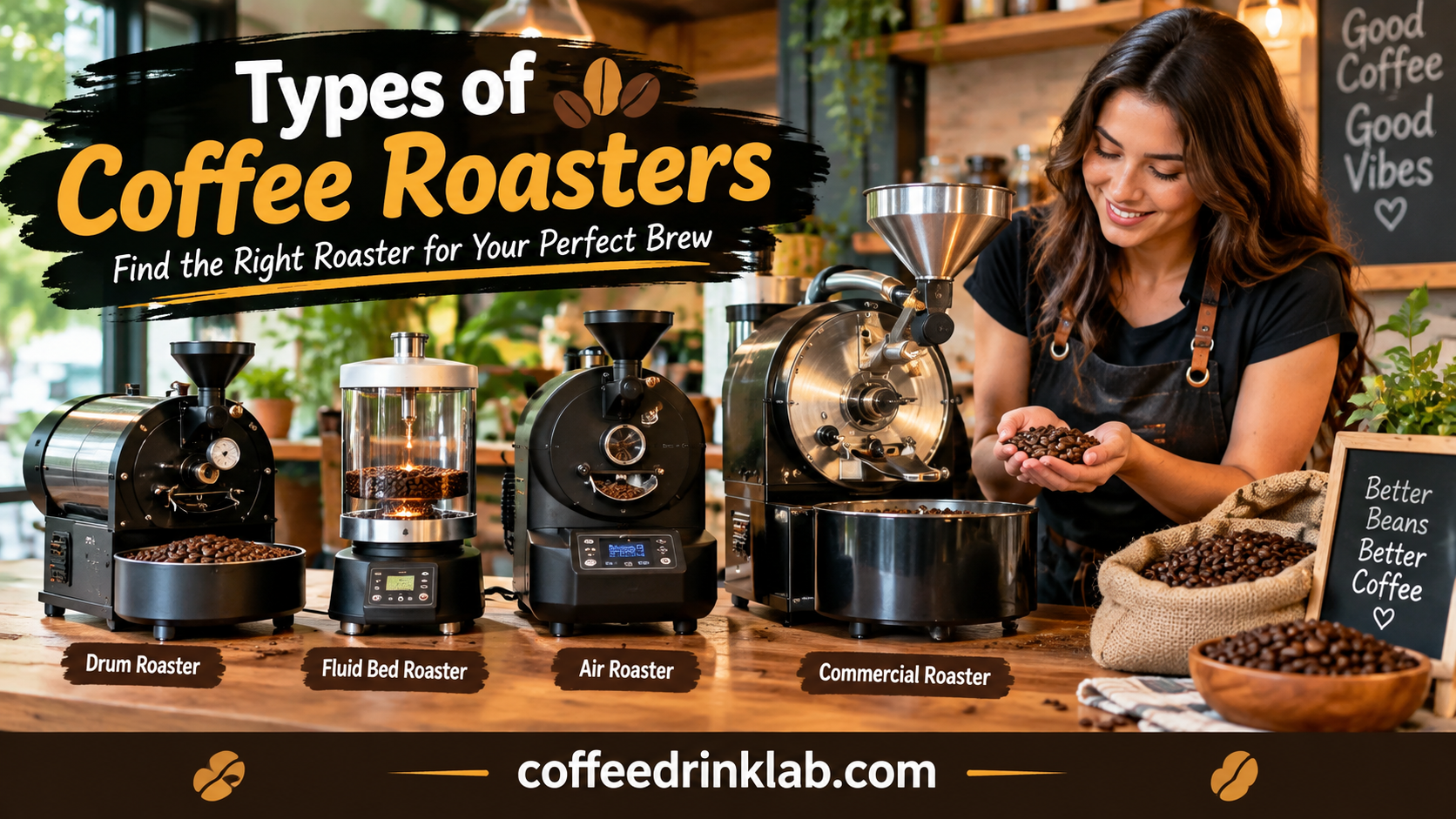
Types of Coffee Roasters
Coffee roasting is where the magic truly happens. Understanding the types of coffee roasters can help you choose the right equipment for your needs, whether you’re a home hobbyist experimenting with small batches or a professional roasting coffee for customers. Each roasting system uses heat and airflow differently, which can affect flavor, roast consistency, and overall control.
Understanding the types of coffee roasters available can help you choose the right equipment for your needs, whether you’re a hobbyist experimenting at home or a professional roasting beans for customers.
In fact, if you’re looking for the best types of coffee roasters for home and commercial roasting, knowing how each system works is an essential first step.
Why Coffee Roasters Matter
Roasting transforms raw green coffee beans into the flavorful beans used to brew espresso, drip coffee, French press, and other coffee drinks. Different roasting systems apply heat in different ways, which directly affects flavor development, consistency, and efficiency.
As a result, selecting the right roaster can influence everything from roast quality to operating costs. Furthermore, certain roasters are better suited for specific roast levels, including light roast, medium roast, and dark roast profiles.
8. Different Types of Coffee Roasters Explained
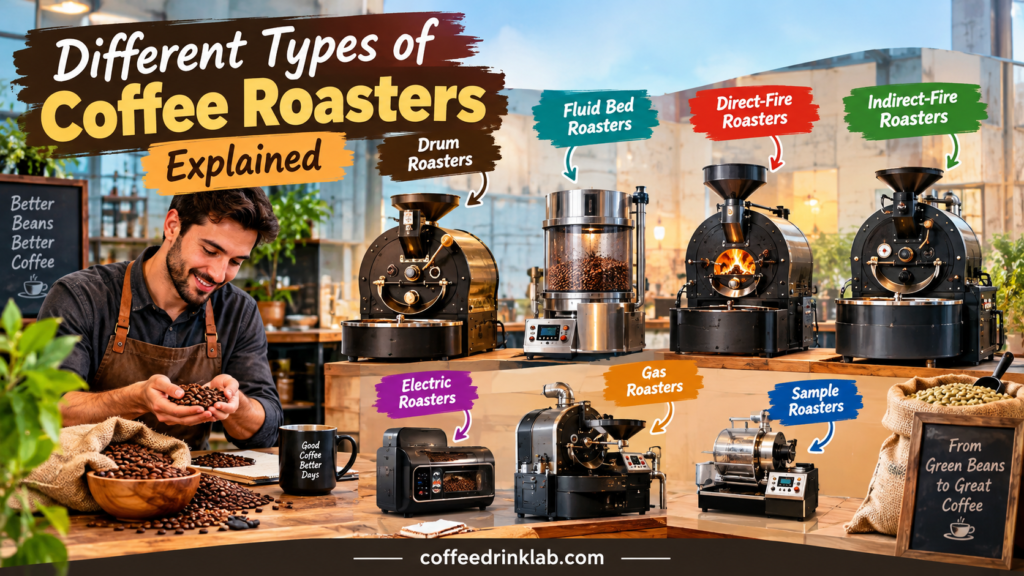
Coffee roasting equipment comes in several designs, and the different types of coffee roasters vary mainly by their heat source, airflow, roasting chamber, and level of control. Drum, fluid bed, direct-fire, indirect-fire, electric, gas, and sample roasters are commonly used for different roasting goals. Understanding these differences makes it easier to choose a machine for home roasting, specialty coffee production, or commercial use.
1. Drum Roasters
Drum roasters are among the most common and widely respected coffee roasting machines. They use a rotating metal drum that continuously tumbles coffee beans while heat is applied from below or around the drum.
Many specialty coffee roasters prefer drum roasting because it provides excellent control over heat application and roast development. Additionally, drum roasters often produce balanced flavor profiles with complex sweetness and body.
Key Features:
- Consistent heat distribution
- Excellent flavor development
- Suitable for light, medium, and dark roasts
- Available in home and commercial sizes
- Popular among specialty coffee roasters
2. Hot Air Roasters (Fluid Bed Roasters)
Hot air roasters use powerful streams of heated air to suspend and roast coffee beans. Instead of tumbling inside a drum, the beans float on hot air during roasting.
Because the beans are exposed directly to heated airflow, roasting happens more quickly. Consequently, fluid bed roasters often highlight bright acidity and origin characteristics, making them popular for single-origin coffees.
Key Features:
- Fast roasting times
- Clean, bright flavor profiles
- Reduced smoke production
- Easier maintenance
- Excellent for light roast coffee
3. Direct-Fire Roasters
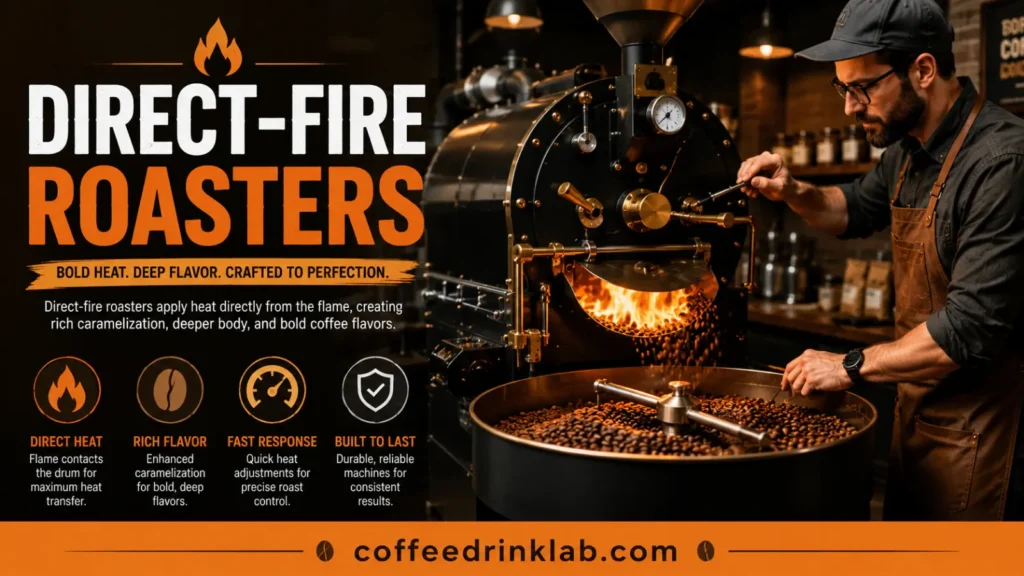
Direct-fire roasters apply heat directly from a flame to the roasting drum. This traditional roasting method has been used for decades and remains popular among artisan roasters.
Many coffee professionals appreciate the richer caramelization achieved through direct heat. However, direct-fire roasting requires careful monitoring to avoid scorching beans.
Key Features:
- Strong flavor development
- Enhanced caramelization
- Traditional roasting method
- Greater operator involvement
- Excellent for medium and dark roasts
5. Indirect-Fire Roasters
Unlike direct-fire systems, indirect-fire roasters separate the heat source from the roasting chamber. Heat circulates around the drum rather than directly contacting it.
As a result, roasting tends to be gentler and more uniform. Furthermore, indirect-fire systems provide precise temperature control, which is valuable when developing complex roast profiles.
Key Features:
- Even heat application
- Greater consistency
- Lower risk of scorching
- Excellent temperature control
- Popular among specialty coffee businesses
6. Electric Coffee Roasters
Electric roasters rely on heating elements instead of gas burners. They are becoming increasingly popular due to their ease of installation and environmentally friendly operation.
For home users especially, electric roasters offer convenience and precision. Meanwhile, commercial electric models continue to improve in power and capacity.
Key Features:
- Simple installation
- Precise temperature control
- Cleaner operation
- Suitable for indoor environments
- Popular for home roasting
7. Gas Coffee Roasters
Gas-powered roasters remain the industry standard for many commercial operations. They offer rapid heat adjustments and excellent roasting flexibility.
Most large-scale roasting companies use gas systems because they can efficiently handle substantial batch sizes while maintaining roast consistency.
Key Features:
- Fast heat response
- High roasting capacity
- Commercial-grade performance
- Excellent roast control
- Widely used in coffee businesses
8. Sample Roasters
Sample roasters are small machines designed specifically for evaluating green coffee beans before large-scale roasting.
Coffee importers, buyers, and professional roasters frequently use sample roasters to test beans from different origins, including arabica and robusta varieties.
Key Features:
- Small batch sizes
- Ideal for quality testing
- Precise profiling
- Used by coffee professionals
- Supports green bean evaluation
2. What Are the Main Two Types of Coffee Roasters?
When comparing coffee roasting systems, the main two types of coffee roasters are generally drum roasters and fluid bed roasters. These two designs differ mainly in how they transfer heat to the coffee beans.
1. Drum Roasters
Drum roasters tumble green coffee beans inside a heated rotating drum. They provide strong control over temperature and roast development, making them popular with specialty coffee roasters and commercial businesses.
2. Fluid Bed Roasters
Fluid bed roasters use heated air to suspend and circulate the beans during roasting. This method provides strong airflow and fast heat transfer, making these machines particularly useful for small-batch and home roasting.
The choice between the two depends on factors such as batch size, desired roast profile, available space, and the level of control you want during roasting.
2. Choosing a Roaster for Home or Commercial Use
Choosing between home and commercial equipment depends largely on your goals.
1. Home Coffee Roasters
Home roasting has become increasingly popular among coffee enthusiasts. Small-batch roasters allow users to enjoy freshly roasted coffee while experimenting with roast levels and flavor profiles.
Home users often prefer electric or fluid bed roasters because they are compact and easy to operate.
Best For:
- Coffee hobbyists
- Learning roast development
- Small batches
- Fresh daily coffee
2. Commercial Coffee Roasters

Commercial roasters are built for production, consistency, and scalability. They can process hundreds or even thousands of pounds of coffee each week.
Most importantly, commercial systems provide advanced controls that allow professionals to replicate roast profiles accurately.
Best For:
- Coffee shops
- Specialty roasters
- Wholesale businesses
- Large-scale production
Coffee Roaster Types at a Glance
| Roaster Type | Heat Method | Best For | Flavor Profile | Typical Users |
|---|---|---|---|---|
| Drum Roaster | Rotating heated drum | Balanced roasting | Rich and complex | Home & Commercial |
| Fluid Bed Roaster | Hot air circulation | Light roasts | Bright and clean | Home & Specialty |
| Direct-Fire Roaster | Direct flame | Darker roasts | Deep caramelization | Artisan Roasters |
| Indirect-Fire Roaster | Indirect heat | Consistency | Balanced and smooth | Specialty Roasters |
| Electric Roaster | Electric elements | Indoor roasting | Consistent | Home Users |
| Gas Roaster | Gas burners | Commercial roasting | Highly customizable | Commercial Roasters |
| Sample Roaster | Small-batch heating | Bean evaluation | Testing purposes | Professionals |
How to Choose the Right Coffee Roaster
The ideal roaster depends on your roasting goals, budget, and experience level.
If you’re new to roasting, electric and fluid bed roasters provide an excellent introduction. On the other hand, experienced users may appreciate the control offered by drum and gas-powered systems.
Additionally, consider factors such as:
- Batch size
- Fuel source
- Ventilation requirements
- Maintenance needs
- Budget
- Desired flavor profile
Most importantly, choose a machine that matches your roasting ambitions rather than simply selecting the largest or most expensive option.
The Final Talk
Understanding the various types of coffee roasters can make a huge difference when selecting roasting equipment. From traditional drum roasters to modern fluid bed systems, each design offers unique advantages and flavor outcomes. Whether you’re roasting a few ounces at home or managing a specialty coffee business, the right machine can help you achieve your desired roast profile consistently.
Ultimately, coffee roasting is both a science and an art. As you explore different roasting technologies, you’ll gain a deeper appreciation for how heat, airflow, and timing influence every cup. Furthermore, experimenting with various roasting methods can help you discover flavor notes that perfectly match your preferences. So don’t be afraid to explore, learn, and enjoy the roasting journey because every great cup of coffee starts with perfectly roasted beans.
FAQs:
Electric and fluid bed roasters are often the best choices for beginners. They are generally easy to operate, require less maintenance, and provide predictable roasting results. Additionally, many beginner-friendly models are compact and affordable.
Start by determining your roasting volume, budget, and experience level. Home users often benefit from smaller electric or fluid bed machines, while commercial operations typically require larger gas or drum roasters. Consider your preferred roast styles as well.
Yes, many coffee roasters are specifically designed for home use. Electric and fluid bed roasters are especially popular because they fit easily into home environments and require less ventilation than larger commercial systems.
Drum roasters are among the most widely used roasting machines, especially in specialty coffee shops and commercial roasting facilities. Fluid bed models are also popular with home roasting enthusiasts because they are compact and relatively simple to operate. The best option depends on batch size, roasting experience, available space, and the type of roast profile you want to create.
The main difference lies in how heat is applied to the beans. Drum roasters use conductive heat through a rotating drum, while fluid bed roasters use hot air. Direct-fire and indirect-fire systems further vary in how heat reaches the roasting chamber, affecting flavor development and consistency.
Discover More Blends
Types of Coffee Machine: Pros and Cons Guide







3 Comments