

Types of milk for Coffee: Dairy vs Plant-Based Coffee Milks
When people talk about coffee, they usually focus on beans, roast levels, or brewing methods. However, the types of milk for coffee you choose can completely transform your drink from a flat, thin cup to a rich café-style latte.
In fact, knowing what milk goes best with coffee can help you choose the right option for everything from a simple morning brew to a creamy latte. The best milk to put in coffee depends on the drink, flavor you prefer, and how much texture or foam you want.
Moreover, milk isn’t just a filler ingredient it shapes texture, sweetness, foam quality, and even how the coffee’s acidity feels on your palate. Whether you love cappuccinos, lattes, or iced coffee, choosing the right milk matters more than most people realize. So, let’s explore every major option in detail so you can confidently upgrade your daily brew.
Which Type of Milk Is Best for Coffee?
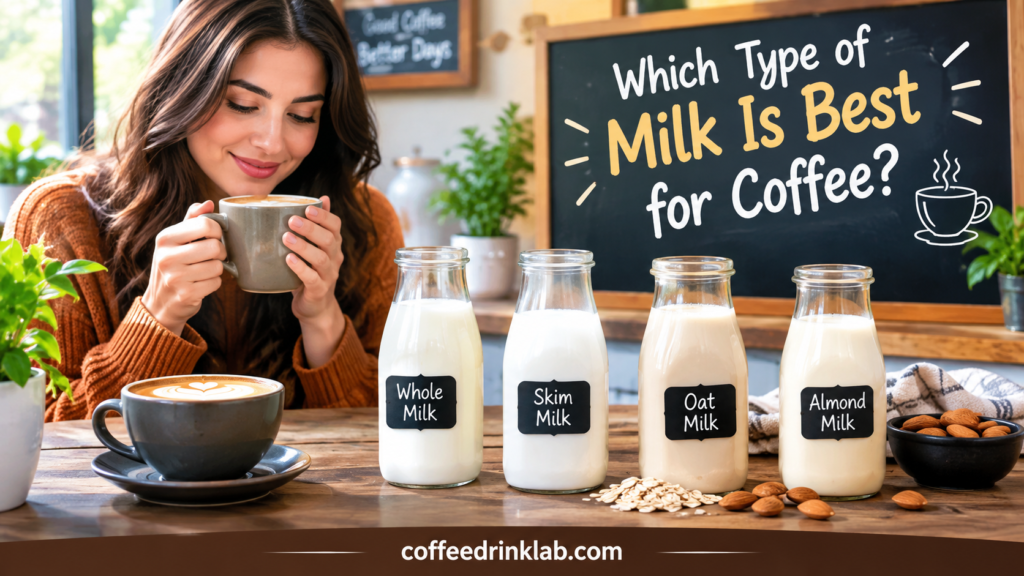
There is no single answer to which type of milk is best for coffee because the ideal choice depends on the coffee drink and the flavor you want. Whole milk is excellent for rich lattes and cappuccinos, Oat milk is the best milk for coffee, the best milk to put in coffee, the best milk for coffee machine, the best milk for coffee drinks, and the best milk for coffee with plant-based milk.
For everyday coffee, whole milk and oat milk are two of the easiest choices for a creamy texture. For iced drinks, almond or oat milk can work especially well. If you are choosing between dairy and plant-based options, consider both flavor and how the milk behaves when heated or frothed.
Best Types of Milk for Coffee Drinks at Home
The world of types of milk for coffee is much broader than just “whole or skim.” Today, coffee lovers in the US enjoy everything from classic dairy milk to plant-based alternatives designed for frothing and flavor balance.
Additionally, each milk behaves differently under heat, steam, and espresso acidity. Some create silky microfoam, while others add nutty or naturally sweet undertones. Let’s break them down one by one.
2. Whole Milk Rich, Creamy, and Café Classic
Whole milk is often considered the gold standard in coffee shops, and for good reason. It has a perfect balance of fat and protein, which creates a smooth texture and rich mouthfeel. As a result, it works beautifully in lattes and cappuccinos where creaminess is key.
Furthermore, whole milk enhances espresso sweetness without overpowering its natural flavor profile. If you enjoy a classic Starbucks-style latte at home, this is your go-to option.
Key details:
- Fat content: ~3.25%
- Best for: lattes, cappuccinos
- Froth quality: excellent
- Flavor: creamy and naturally sweet
1. What Is the Best Thick Milk for Coffee?
If you want thick milk for coffee, whole milk is one of the simplest choices because its higher fat content gives coffee a richer mouthfeel. Barista-style oat milk can also provide a creamy texture, especially in lattes. The exact thickness depends on the milk brand and whether you steam or froth it.
2. What Milk Is Best for a Flat White?
A flat white traditionally works best with smooth, creamy milk that can create fine microfoam. Whole milk is a classic choice because its fat and protein help produce a silky texture. Barista-style oat milk can also work well if you prefer coffee with plant-based milk.
2% Milk Balanced Everyday Choice
2% milk is one of the most commonly used types of milk for coffee in American households. It strikes a balance between richness and lightness, making it a versatile option for daily coffee drinks.
Meanwhile, it still produces decent foam, although not as thick or velvety as whole milk. However, many people prefer it because it feels lighter without losing too much creaminess.
Key details:
- Fat content: 2%
- Best for: drip coffee, lattes
- Froth quality: moderate
- Flavor: light creamy taste
Skim Milk Light but Less Creamy

Skim milk is ideal for those who want a low-calorie coffee option. However, it removes most of the fat, which affects texture and foam stability.
On the other hand, it still adds a slight sweetness and softens espresso bitterness. If you prefer a very light cup of coffee, skim milk can work, but it won’t give you café-style foam.
Key details:
- Fat content: almost 0%
- Best for: light coffee drinks
- Froth quality: weak
- Flavor: thin and mild
2. Oat Milk The Barista Favorite
Oat milk has exploded in popularity, especially in specialty coffee shops. Among all plant-based types of milk for coffee, it is known for its creamy texture and natural sweetness.
Moreover, barista-style oat milk is specifically designed to foam well, making it perfect for lattes and cappuccinos. It also blends smoothly with espresso without curdling.
Key details:
- Dairy-free: yes
- Best for: lattes, iced coffee
- Froth quality: excellent (barista blends)
- Flavor: slightly sweet, grainy smooth
1. What Milk Options Does Costa Coffee Offer?
Costa Coffee’s available milk options can vary by location and menu, so it is best to check the current menu at the specific Costa location. Common café milk choices can include dairy and plant-based alternatives.
2. Which Vegan Milk Is Best for Coffee?
For many coffee drinkers, oat milk is one of the best choices among vegan milks because it offers a creamy texture and naturally mild sweetness. A barista-style version is particularly useful for espresso drinks because it is formulated to steam and foam more easily.
1. Almond Milk Nutty and Light
Almond milk offers a lighter, nutty flavor that pairs well with mild coffee blends. However, it is thinner than dairy milk, which means foam stability can vary depending on the brand.
Additionally, unsweetened almond milk keeps your coffee low-calorie, while sweetened versions can add a dessert-like twist.
Key details:
- Dairy-free: yes
- Best for: iced coffee, light lattes
- Froth quality: low to moderate
- Flavor: nutty and slightly sweet
1. Which Milk Is Used for Cold Coffee?
Cold coffee can be made with almost any milk, but oat, whole, almond, and 2% milk are popular choices. Oat milk adds creaminess, almond milk provides a lighter nutty flavor, and whole milk creates a richer drink. For a refreshing iced coffee, choose the milk based on whether you prefer creamy, light, or slightly sweet flavors.
1. Soy Milk Protein-Rich Plant Option
Soy milk has been a long-standing alternative for coffee drinkers. It contains higher protein levels, which helps it behave more like dairy milk when steamed.
As a result, soy milk is one of the few plant-based options that can create stable foam for cappuccinos. However, some people notice a slight beany aftertaste depending on the brand.
Key details:
- Dairy-free: yes
- Best for: cappuccinos, lattes
- Froth quality: good
- Flavor: mild, slightly earthy
1. Soy Milk vs Dairy Milk Protein
When comparing soy milk vs dairy milk protein, both can contribute protein to a coffee drink, although the exact amount varies by product and serving size. Soy milk is often chosen as a higher-protein plant-based alternative, while dairy milk provides naturally occurring milk proteins. Check the nutrition label of your preferred brand if protein content is important to you.
Coconut Milk Tropical and Bold

Coconut milk adds a distinct tropical flavor that completely changes your coffee experience. While it may not suit traditional espresso drinks, it works beautifully in iced coffee and flavored lattes.
However, it can overpower delicate coffee beans, so pairing it with stronger roasts is usually best.
Key details:
- Dairy-free: yes
- Best for: iced coffee, flavored drinks
- Froth quality: low
- Flavor: creamy coconut taste
Lactose-Free Milk Same Taste, No Discomfort
Lactose-free milk is becoming increasingly popular among people who want traditional dairy taste without digestive issues. It behaves almost exactly like regular milk in coffee.
Therefore, it is one of the easiest switches for anyone exploring different types of milk for coffee without changing flavor expectations.
Key details:
- Dairy-free: no (treated dairy)
- Best for: all coffee drinks
- Froth quality: excellent
- Flavor: identical to regular milk
1. Types of Coffee With Milk
Different coffee drinks use milk in different amounts, so understanding these coffee variations with milk can make it easier to choose the right option.
- Latte: Espresso with a larger amount of steamed milk and a thin layer of foam.
- Cappuccino: Espresso with steamed milk and a thicker layer of foam.
- Flat white: Espresso combined with silky steamed milk and fine microfoam.
- Macchiato: Espresso with a smaller amount of milk or milk foam.
- Café au lait: Brewed coffee combined with warm milk.
- Iced coffee with milk: Chilled coffee served with cold milk, often over ice.
The amount and texture of milk can change the strength, sweetness, and mouthfeel of each drink. That is why the best milk for a flat white may not be the same choice you prefer for iced coffee.
1. Which Type of Coffee Has the Least Milk?
Among common milk-based coffee drinks, a macchiato generally contains much less milk than a latte or cappuccino. A traditional macchiato is primarily espresso with a small amount of milk or milk foam, so the coffee flavor remains much stronger.
1. Coffee Milk Comparison Chart
| Milk Type | Flavor Profile | Froth Quality | Best Use | Dairy-Free |
|---|---|---|---|---|
| Whole Milk | Creamy, rich | Excellent | Lattes, cappuccinos | No |
| 2% Milk | Balanced, light | Moderate | Everyday coffee | No |
| Skim Milk | Thin, mild | Weak | Light coffee | No |
| Oat Milk | Sweet, smooth | Excellent | Specialty lattes | Yes |
| Almond Milk | Nutty, light | Low–Moderate | Iced coffee | Yes |
| Soy Milk | Earthy, mild | Good | Cappuccinos | Yes |
| Coconut Milk | Tropical, bold | Low | Flavored drinks | Yes |
| Lactose-Free Milk | Classic dairy taste | Excellent | All coffee types | No |
1. Which Tastes Better: Dairy Milk or Plant-Based Milk?
There is no universal winner when asking which tastes better in coffee. Dairy milk usually provides a familiar creamy flavor, while oat milk adds mild sweetness and almond milk contributes a nutty note. Soy milk can have a more neutral or slightly earthy taste. Your coffee roast also matters, so the best approach is to try the same coffee with different milks and compare the flavor.
1. What Milk Is Used in Coffee Shops?
Coffee shops commonly offer whole milk, reduced-fat milk, oat milk, almond milk, and soy milk. The exact milk used in coffee shops varies by café and location, but whole milk remains a traditional choice for espresso-based drinks, while oat milk has become a popular plant-based option.
Many cafés also use barista-style plant milks because they are designed to steam, pour, and foam more consistently.
1. Is Fresh Milk Good for Coffee?
Yes, fresh milk for coffee can provide a naturally creamy taste and smooth texture, especially when paired with espresso or brewed coffee. Coffee with fresh milk works particularly well in lattes, cappuccinos, and simple milk coffee. For the best flavor, use fresh milk that is properly refrigerated and within its recommended use period.
Choosing the Best Milk for Your Coffee Style
When selecting from different types of milk for coffee, it really comes down to your personal taste and lifestyle. For instance, if you want café-style foam and richness, whole milk or oat milk is ideal.
However, if you’re focused on calories or dietary restrictions, almond or skim milk may suit you better. Meanwhile, soy and lactose-free milk offer a middle ground between texture and digestibility.
Milk vs Coffee: How the Balance Changes Your Drink
The balance between milk vs coffee affects both flavor and strength. More coffee creates a stronger, more pronounced flavor, while a larger amount of milk makes the drink creamier and softer. Espresso-based drinks such as flat whites, lattes, and cappuccinos use different milk-to-coffee ratios to create their distinctive textures and flavors.
What Is the Healthiest Milk for Coffee?
The answer to what is the healthiest milk for coffee depends on your nutritional preferences and dietary needs. Unsweetened almond milk is often a lighter option, while soy milk can provide more protein than many other plant-based choices. Dairy milk provides protein and other nutrients, while oat milk is popular for its creamy texture.
Check the nutrition label for calories, protein, added sugar, and other nutrients when comparing different products. An unsweetened version may be preferable if you want to limit added sugar.
The Final Talk
Understanding the types of milk for coffee can completely change how you enjoy your daily cup. In fact, the right milk doesn’t just add creaminess it enhances flavor, texture, and even the emotional comfort of your coffee ritual.
Moreover, whether you prefer dairy classics or plant-based alternatives, there is no single “best” choice only the one that fits your taste, health needs, and brewing style. So, take your time experimenting. Try oat milk in your latte, almond milk in your iced coffee, or whole milk in your cappuccino.
Ultimately, coffee is personal, and your milk choice is part of that journey. Once you explore different types of milk for coffee, you’ll start noticing how small changes create big improvements in every sip
FAQs:
A macchiato generally has much less milk than drinks such as lattes and cappuccinos. It uses espresso with only a small amount of milk or milk foam.
Oat milk is one of the most popular vegan milks for coffee because it provides a creamy texture and mild sweetness. Barista-style oat milk is particularly useful for lattes and other espresso drinks.
Whole milk is a classic choice for a creamy coffee, while oat milk is popular for plant-based drinks. Almond and soy milk can also work well depending on the coffee and flavor you prefer.
Whole milk is a traditional choice for a flat white because it creates smooth, silky microfoam. Barista-style oat milk can also produce good results for a plant-based version.
There is no single healthiest choice for everyone. Compare nutrition labels and consider factors such as protein, added sugar, calories, and your dietary preferences when choosing milk for coffee.
Discover More Blends
Types of Coffee Machine: Pros and Cons Guide
Types of Coffee Roasters
Chart Types of Coffee Beans: Complete Bean Guide







7 Comments