
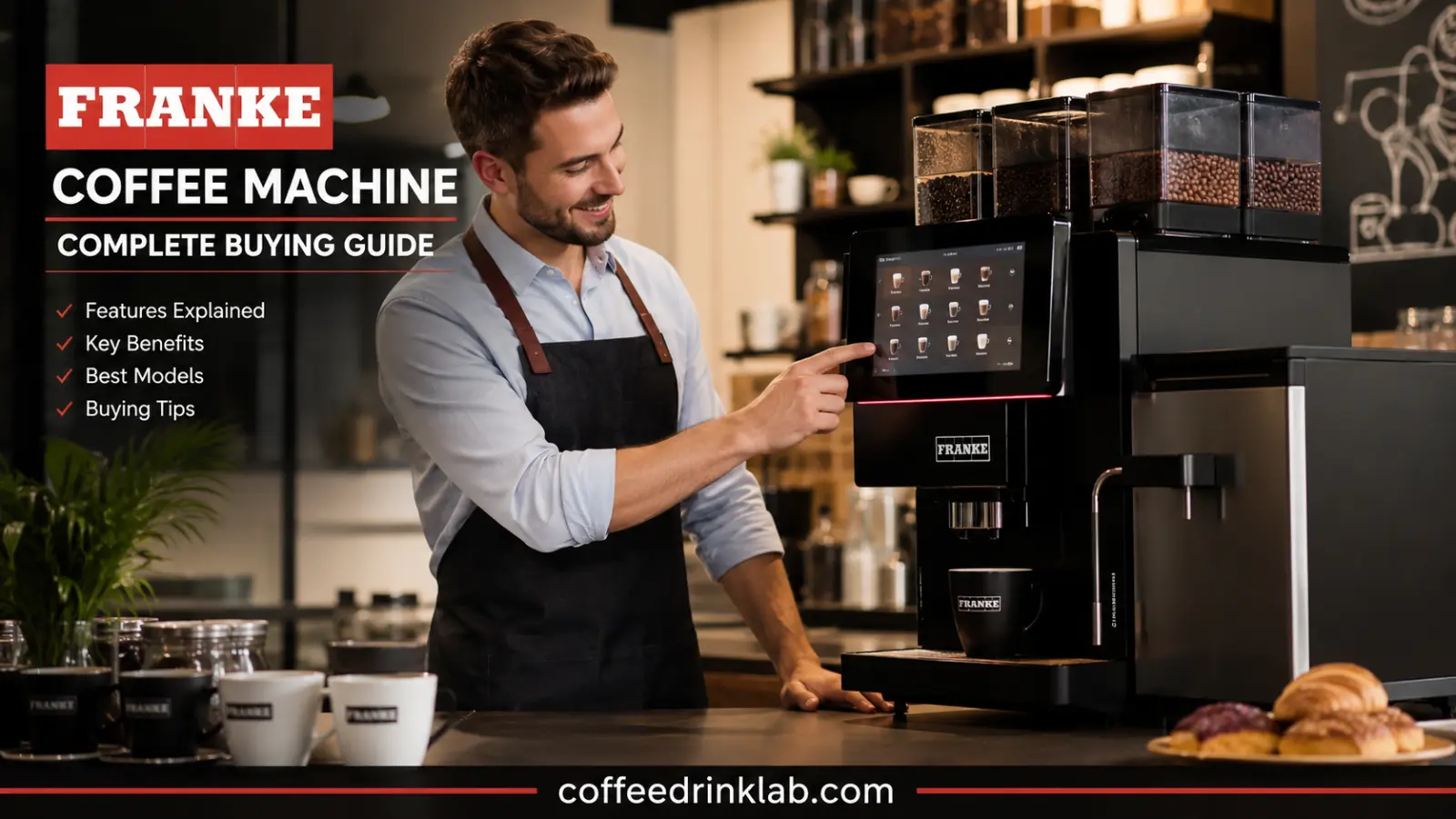
Franke Coffee Machine: Complete Buying Guide
A Franke coffee machine is a fully automatic coffee system designed to make consistent espresso, coffee, milk-based beverages, and other specialty drinks with minimal manual effort. Depending on the model and configuration, a Franke automatic coffee machine can be used in restaurants, hotels, cafés, offices, self-service areas, and other professional environments.
If you are researching Franke coffee machines, comparing a Franke espresso machine with other commercial equipment, looking for a Franke coffee machine for home use, or checking the latest A600, A800, and A1000 options, the range can feel overwhelming. This guide covers models, commercial and home considerations, installation requirements, operating instructions, maintenance, cleaning, troubleshooting, prices, parts, service, and buying advice.
In this guide, we’ll break down the main models, features, cleaning, troubleshooting, pricing, service, and buying considerations so you can choose with confidence.
1. What Is a Franke Coffee Machine?
Franke Coffee Systems specializes in professional coffee equipment, including fully automatic and semi-automatic systems designed for different beverage programs and operating environments. A Franke coffee machine can automate much of the process involved in grinding, brewing, milk preparation, and beverage dispensing.
You may also see these products described as Franke espresso machines, Franke automatic coffee machines, or simply Franke coffee systems. The terminology depends on the model and the type of drinks it is designed to prepare.
For businesses, the main advantage is consistency. Staff can serve repeatable beverages while adjusting menus, milk options, grinders, powders, flavors, and other configurations depending on the machine.
Franke’s current portfolio includes models such as the A300, A400, A600, A800, A1000, SB1200, and S700, although availability and configurations can vary by market.
1. Franke Coffee Machine vs. Franke Espresso Machine
The terms are sometimes used interchangeably, but they can describe different types of equipment. A fully automatic Franke system can handle much of the preparation process automatically, while a Franke espresso machine can refer to equipment designed around espresso preparation and, in some cases, more hands-on barista operation.
Before buying, check the exact model rather than relying only on the phrase “Franke coffee maker.” Specifications, milk systems, electrical requirements, capacity, and intended use can differ considerably between machines.
3. Best Franke Commercial Coffee Machine for Business Use
If you are searching for a Franke commercial coffee machine, the best model depends on your expected drink volume, menu, available counter space, milk requirements, and operating environment. Franke offers modular systems for restaurants, hotels, cafés, self-service areas, convenience stores, and other professional settings.
The current range includes the A600 and A800 in the New A Line, along with established models such as the A1000 and other Coffee Systems solutions. Franke describes the new A600 as a mid- to high-volume solution, while the new A800 is designed for higher-demand environments.
1. Franke A600: Features & Best Use
The Franke coffee machine A600 is a strong option for businesses that want a broad specialty-coffee menu while keeping operation relatively straightforward. The US model features an 8-inch color touchscreen, customizable beverage menus, an adjustable coffee outlet, and optional solutions for milk and iced coffee.
For self-service environments, the A600 is particularly interesting because customers can select drinks themselves. Meanwhile, operators can configure the machine around different beans, milk options, and beverage preferences.
Best suited for:
- Restaurants and cafés
- Hotels and breakfast areas
- Self-service stations
- Businesses wanting specialty drinks
- Moderate-volume coffee service
- The new Franke A600 coffee machine is part of Franke’s New A Line and is positioned for mid- to high-volume environments. Depending on configuration, it can support up to three grinders, two powder hoppers, multiple milk options, and up to 200 cups per day. Franke also lists iQFlow™, a 10.4-inch touchscreen, FrankeOS, and FrankeConnect among its features.
- This means buyers should distinguish between the current New A600 and older A600 configurations when comparing specifications or looking at a used Franke machine.
2. Franke A800 Coffee Machine
The A800 is positioned for higher-volume operations where speed and variety matter. Franke describes it as a professional machine capable of handling up to about 250 cups per day, depending on configuration and operating conditions.
Furthermore, its multiple brewing and milk capabilities make it useful when several drink orders need to be handled efficiently. It is therefore a better fit for busy hospitality and food-service environments than a typical household machine.
3. Franke Coffee Machine A1000
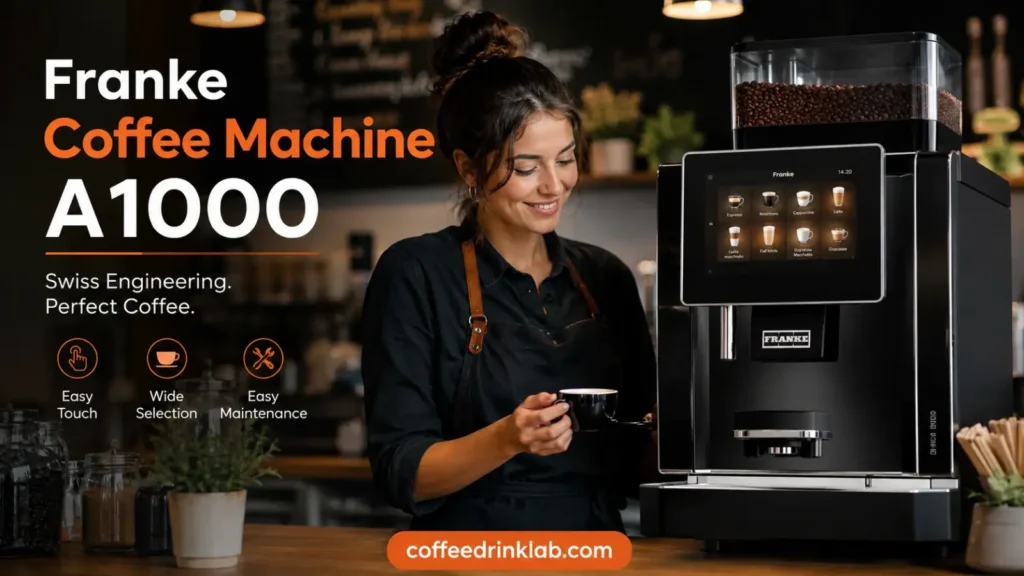
The Franke coffee machine A1000 sits toward the premium end of the fully automatic range. It combines iQFlow™ extraction, FoamMaster™ milk technology, an integrated CleanMaster cleaning system, and a 10.4-inch touchscreen. Depending on configuration, it can include additional grinders, milk options, and a Flavor Station.
Franke states that the A1000 can produce up to 300 cups, making it particularly relevant to demanding commercial environments.
Why consider the A1000?
- Large beverage variety
- Premium milk-based drinks
- Multiple bean options
- Advanced customization
- Automated cleaning
- High-volume commercial use
3. A600 vs. A800 vs. A1000: Which Fits You?
When comparing these popular models, capacity is only one part of the decision. You should also consider touchscreen size, customization, milk systems, cleaning technology, and the type of business you operate.
| Model | Best for | Key strength | Approx. daily capacity* |
|---|---|---|---|
| A600 | Restaurants & self-service | Versatility | Up to 200 cups |
| A800 | Busy hospitality | High-volume multitasking | Up to 250 cups |
| A1000 | Premium commercial service | Maximum customization | Up to 300 cups |
*Capacity depends on model, configuration, application, and operating conditions. Current Franke specifications support these approximate figures.
As a result, the A600 can make sense when flexibility and simplicity are priorities, while the A800 is attractive for heavier workloads. On the other hand, the A1000 is worth considering when premium customization and a larger beverage program justify the additional investment.
1. Is a Franke Coffee Machine Suitable for Home Use?
A Franke coffee machine for home use can sound appealing to coffee enthusiasts who want automated espresso and specialty beverages, but buyers should first check the intended application of the exact model.
Many Franke Coffee Systems products are designed around professional environments rather than ordinary household kitchens. That means a home buyer needs to consider counter space, electrical requirements, water connections, drainage, milk cooling, ventilation, noise, cleaning, and local service support.
A professional Franke coffee maker may offer far more capacity and customization than a household user actually needs. If you only prepare a few coffees each morning, a smaller consumer machine may be more practical.
Before buying a Franke machine for home, check:
- Intended market and application
- Electrical requirements
- Water and drainage requirements
- Machine dimensions
- Counter space
- Milk-system configuration
- Cleaning requirements
- Local service availability
- Replacement parts availability
The important point is that “can make coffee at home” and “designed for normal home use” are not necessarily the same thing.
2. Franke Coffee Machine Installation Requirements
Before purchasing or installing a Franke coffee machine, confirm the exact requirements for the model and configuration. Professional machines can require more planning than a standard countertop coffee maker.
Depending on the model, installation may involve electrical supply, water connection, drainage, counter clearance, ventilation, milk cooling equipment, and sufficient space for operators to access the machine.
For example, Franke’s New A Line documentation lists different electrical configurations for the A600 and A800, showing why buyers should never assume that every Franke machine has the same installation requirements.
3. Installation Checklist
Before installation, confirm:
- Electrical connection and voltage
- Water supply requirements
- Drainage requirements
- Available counter space
- Machine dimensions and clearance
- Milk cooling requirements
- Bean and powder storage space
- Cleaning and waste access
- Local service access
- Model-specific installation instructions
Always use the documentation for your exact machine and configuration. Installation requirements can vary between models and markets.
What Determines the Price?
A automatic beverage system for home is a different proposition from buying a typical consumer espresso machine. Many Franke Coffee Systems models are designed primarily around professional applications, so home buyers should carefully check the intended market, electrical requirements, dimensions, installation needs, and service availability before purchasing.
For a household, the biggest advantage would be automation and drink variety. However, a professional system can be unnecessary if you only need a few espresso drinks each morning.
Before buying one for home, consider:
- Available counter and installation space
- Power and water requirements
- Milk-system requirements
- Cleaning responsibilities
- Local service availability
- Cost of replacement parts and consumables
In other words, don’t choose a commercial machine simply because it has more features. Choose it because those features solve a real need.
Franke Coffee Machine Price and What Affects It
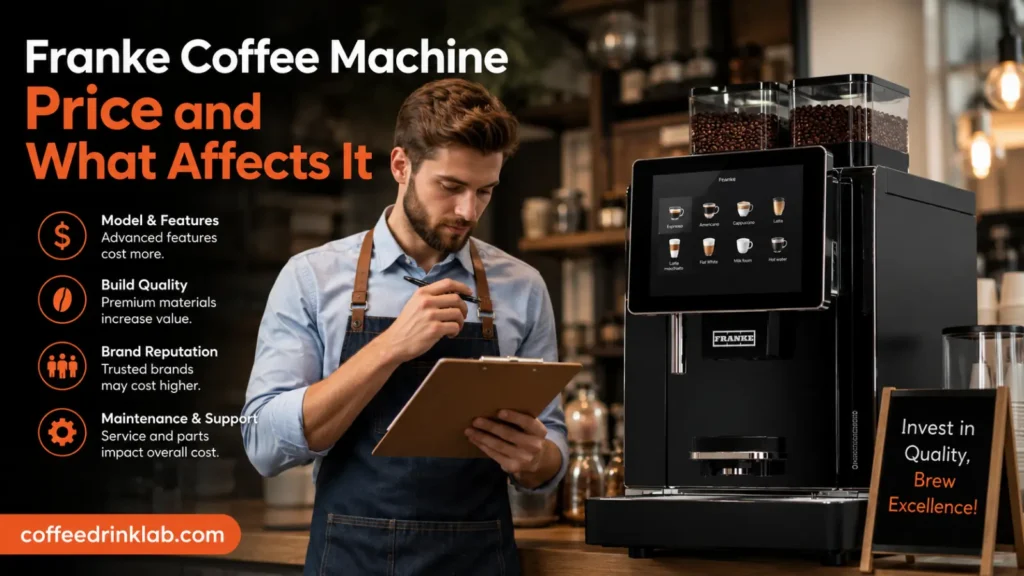
There isn’t one universal Franke coffee machine price because the final cost can vary considerably by model, configuration, accessories, installation, market, and dealer. A machine equipped with advanced milk technology, additional grinders, cooling equipment, or flavor systems will naturally have a different price from a simpler configuration.
Moreover, commercial buyers should look beyond the initial purchase price. Installation, maintenance, cleaning products, service contracts, water treatment, and replacement Franke coffee machine parts can all contribute to the total cost of ownership.
For that reason, ask a dealer for a configuration-specific quote rather than relying on a generic online price.
Franke Coffee Machine for Sale: New or 2nd Hand?
Searching for a Franke coffee machine for sale can lead to new machines, refurbished equipment, and used commercial units. Before purchasing, identify the exact model and configuration rather than relying only on the seller’s description.
For a used Franke machine, check the model number, serial information, service history, cleaning records, grinder condition, milk-system condition, operating hours if available, and availability of replacement parts.
Also confirm whether the machine can be installed and serviced in your location. A lower purchase price is not necessarily a better deal if the equipment requires expensive repairs, specialized installation, or difficult-to-source parts.
Before purchasing a used unit, check its model number, age, service history, cleaning records, condition of the grinder and milk system, and availability of replacement parts. Additionally, ask whether the seller can demonstrate the machine operating correctly.
A used machine can be a reasonable option when its history is documented and professional servicing is available. Otherwise, a lower purchase price may not remain a bargain after repairs and installation.
1. Franke Coffee Machine Maintenance and Cleaning
Regular Franke coffee machine maintenance helps protect beverage quality, hygiene, and reliable operation. Cleaning is only one part of maintenance; operators should also monitor milk systems, brewing components, grinders, waste areas, water treatment, and other components according to the machine’s documentation.
1. Franke Coffee Machine Cleaning Routine
Regular Franke coffee machine cleaning may include automated cleaning programs as well as manual care of components that come into contact with milk, coffee, water, or waste.
A practical routine includes:
- Run the prescribed automatic cleaning cycle.
- Clean milk-contact components as instructed.
- Empty waste and drip containers.
- Keep bean and powder areas clean and dry.
- Follow the recommended water-treatment procedure.
- Complete required descaling procedures.
- Arrange professional maintenance when required.
Franke’s current machines can offer cleaning systems such as EasyClean and CleanMaster depending on the configuration.
Never substitute household cleaning products for the products or procedures specified for your exact machine.
1. Franke Coffee Machine Troubleshooting: Common Problems
Franke coffee machine troubleshooting usually starts with the machine’s display because modern models can provide alerts or instructions. A machine that will not make a drink may have a simple issue involving water, beans, waste containers, milk supply, cleaning requirements, or an active warning.
If the machine stops unexpectedly, check the display message first. Then confirm that essential supplies and removable components are correctly positioned. If an error continues after following the machine’s approved instructions, professional Franke coffee machine service is the safer next step.
1. How to Restart Franke Coffee Machine
If you need to know how to restart a automatic coffee system, use the normal shutdown and startup procedure specified for your exact model. The procedure can vary between machines, so the Franke machine manual is the best source for model-specific instructions.
Generally, avoid repeatedly switching the machine on and off when it is displaying a serious fault. Instead, read the displayed message, follow the recommended procedure, and contact authorized service if the problem remains.
Franke Coffee Machine Manual and Parts
A Franke coffee machine manual is especially useful when you need information about cleaning cycles, warnings, settings, maintenance, and operating procedures. Franke provides product brochures, specifications, and other documentation through its Coffee Systems resources.
Likewise, commercial coffee machine parts should be sourced through appropriate service or parts channels for the exact model. This matters because components and configurations can differ between machines.
Keeping the model and serial information available can make service conversations much easier.
When looking for Franke coffee machine parts, identify the exact model and configuration first. Components can vary between different Franke machines and versions, so ordering by appearance alone can lead to compatibility problems.
Likewise, Franke coffee machine service is especially important for commercial operators because equipment downtime can interrupt beverage sales. Keep records of cleaning, maintenance, error messages, and previous service work so technicians can diagnose problems more efficiently.
Franke Coffee Machine Service and Support
Professional automatic beverage system service becomes particularly important for commercial operators because downtime can quickly affect customers and sales. Franke says its global service network supports coffee businesses with maintenance and technical assistance.
For US customers, Franke’s Coffee Systems site currently lists North American customer service hours of Monday through Friday, 7 a.m. to 5 p.m., with a customer-service phone number on its A600 product page.
When requesting service, provide the exact model, serial number, displayed error, recent cleaning or maintenance activity, and a clear description of what happened.
Franke Coffee Machine News and New Models
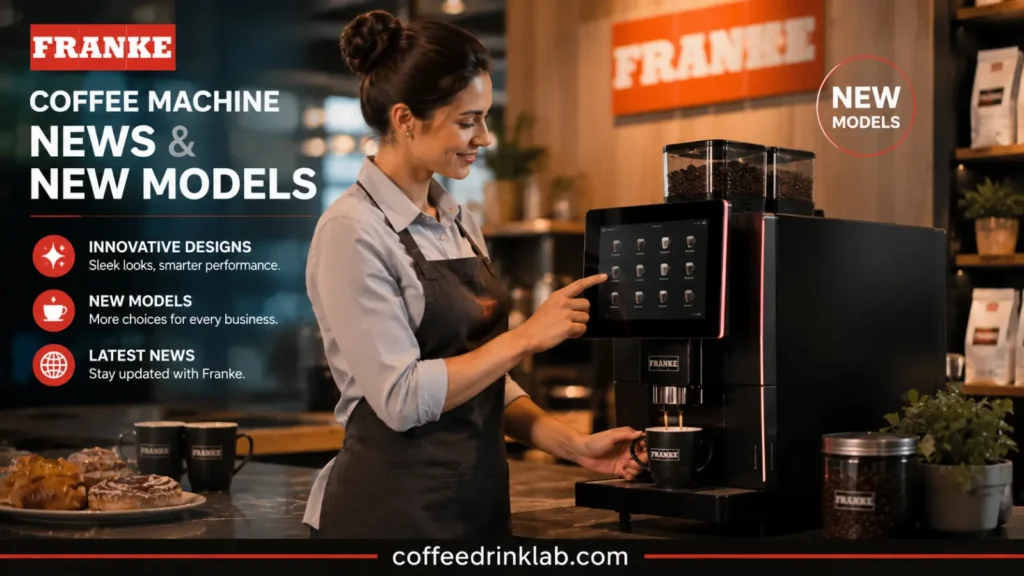
If you follow Franke coffee machine news, one of the most important recent developments is the New A Line. Franke introduced the next generation of its fully automatic coffee machines with the new A600 and A800, built on a shared platform with updated technology, connectivity, modularity, and serviceability.
In 2026, Franke continued promoting the New A Line across different markets and events. Its current US Coffee Systems portfolio highlights the A1000 FLEX, A800 Fresh Brew, A600, A400, A300 Fresh Brew, and other professional solutions.
The New A Line has also received design recognition in 2026, including an iF Design Award for the product design of the new A600 and A800.
Because Franke offers both newer and established versions of some models, buyers should check the exact product name, configuration, market, and documentation before comparing specifications.
For anyone researching Franke coffee machine news, this distinction between the New A Line and older configurations is particularly important when comparing an A600 or A800.
How to Choose the Right Franke Coffee Machine
Choosing a Franke machine becomes much easier when you work backward from your coffee program. First, estimate how many drinks you serve during your busiest period. Next, decide whether customers need espresso, cappuccino, latte, iced coffee, flavored drinks, multiple bean choices, or different milk options.
Then consider:
- Volume: Match capacity to your busiest service periods.
- Menu: Make sure the machine supports your desired drinks.
- Milk: Consider dairy and non-dairy requirements.
- Space: Measure the counter and surrounding service area.
- Cleaning: Understand daily and periodic maintenance.
- Service: Confirm support and parts availability locally.
- Budget: Calculate purchase and ongoing operating costs.
Most importantly, don’t judge a machine by its feature list alone. The best choice is the one that fits your workflow and consistently delivers the drinks your customers actually order.
The Final Talk
A Franke coffee machine can be a powerful choice when consistent coffee, automation, customization, and efficient service matter. The A600, A800, and A1000 each target different commercial needs, while used equipment and home applications require more careful consideration of installation, maintenance, and service.
Whether you’re comparing Franke coffee machine price, researching an A1000, looking for a manual, or troubleshooting an existing unit, the right approach is to match the machine to your volume, menu, space, and long-term operating needs.
Ultimately, don’t buy simply because a machine looks impressive. Compare its features with your real coffee routine, investigate service availability, and understand cleaning requirements before committing. With that information in hand, you can choose a Franke system more confidently and build a coffee setup that delivers consistent results cup after cup.
FAQs:
The A600, A800, and A1000 are among the best-known Franke fully automatic models. Their capabilities differ, with the A600 emphasizing versatility, the A800 targeting higher-volume multitasking, and the A1000 offering extensive customization and premium features.
Check the machine’s intended application, daily capacity, electrical and water requirements, dimensions, milk system, cleaning requirements, service availability, parts support, and total ownership cost.
For a commercial beginner, the A600 can be a sensible starting point because it combines automation, a customizable menu, and self-service capabilities. However, the right choice still depends on expected volume and required beverages.
Operating instructions should be obtained for the exact Franke model and configuration. Product documentation can include information about operation, cleaning, maintenance, warnings, and technical specifications.
Franke coffee machines are commonly used in professional environments such as restaurants, hotels, cafés, self-service areas, offices, and other businesses that need consistent automated coffee preparation.
Discover More Blends
Vertuo Coffee Pods: Best Picks & Buying Guide
Meemaw Fuel Coffee: Owner, Review, Where to Buy & Net Worth
Best Starbucks Coffee: 10 Great Picks







7 Comments