
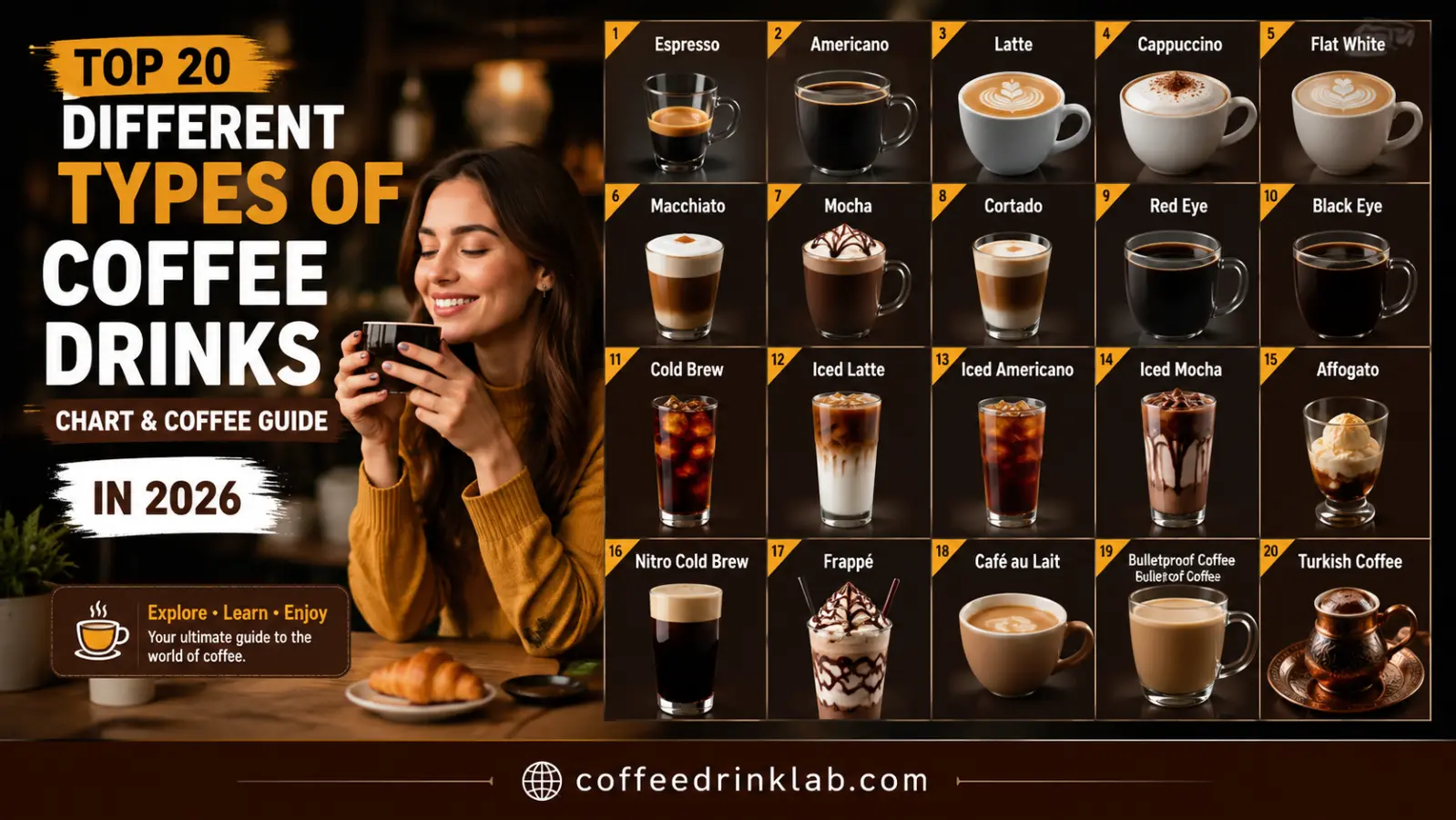
Top 20 Different Types of Coffee Drinks Chart & Coffee Guide in 2026
Coffee menus can feel confusing, especially when you’re faced with dozens of espresso-based and milk-based beverages. A types of coffee drinks chart makes it easy to understand the differences between popular coffee drinks, their ingredients, and their flavor profiles.
Whether you’re looking for a coffee drink chart, comparing different types of coffee drinks, or searching for a simple coffee drinks explained chart, this guide will help you choose the perfect beverage.
You’ll also discover a detailed coffee drink types chart, an easy-to-read coffee types chart, and tips for ordering coffee like a pro.
How Many Types of Coffee Are There?
Many people ask, how many types of coffee are there? The answer depends on whether you’re talking about coffee beans, brewing methods, or coffee drinks. There are more than 100 coffee drink variations worldwide, but most cafés serve around 20–30 popular types of coffee. Coffee can also be grouped into different categories, including coffee beans, black coffee, milk coffee, iced coffee, and specialty drinks.
What Are the 12 Types of Coffee?
If you’re wondering what are the 12 types of coffee, these are the most popular coffee drinks enjoyed in cafés around the world. While there are dozens of coffee varieties, these twelve are considered the classics because of their unique flavors, ingredients, and brewing styles. Learning about these different types of coffee makes it easier to choose the perfect drink based on your taste preferences.
1. Espresso
A concentrated coffee made by forcing hot water through finely ground coffee beans. It serves as the base for many other coffee drinks.
2. Americano
An Americano is made by adding hot water to espresso, creating a smoother black coffee with a less intense flavor.
3. Latte
A latte combines espresso with steamed milk and a thin layer of foam, making it one of the most popular coffee with milk types.
4. Cappuccino
Cappuccino contains equal parts espresso, steamed milk, and milk foam, offering a rich and balanced flavor.
5. Flat White
Originating from Australia and New Zealand, a Flat White uses espresso with velvety microfoam for a stronger coffee taste than a latte.
6. Macchiato
A Macchiato is an espresso “marked” with a small amount of milk foam, giving it a bold coffee flavor.
7. Mocha
Mocha combines espresso, steamed milk, and chocolate syrup, creating a sweet coffee that’s perfect for chocolate lovers.
8. Cortado
A Cortado is made with equal parts espresso and steamed milk, resulting in a smooth and balanced drink.
9. Cold Brew
Cold Brew is prepared by steeping coarse coffee grounds in cold water for 12–24 hours, producing a naturally smooth and less acidic coffee.
10. Iced Latte
An Iced Latte mixes espresso, cold milk, and ice for a refreshing version of the classic latte.
11. Affogato
Affogato is a coffee dessert made by pouring a shot of hot espresso over vanilla ice cream.
12. Red Eye
A Red Eye combines brewed coffee with one shot of espresso, making it one of the strongest and most caffeinated coffee drinks.
What Are the Different Types of Coffee?
Coffee comes in many varieties, and understanding the different types of coffee can help you choose the perfect cup for your taste and brewing style. If you’re wondering what are the different types of coffee or what types of coffee are there, coffee is generally divided into several major categories based on how it is prepared and served. These include espresso-based coffee, black coffee, milk coffee, cold coffee, flavored coffee, and specialty coffee. Each category offers a unique flavor, texture, and coffee experience.
Espresso-Based Coffee
Espresso-based coffee is made using one or more shots of espresso as the foundation. Popular drinks in this category include Espresso, Americano, Latte, Cappuccino, Flat White, Macchiato, Cortado, and Mocha. These are some of the most common types of coffee drinks found in cafés around the world.
Black Coffee
Black coffee contains no milk or cream, allowing the natural flavor of the coffee beans to stand out. Espresso, Americano, Long Black, Drip Coffee, and Pour-Over Coffee are all popular black coffee options. They are ideal for people who enjoy a bold and rich coffee taste.
Milk Coffee
Milk coffee is one of the most popular choices for beginners because it has a smooth and creamy flavor. Common coffee with milk types include Latte, Cappuccino, Flat White, Café au Lait, Cortado, and Breve. These milk coffee types differ mainly in the amount of steamed milk and milk foam used in each drink.
Cold Coffee
Cold coffee is perfect for warm weather and offers a refreshing alternative to hot beverages. Popular options include Cold Brew, Iced Latte, Iced Americano, Iced Mocha, Nitro Cold Brew, and Frappé. These drinks are served chilled while maintaining rich coffee flavors.
Flavored Coffee
Flavored coffee combines coffee with syrups, spices, or chocolate to create sweet and aromatic beverages. Favorites include Vanilla Latte, Caramel Latte, Hazelnut Coffee, Pumpkin Spice Latte, and Mocha. These drinks are ideal for coffee lovers who enjoy a touch of sweetness.
Specialty Coffee
Specialty coffee is made from high-quality coffee beans that are carefully grown, roasted, and brewed to highlight their unique flavors. Single-origin coffee, pour-over coffee, and premium espresso drinks all fall into this category, offering a more refined coffee experience.
Types of Coffee Drinks Chart: Quick Reference Guide
The following chart provides a clear overview of the most common coffee beverages found in American coffee shops.
| Coffee Drink | Espresso Shots | Milk | Foam | Flavor Profile | Best For |
|---|---|---|---|---|---|
| Espresso | 1-2 | No | No | Strong, concentrated | Pure coffee lovers |
| Americano | 1-2 | No | No | Smooth black coffee | Those who enjoy black coffee |
| Latte | 1-2 | Steamed milk | Light foam | Creamy and mild | Beginners |
| Cappuccino | 1-2 | Steamed milk | Thick foam | Rich and balanced | Foam lovers |
| Flat White | 2 | Steamed milk | Thin microfoam | Velvety and strong | Espresso enthusiasts |
| Macchiato | 1-2 | Small amount | Little foam | Bold with slight creaminess | Strong coffee drinkers |
| Mocha | 1-2 | Steamed milk | Light foam | Chocolatey and sweet | Dessert coffee fans |
| Cortado | 1-2 | Equal milk | Minimal | Balanced and smooth | Medium-strength drinkers |
| Red Eye | Brewed coffee + espresso | Optional | No | Extra strong | High caffeine seekers |
| Affogato | 1 | Ice cream | No | Sweet and indulgent | Dessert lovers |
Understanding this types of coffee drinks chart makes it much easier to navigate coffee shop menus and discover new favorites.
Types of Coffee Beans
Many readers confuse coffee drinks with coffee beans. The different types of coffee beans include:
Arabica
The world’s most popular coffee bean, known for its smooth, sweet flavor.
Robusta
Higher in caffeine with a stronger, more bitter taste.
Liberica
Rare beans with a fruity, floral aroma.
Excelsa
A unique variety often blended with Liberica for extra complexity.
Different Types of Coffee Makers
Coffee isn’t just about drinks it’s also about brewing equipment. Some of the most common different types of coffee makers include:
- Drip Coffee Maker
- French Press
- Espresso Machine
- AeroPress
- Pour Over
- Moka Pot
- Percolator
- Cold Brew Maker
- Single-Serve Pod Machine
Each brewer creates a unique flavor and body.
Different Types of Coffee Drinks Explained
Most coffee beverages begin with espresso. Espresso is a concentrated coffee brewed by forcing hot water through finely ground coffee beans under pressure.
Because espresso serves as the foundation for many drinks, changing the amount of milk, foam, or water creates entirely different beverages. As a result, a simple espresso shot can transform into a latte, cappuccino, flat white, or americano.
Espresso
Espresso is the heart of modern coffee culture. It delivers intense flavor, rich aroma, and a concentrated caffeine experience in a small serving.
Key Features:
- Strong flavor profile
- No milk or water added
- Rich crema on top
- Base for many coffee drinks
Americano
An americano combines espresso with hot water. This creates a smoother drink that resembles traditional black coffee while preserving espresso’s rich flavor notes.
Many people who enjoy black coffee choose an americano because it offers depth without the heaviness of milk-based drinks.
Key Features:
- Espresso plus hot water
- Less intense than espresso
- Popular morning coffee option
- Low calorie beverage
Latte
A latte is one of America’s most popular coffee drinks. It combines espresso with steamed milk and a thin layer of foam.
The larger milk content softens espresso’s intensity, making it an excellent choice for beginners.
Key Features:
- Creamy texture
- Mild coffee flavor
- Great with flavored syrups
- Easy introduction to espresso drinks
Cappuccino
A cappuccino contains equal parts espresso, steamed milk, and milk foam. The thicker foam creates a richer texture and stronger coffee taste compared to a latte.
Many coffee enthusiasts appreciate cappuccinos because they balance milk sweetness with espresso intensity.
Key Features:
- Thick foam layer
- Balanced flavor
- Traditional Italian coffee drink
- Rich mouthfeel
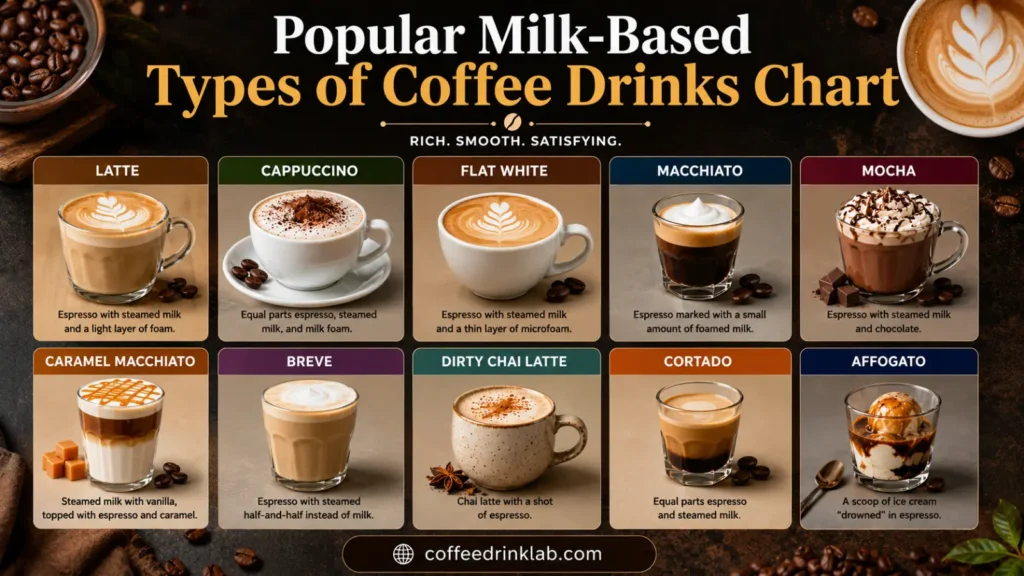
Coffee Drink Types Chart: Milk-Based Drinks
Milk changes the texture and flavor of coffee dramatically. Furthermore, different milk varieties create unique experiences.
Today, coffee shops commonly offer:
- Whole milk
- Oat milk
- Almond milk
- Soy milk
- Coconut milk
- Barista blends
Flat White
The flat white originated in Australia and New Zealand. It features espresso and velvety microfoam milk.
Compared to a latte, a flat white contains less milk and delivers a stronger coffee flavor. Therefore, it’s ideal for those who want a creamier drink without losing espresso character.
Cortado
A cortado uses equal parts espresso and steamed milk. The milk reduces acidity while allowing coffee flavors to remain prominent.
As a result, cortados are often preferred by coffee lovers seeking balance rather than sweetness.
Macchiato
Traditionally, a macchiato consists of espresso “marked” with a small amount of milk foam.
Because it contains very little milk, the espresso remains the star of the drink. Consequently, it appeals to those who enjoy bold coffee flavors.
Coffee Drink Types Chart by Strength
| Drink | Strength |
|---|---|
| Espresso | ⭐⭐⭐⭐⭐ |
| Red Eye | ⭐⭐⭐⭐⭐ |
| Americano | ⭐⭐⭐⭐ |
| Flat White | ⭐⭐⭐⭐ |
| Cappuccino | ⭐⭐⭐ |
| Latte | ⭐⭐ |
| Mocha | ⭐⭐ |
Google loves comparison tables.
How Do You Make Different Types of Coffee?
If you’re wondering how do you make different types of coffee?, the process usually starts with freshly brewed espresso or coffee. By changing the amount of milk, water, foam, chocolate, or ice, you can create dozens of unique coffee drinks.
For example:
- Flat White = espresso + microfoam
- Espresso = coffee only
- Americano = espresso + hot water
- Latte = espresso + steamed milk
- Cappuccino = espresso + milk + foam
- Mocha = espresso + chocolate + milk
Sweet Types of Coffee Drinks Chart for Dessert Lovers
Not every coffee drink is about pure coffee flavor. Some beverages combine espresso with sweet ingredients for a dessert-like experience.
Mocha
A mocha blends espresso, chocolate syrup, steamed milk, and foam.
The chocolate softens coffee bitterness while creating a rich, indulgent beverage. Therefore, it’s often considered the perfect bridge between coffee and dessert.
Key Features:
- Chocolate flavor
- Creamy texture
- Popular among beginners
- Available hot or iced
Affogato
An affogato is a simple yet luxurious dessert. A shot of hot espresso is poured over vanilla ice cream.
The contrast between hot espresso and cold ice cream creates a unique flavor experience that’s both sweet and bold.
Different Types of Coffee Drinks by Category
Black Coffee
- Espresso
- Americano
- Long Black
Milk Coffee
- Latte
- Cappuccino
- Flat White
- Cortado
- Macchiato
Sweet Coffee
- Mocha
- Affogato
Cold Coffee
- Iced Latte
- Iced Americano
- Cold Brew
- Nitro Cold Brew
Now you’re ranking for
coffee drink types
different types of coffee drinks
Cold Brew
Cold brew is made by steeping coarse coffee grounds in cold water for 12–24 hours. Unlike iced coffee, it is never brewed with hot water, producing a naturally smooth, less acidic flavor. Cold brew is a popular addition to any cold coffee types chart because of its refreshing taste and higher caffeine concentration.
Strong Types of Coffee Drinks Chart for Maximum Caffeine
Some coffee drinkers prioritize energy and caffeine above all else.
Red Eye
A red eye combines brewed coffee with a shot of espresso.
This drink delivers significantly more caffeine than standard coffee, making it popular among students, shift workers, and early commuters.
Black Eye
A black eye takes things further by adding two espresso shots to brewed coffee.
The result is an extremely powerful beverage designed for serious caffeine enthusiasts.
Dead Eye
The dead eye includes three espresso shots added to brewed coffee.
Although incredibly strong, it should be consumed responsibly due to its high caffeine content.
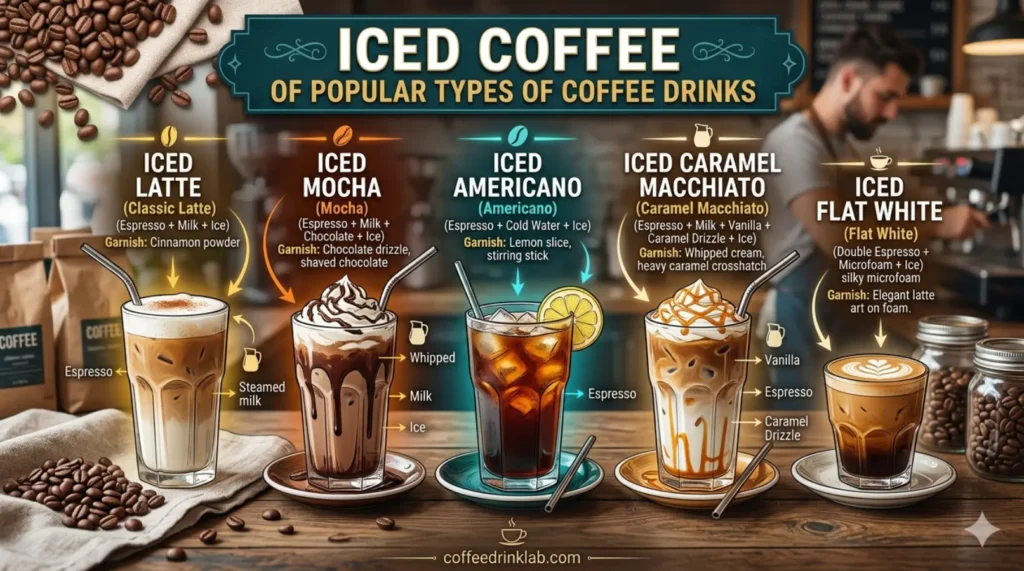
Cold Coffee Types Chart
Most beverages in this types of coffee drinks chart can be served cold.
Iced Latte
An iced latte combines espresso, cold milk, and ice. It maintains the creamy texture of a traditional latte while providing a refreshing experience.
Iced Americano
An iced americano uses espresso, cold water, and ice. It delivers a clean, refreshing black coffee taste with fewer calories than milk-based drinks.
Iced Mocha
An iced mocha combines espresso, chocolate, milk, and ice. Consequently, it becomes a popular summer treat among coffee lovers.
Coffee Drinks Comparison Chart
| Coffee Drink | Main Ingredients | Taste | Hot/Cold |
|---|---|---|---|
| Espresso | Espresso | Bold | Hot |
| Americano | Espresso + Water | Smooth | Both |
| Latte | Espresso + Steamed Milk | Creamy | Both |
| Cappuccino | Espresso + Milk + Foam | Rich | Hot |
| Flat White | Espresso + Microfoam | Strong | Hot |
| Mocha | Espresso + Chocolate + Milk | Sweet | Both |
| Macchiato | Espresso + Foam | Bold | Hot |
| Cortado | Espresso + Equal Milk | Balanced | Hot |
Then write
This coffee drinks explained chart helps beginners quickly understand how each drink differs in ingredients, texture, and taste.
How to Choose the Best Coffee Drink
Choosing the right coffee drink depends on your preferences. If you enjoy strong black coffee, an espresso or americano may be ideal. On the other hand, if you prefer creamy beverages, a latte or flat white is often a better fit.
Meanwhile, those who enjoy sweeter flavors may gravitate toward mochas or affogatos. Most importantly, don’t be afraid to experiment. Trying different drinks is one of the best ways to discover your personal favorite.
Conclusion
There are many types of coffee, from bold black coffee to creamy milk coffee and refreshing iced beverages. Whether you’re exploring different types of coffee drinks, learning about types of coffee beans, comparing types of coffee makers, or searching for the best coffee with milk, understanding these differences helps you choose the perfect cup.
This guide answers common questions such as how many types of coffee are there, what are the 12 types of coffee, and how do you make different types of coffee, making it a complete resource for coffee lovers.
FAQs:
There are hundreds of coffee variations worldwide. Most cafés serve 20–30 popular drinks, while coffee can also be categorized by bean type, brewing method, and milk preparation.
The most popular 12 include Espresso, Americano, Latte, Cappuccino, Flat White, Mocha, Macchiato, Cortado, Cold Brew, Iced Latte, Affogato, and Red Eye.
Popular coffee makers include drip machines, espresso machines, French presses, AeroPress, pour-over brewers, Moka pots, percolators, cold brew makers, and single-serve pod machines.
Consider your preferred flavor profile, caffeine level, and texture. Strong coffee drinkers often enjoy espresso or americanos, while those seeking creaminess usually prefer lattes or flat whites.
Absolutely. Many coffee drinks can be prepared at home using an espresso maker, French press, drip machine, or pod machine. Home brewing allows you to customize ingredients and flavors
Types of Iced Coffee: Cold Brew vs Flash Chilled
What Are the 12 Types of Coffee?
Different Types of Coffee Pods Explained







I didn’t realize there were so many coffee drink types. Do you have a favorite drink from the chart?