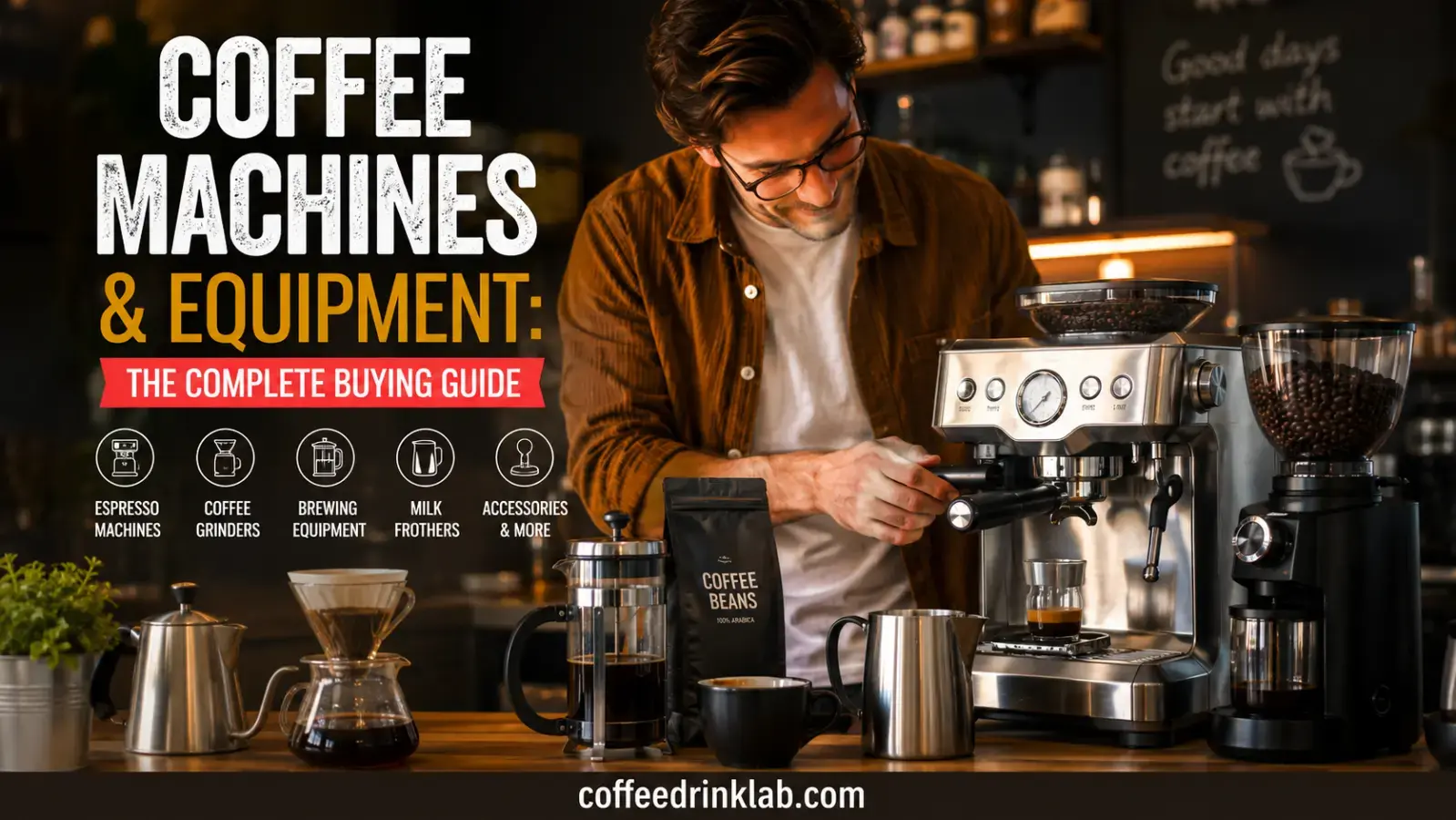
Coffee Machines & Equipment: The Complete Buying Guide
If you’ve ever stood in the coffee aisle staring at drip machines, espresso makers, and pod systems wondering which one actually fits your life, you’re not alone.
Coffee machines & equipment cover everything from the countertop workhorse that brews your morning pot to the small tools filters, carafes, grinders that quietly shape how your coffee actually tastes. This guide walks through the best coffee machines and equipment for home brewing, so you can stop guessing and start brewing with confidence.
Whether you’re a beginner who just wants a reliable button-press brew or a curious enthusiast chasing café-quality espresso at home, this page breaks down every major category, explains what makes each one worth considering, and points you toward deeper guides on specific machines and accessories. Let’s get into it.
10. Types of Coffee Machines & Equipment You’ll Find in a Modern Kitchen
Before you buy anything, it helps to understand the landscape. Coffee machines & equipment fall into a handful of broad categories, and each one brews coffee a little differently which, as a result, changes the flavor, strength, and overall experience. Below, I’ve broken down the major players so you can see how they stack up against one another.
1. Drip Coffee Makers Reliable and Beginner-Friendly
Drip machines are the most familiar type of coffee equipment in American kitchens, and for good reason. You add water and grounds, hit a button, and a full carafe is ready in minutes — no fuss, no learning curve. Furthermore, most models today include programmable timers, built-in grinders, and thermal carafes that keep coffee hot for hours.
- Best for: households that brew multiple cups at once
- Ease of use: very high
- Maintenance: light descaling every few weeks
If you want a deeper breakdown of how drip machines compare to other brewing styles, this guide to coffee machine types, along with their pros and cons, is worth a read.
2. Espresso Machines For Café-Quality Shots at Home
Espresso machines force hot water through finely ground coffee under pressure, producing that thick, concentrated shot with a golden crema on top. In fact, this is the base for lattes, cappuccinos, and Americanos, so if you love milk-based drinks, an espresso machine is where you’ll get the most mileage. On the other hand, these machines do require some practice to dial in grind size and tamping pressure.
- Best for: espresso, lattes, cappuccinos
- Ease of use: moderate to advanced
- Maintenance: regular cleaning of the group head and steam wand
3. Single-Serve & Pod Machines Fast, Simple, and Convenient
Pod machines like Keurig and Nespresso systems have become a staple for people who want good coffee without the cleanup. You simply drop in a pod, press a button, and you’re sipping within a minute. Additionally, most pod machines offer huge flavor variety, since compatible pods span everything from single-origin light roasts to flavored seasonal blends.
- Best for: single-person households, offices, quick mornings
- Ease of use: very high
- Maintenance: minimal, mostly water tank cleaning
To understand how different capsule and pod formats compare, take a look at this guide on types of coffee pods, and this companion piece that goes even further into different types of coffee pods explained.
4. French Press Full-Bodied and Old-School
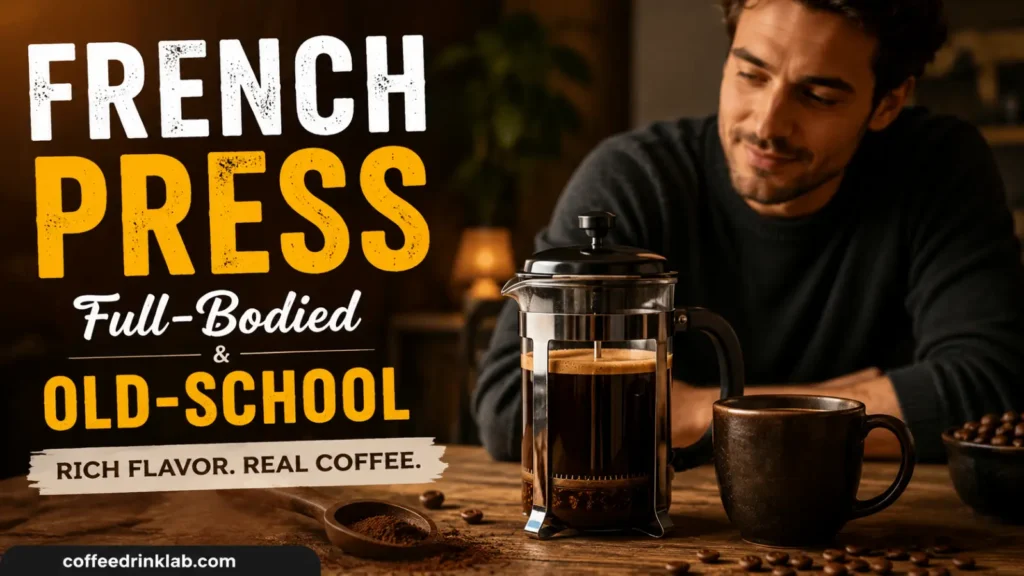
The French press is about as simple as coffee equipment gets: coarse grounds steep in hot water, then a metal mesh plunger separates the liquid from the grounds. Because there’s no paper filter involved, more natural oils stay in the cup, which means a heavier, richer body than drip coffee. Meanwhile, it’s also one of the most affordable and portable brewing methods around.
- Best for: bold, full-bodied coffee
- Ease of use: easy, but requires a timer
- Maintenance: rinse after every use
5. Pour-Over Setups Slow, Manual, and Precise
Pour-over brewing, whether with a Chemex, a V60, or a similar dripper, gives you full control over water temperature, pour speed, and extraction time. As a result, it’s a favorite among enthusiasts who want to highlight the subtle flavor notes of a specific origin or roast. It does take longer than a drip machine, but many people find the ritual itself part of the appeal.
- Best for: single-origin beans, flavor exploration
- Ease of use: moderate, technique-dependent
- Maintenance: minimal
6. Moka Pots Stovetop Espresso-Style Brewing
A moka pot sits directly on your stovetop and uses steam pressure to push water through grounds, producing a strong, espresso-like coffee without an actual espresso machine. It’s a beloved staple in Italian households, and it’s inexpensive, durable, and doesn’t need electricity. However, it does produce something closer to strong coffee than true espresso, since the pressure is lower than a dedicated machine.
- Best for: strong coffee on a budget
- Ease of use: easy once you learn the timing
- Maintenance: hand wash only
7. Coffee Siphons Theatrical Brewing at Its Best
Siphon brewers use vapor pressure and a vacuum to pull water up through coffee grounds and back down again, and honestly, watching one work is half the fun. This method produces a remarkably clean, tea-like cup with a lot of clarity in the flavor. If you’re curious how the whole process actually works, this detailed guide to coffee siphon brewing walks through it step by step.
- Best for: enthusiasts who enjoy a hands-on brewing show
- Ease of use: moderate, requires practice
- Maintenance: glass components need careful handling
8. Manual Espresso Makers The ROK and Similar Devices
Not every espresso maker needs a power outlet. Manual lever devices like the ROK use hand pressure instead of an electric pump, so you can pull a genuine espresso shot anywhere, including while camping or traveling. In addition, they’re compact, quiet, and often more affordable than electric machines. For a closer look at how these compare to traditional espresso and tea brewing, check out this piece on the ROK coffee and tea maker.
- Best for: travel, small kitchens, manual brewing fans
- Ease of use: moderate, some arm strength helps
- Maintenance: minimal, easy to disassemble
9. Cold Brew Makers Smooth, Low-Acid Coffee
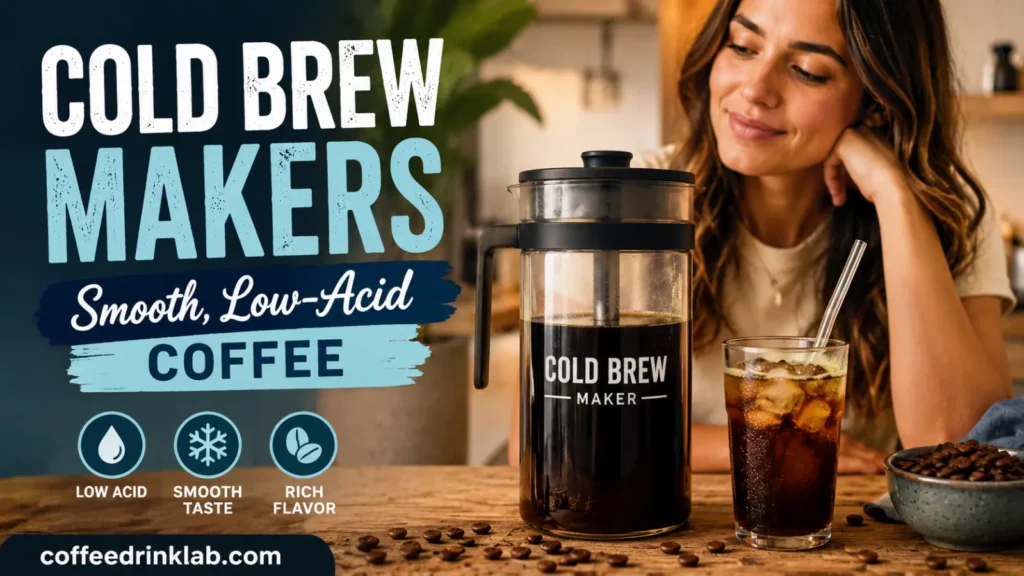
Cold brew equipment steeps coarse grounds in cold or room-temperature water for 12 to 24 hours, which produces a naturally sweet, low-acid concentrate. Consequently, it’s a great option for anyone whose stomach doesn’t love the acidity of hot-brewed coffee. Most cold brew makers are simply a steeping vessel with a built-in filter, so they’re beginner-friendly and largely hands-off.
- Best for: iced coffee lovers, low-acid preference
- Ease of use: very easy, just requires patience
- Maintenance: rinse the filter after each batch
10. Unique and Anomalous Coffee Machines Worth Knowing
Beyond the familiar categories, there’s a whole world of unusual and inventive brewing equipment that doesn’t fit neatly into any one box machines that combine methods, use unconventional pressure systems, or borrow ideas from lab equipment. If you enjoy exploring beyond the standard lineup, this guide to an anomalous coffee machine for home brewing is a fun rabbit hole. For a broader survey of everything currently on the market, this roundup of different types of coffee machines is a solid starting point.
11. Quick Comparison: Coffee Machines & Equipment Side by Side
| Machine Type | Price Range | Best For | Ease of Use | Maintenance |
|---|---|---|---|---|
| Drip Coffee Maker | $ | Multiple cups at once | Very high | Light |
| Espresso Machine | $$$ | Lattes, cappuccinos | Moderate–advanced | Regular |
| Pod/Single-Serve | $$ | Convenience, speed | Very high | Minimal |
| French Press | $ | Bold, full-bodied cups | Easy | Light |
| Pour-Over | $ | Flavor exploration | Moderate | Minimal |
| Moka Pot | $ | Strong stovetop coffee | Easy | Light |
| Siphon Brewer | $$ | Brewing as a ritual | Moderate | Careful handling |
| Manual Espresso (ROK) | $$ | Travel, no power needed | Moderate | Minimal |
| Cold Brew Maker | $ | Smooth iced coffee | Very easy | Light |
4. Essential Coffee Equipment & Accessories Beyond the Machine
A great cup of coffee isn’t just about the machine the smaller pieces of equipment around it matter just as much. In fact, upgrading a filter or carafe can noticeably change your coffee’s flavor and consistency, even if the machine itself stays the same.
1. Filters Paper, Metal, and Machine-Specific Options
Filters control how much oil and sediment end up in your cup, and different machines require different filter types entirely. Paper filters produce a cleaner, lighter cup, while metal mesh filters let more oils through for a fuller body. If you own a Cuisinart machine, this guide on Cuisinart coffee maker filters covers exactly which types fit and how to keep them working properly.
2. Carafes Keeping Your Coffee Hot and Fresh
The carafe might seem like an afterthought, but it plays a real role in how your coffee tastes an hour after brewing. Glass carafes look great and let you see the coffee level at a glance, whereas thermal carafes keep coffee hot for hours without a hotplate that can scorch it. For a closer comparison of the options out there, this guide to coffee carafes breaks down which style suits different routines.
3. Grinders Getting Grind Size Right
Grind size affects extraction more than almost any other variable, which is why a good grinder is arguably as important as the machine itself. Coarse grounds work best for French press and cold brew, medium grounds suit drip machines, and fine grounds are essential for espresso. Burr grinders are worth the investment since they produce a far more consistent grind than blade grinders.
4. Kettles Precision for Pour-Over
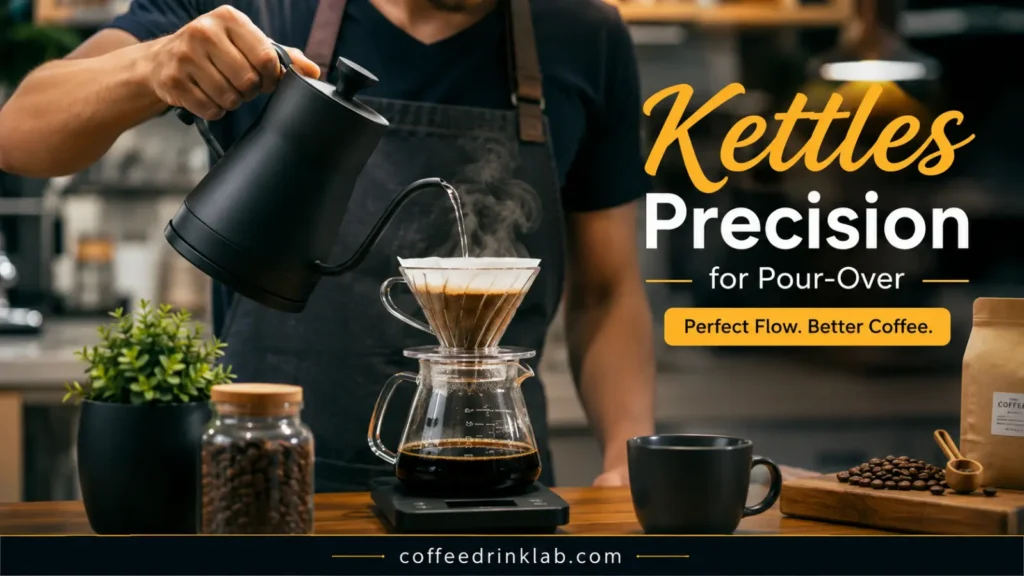
If you’re brewing pour-over, a gooseneck kettle gives you the control to pour slowly and evenly over the grounds. Meanwhile, a kettle with a built-in thermometer takes the guesswork out of water temperature, which matters more than most beginners expect.
How to Choose the Best Coffee Machines and Equipment for Home Brewing
Choosing among all these coffee machines & equipment ultimately comes down to a few honest questions about your own habits. How many cups do you actually drink in a day? Do you prefer bold and strong or bright and nuanced? Is counter space tight, or do you have room for a full setup?
Budget matters too, and thankfully there’s a good option at nearly every price point, from a $20 French press to a $600 espresso machine. If you’re still weighing the options side by side, this complete buying guide to types of coffee machines is a great next stop, and pairing it with the earlier coffee machine types pros and cons breakdown will help you narrow things down even further.
The Final Talk
At the end of the day, the right coffee machines & equipment are simply the ones that match how you actually live and drink coffee not necessarily the fanciest or most expensive option on the shelf. Whether that means a no-fuss drip machine, a hands-on pour-over setup, or a full espresso station, there’s a genuinely great choice waiting for nearly every routine and budget.
Most importantly, don’t be afraid to experiment. Try a new brewing method, swap your filter, or upgrade your grinder, and you might be surprised how much it changes your daily cup. As you explore the categories above, use the linked guides throughout this article to dig deeper into whichever machine or accessory catches your eye each one covers the details you’ll want before you buy. Happy brewing!
FAQs:
Q1. What are the most popular coffee machines & equipment?
Drip coffee makers and pod/single-serve machines remain the most widely owned coffee equipment in American households, largely because of their convenience and low learning curve. Espresso machines and French presses follow closely behind, especially among people who care deeply about flavor and control over the brewing process.
Q2. What is the difference between coffee machines & equipment?
“Coffee machines” generally refers to the actual brewing devices, such as drip makers, espresso machines, and pod systems, while “coffee equipment” is a broader term that also includes accessories like filters, carafes, grinders, and kettles. Together, they determine both how your coffee is brewed and how it ultimately tastes.
Q3. Which coffee machines & equipment are best for beginners?
Drip coffee makers and pod machines are the easiest entry points, since they require little technique and almost no maintenance beyond basic cleaning. A French press is also a great beginner option if you want a bit more control without a steep learning curve.
Q4. How do I choose the right coffee machines & equipment?
Start by thinking about how many cups you drink daily, how much counter space you have, and whether you prefer convenience or a hands-on ritual. From there, match those preferences against the comparison table above to narrow down the machine type, then choose accessories like filters and grinders that complement it.
Q5. Can I use coffee machines & equipment at home?
Yes, virtually every machine and accessory covered in this guide is designed for home use, from compact pod machines that fit tight kitchens to full espresso setups for dedicated home baristas. Many, like the moka pot or manual espresso maker, are even portable enough to travel with.
Discover More Blends
Panama Geisha Coffee Beans: Complete Guide
Golden Goat Coffee: Complete Buying Guide 2026







4 Comments