
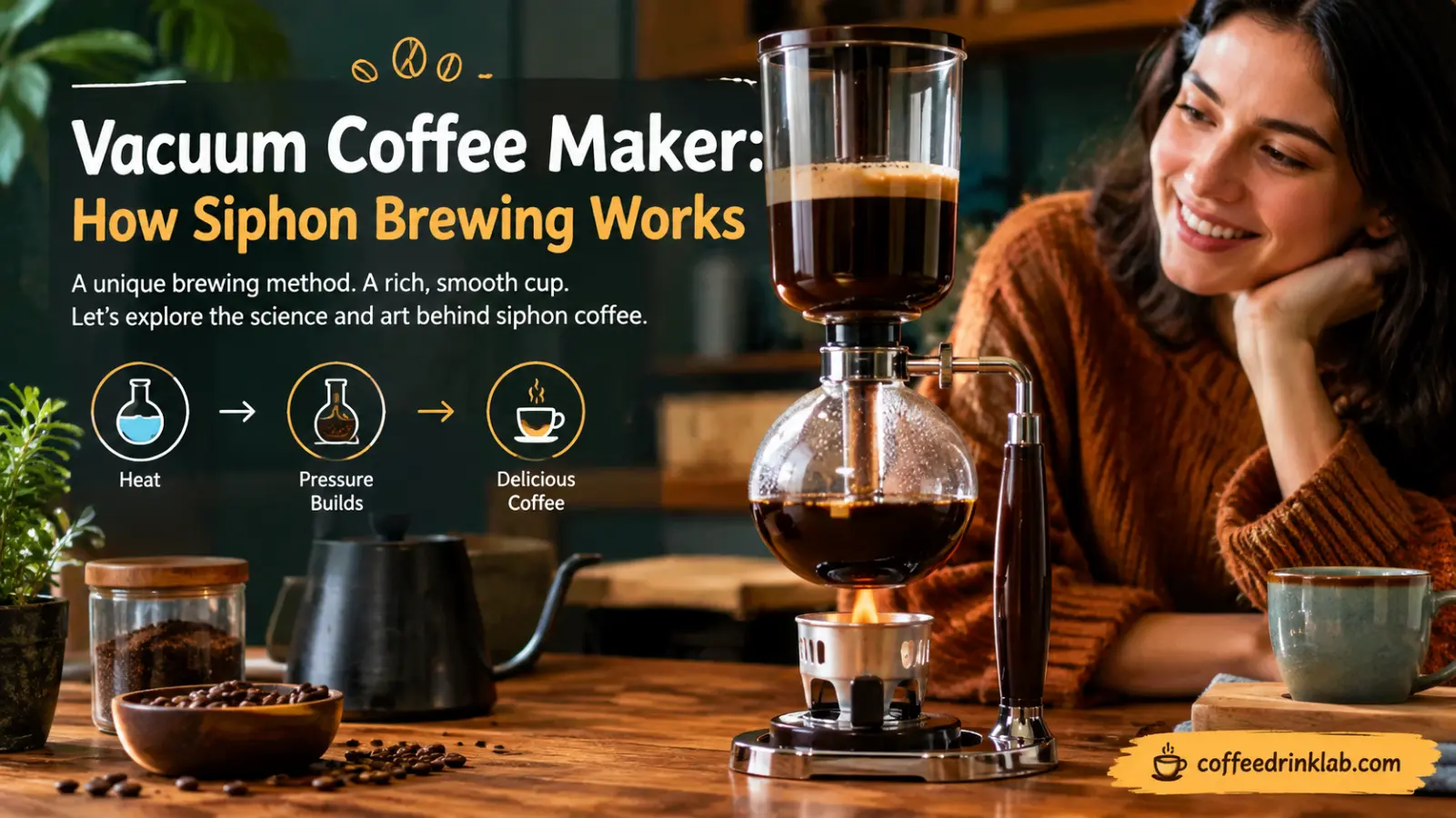
Vacuum Coffee Maker: How Siphon Brewing Works
A vacuum coffee maker is one of the most fascinating ways to brew coffee at home. Also called a siphon coffee maker, it uses heat, pressure, and a vacuum-like effect to move water between two chambers and extract coffee with impressive clarity.
If you’re searching for the best vacuum coffee brewer for home brewing, this guide will help you understand how the brewing method works, which styles are available, and what to look for before buying one.
Unlike a standard drip machine or French press, a vacuum brewer turns coffee preparation into a small countertop show. However, it is not just about appearance. When used correctly, it can produce a clean, aromatic cup that highlights the flavor profile of quality beans.
Japanese Vacuum Coffee Maker: A Classic Siphon Brewing Style 🇯🇵
A Japanese vacuum coffee maker is closely associated with the careful, presentation-focused style of siphon brewing popular in Japanese coffee culture. These brewers typically feature glass chambers, a cloth or metal filter, and a separate heat source.
In addition, Japanese siphon brewing often emphasizes precise water temperature, stirring, brewing time, and presentation. As a result, it appeals to coffee drinkers who enjoy the process as much as the final cup.
A typical setup includes:
- Upper brewing chamber
- Lower water chamber
- Filter and filter holder
- Stand
- Burner or heating element
- Stirring utensil
How Does a Vacuum Coffee Maker Work?
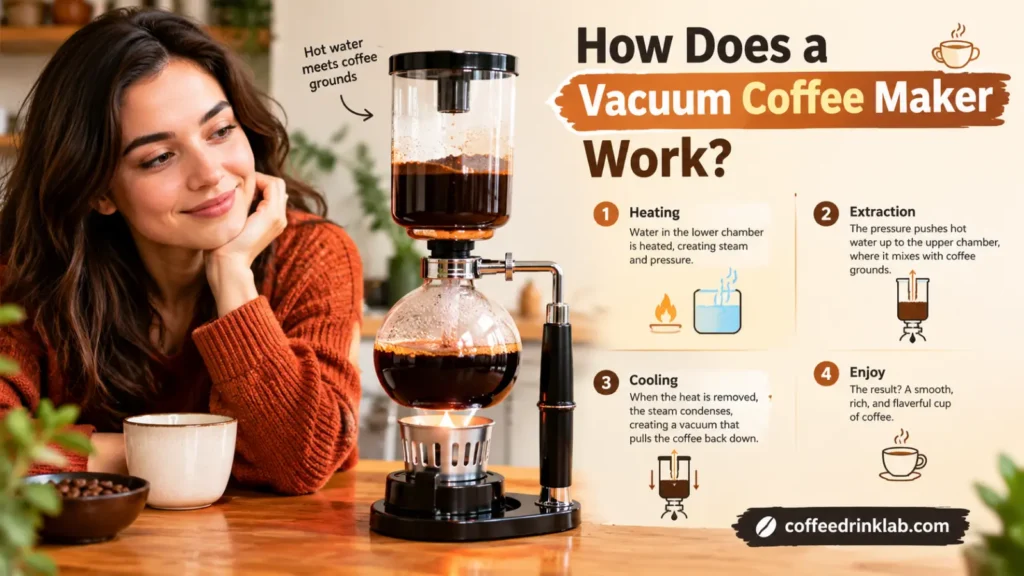
So, how does a vacuum coffee maker work? The basic process relies on changing pressure inside two connected chambers. When the water in the lower chamber heats up, expanding air and water vapor push the hot water upward into the upper chamber.
Once the coffee grounds are added, the water and coffee steep together. Then, when the heat is removed or reduced, the pressure in the lower chamber drops. This allows brewed coffee to move back through the filter into the lower chamber.
The process is surprisingly simple:
- Add water to the lower chamber.
- Heat the water.
- Hot water rises into the upper chamber.
- Add coffee grounds and stir gently.
- Allow the coffee to brew briefly.
- Remove or reduce the heat.
- Brewed coffee returns through the filter.
Importantly, the brewer does not create a perfect laboratory vacuum. The name refers to the pressure difference that helps pull the brewed coffee downward.
Best Vacuum Coffee Maker for Home Brewing
When choosing the best vacuum coffee maker for home brewing, focus less on complicated features and more on construction, filter design, capacity, heat source, and replacement parts.
Glass is particularly popular because you can watch the entire brewing process. However, stainless-steel components can provide additional durability, especially around the filter holder and stand.
For most home users, look for:
- Heat-resistant glass chambers
- A secure upper and lower connection
- A reliable filter system
- Stable stand construction
- Easy-to-find replacement filters
- A capacity suitable for your household
- Simple cleaning and maintenance
Additionally, beginners may prefer a model with straightforward assembly rather than a highly specialized setup.
Glass Vacuum Coffee Maker vs. Stainless Steel
A glass vacuum coffee maker is probably the style most people picture when they hear “siphon coffee.” The transparent chambers make it easy to watch the water rise and the coffee brew, which is one reason this method is so popular with enthusiasts.
Stainless steel, meanwhile, is generally valued for durability. Some brewers combine glass brewing chambers with stainless-steel filters, stands, or other components, giving you a balance between visibility and toughness.
| Feature | Glass | Stainless Steel |
|---|---|---|
| Visibility | Excellent | Limited |
| Appearance | Classic and elegant | Modern and durable |
| Heat resistance | Designed for brewing heat | Excellent |
| Durability | Requires careful handling | Generally more rugged |
| Brewing experience | Highly visual | More practical |
| Best for | Enthusiasts and presentation | Frequent use |
Therefore, glass is a great choice if you enjoy watching the brewing process, while stainless steel may appeal more if durability is your priority.
Bodum Santos Vacuum Coffee Maker: A Vintage Favorite
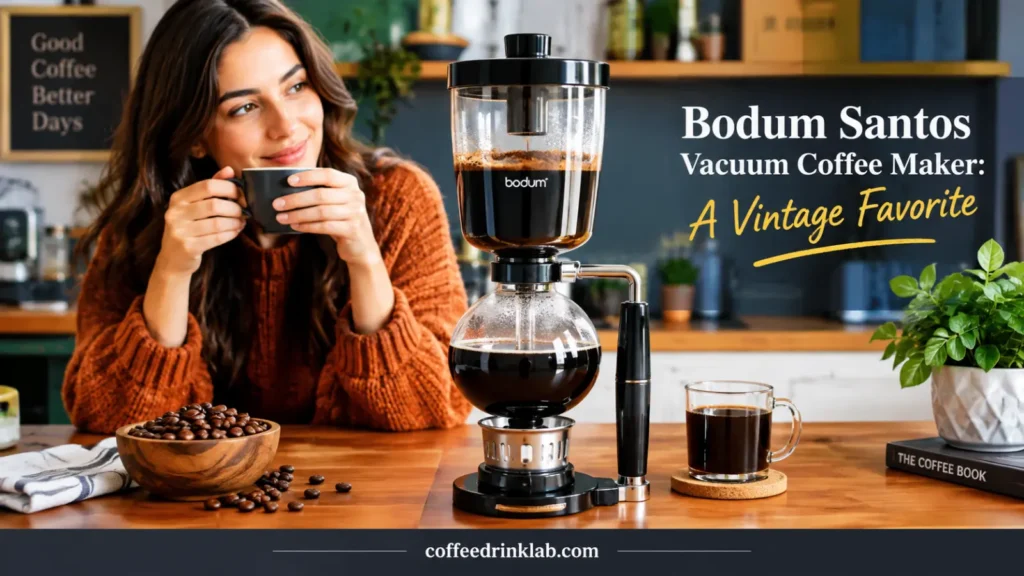
The Bodum Santos vacuum coffee maker has become a recognizable name among fans of classic siphon brewing. Bodum has produced several vacuum-style coffee products over the years, and older Santos brewers are particularly interesting to collectors and coffee enthusiasts.
The Santos design represents an era when countertop coffee brewing could be both functional and visually dramatic. Consequently, a vintage example can be appealing for someone who appreciates older coffee equipment.
However, when buying a vintage unit, inspect the glass, seals, filter assembly, and other components carefully. Replacement parts can also be an important consideration.
Bodum Pebo Vacuum Coffee Maker
The Bodum Pebo vacuum coffee maker is another well-known Bodum siphon-style brewer. Its two-chamber design demonstrates the same basic pressure-driven brewing principle found in other vacuum brewers.
The Pebo is especially interesting for people who want a traditional-looking siphon brewer without moving entirely into antique equipment. Nevertheless, availability and replacement components can vary depending on where you shop.
Before purchasing an older Bodum brewer, check the condition of the glass and confirm that the filter and sealing components are usable.
Bodum Vacuum Coffee Maker Instructions: Basic Brewing Guide
If you are looking for Bodum vacuum coffee maker instructions, the exact process can vary by model. However, the basic technique is similar across many siphon brewers.
Start by adding the recommended amount of water to the lower chamber. Next, attach the upper chamber securely and begin heating. As the water rises, add freshly ground coffee to the upper section.
After that, stir gently and allow the coffee to brew for a short, controlled period. Finally, remove the heat and let the brewed coffee return through the filter.
Always follow the manufacturer’s instructions for your specific model, particularly when dealing with glass, heat, filters, and replacement components.
Vacuum Coffee Maker Electric Options
A vacuum coffee maker electric model uses an integrated heating system rather than requiring a separate burner. This can make the setup more convenient for people who want the siphon brewing experience without managing an alcohol or butane burner.
Electric models can also provide more consistent heating. However, they may have fewer styling options than traditional stovetop or flame-heated siphon brewers.
For a beginner, electric heating can be appealing because it simplifies one part of the brewing process. On the other hand, traditional burners offer the classic visual experience many siphon enthusiasts enjoy.
Vintage Vacuum Coffee Maker: What to Look For
A vintage vacuum coffee maker can be more than a brewing tool it can also be a piece of coffee history. Older siphon brewers often have distinctive stands, glass shapes, and mechanical designs that look completely different from today’s automatic machines.
Still, appearance should not be your only consideration. Before using a vintage brewer, inspect it carefully for cracks, chips, damaged seals, corrosion, or missing components.
If replacement parts are unavailable, a vintage model may be better displayed as a collectible than used for everyday brewing.
Hario Vacuum Coffee Maker and Modern Siphon Brewing
Hario is another important name for coffee enthusiasts interested in siphon brewing. A Hario vacuum coffee maker typically combines heat-resistant glass with a carefully designed filter and stand, reflecting the company’s broader reputation for manual brewing equipment.
Modern Hario-style siphon brewing is popular among enthusiasts because it gives the brewer control over grind size, water temperature, agitation, and brewing time. In addition, the visual process makes it particularly enjoyable when serving coffee to guests.
The method is more hands-on than using a drip machine, but that extra involvement is part of its appeal.
What Coffee Should You Use in a Vacuum Coffee Maker?
The coffee you choose can make a major difference. Medium or medium-light roasted Arabica beans are a good starting point because the brewing method can showcase aroma, sweetness, acidity, and subtle flavor notes.
A medium grind is commonly used for siphon brewing, although the ideal setting depends on your filter and brewing technique. Freshly ground beans are also preferable because they preserve more aroma.
For your first brew, try a balanced single-origin or medium roast rather than an extremely dark roast. Then, adjust the grind and brewing time according to taste.
Vacuum Coffee Maker vs. Other Brewing Methods
A vacuum brewer sits somewhere between a traditional manual brewer and a theatrical coffee-making experience. It produces a filtered cup but uses immersion and pressure changes rather than the simple gravity process of a drip machine.
| Brewing Method | Flavor | Ease of Use | Visual Appeal | Best For |
|---|---|---|---|---|
| Vacuum/Siphon | Clean and aromatic | Moderate | Excellent | Enthusiasts |
| Drip Machine | Balanced | Easy | Low | Everyday brewing |
| French Press | Full-bodied | Easy | Moderate | Rich coffee |
| Pour Over | Clean and nuanced | Moderate | High | Manual brewing |
| Espresso Machine | Concentrated | Difficult | High | Espresso drinks |
Therefore, a vacuum brewer makes the most sense if you want both excellent coffee and an engaging brewing ritual.
KitchenAid Vacuum Coffee Maker: What You Should Know
Searches for a KitchenAid vacuum coffee maker sometimes appear alongside older or specialty coffee equipment. However, KitchenAid is better known for other categories of coffee appliances and kitchen products than for being a major current vacuum-brewer manufacturer.
If you encounter a KitchenAid-branded or vintage vacuum-style brewer, verify the exact model and availability of replacement components before buying. Product names can also appear in secondhand listings where descriptions are inaccurate.
For that reason, always check the model information rather than relying only on a marketplace title.
Is a Vacuum Coffee Maker Worth It?
A vacuum coffee maker is worth considering if you enjoy experimenting with coffee and don’t mind spending a little more time brewing. It can produce a bright, aromatic cup while giving you control over variables such as grind size, water temperature, agitation, and brewing time.
However, it is not necessarily the best option for someone who wants coffee with one button before rushing out the door. A drip machine or single-serve brewer will usually be easier for everyday convenience.
The biggest advantage is the combination of control and experience. You are not simply making coffee you are watching the brewing process happen.
Conclusion
A vacuum coffee maker offers a unique combination of flavor, control, and visual appeal that few other brewing methods can match. From a Japanese vacuum coffee maker to a classic Bodum Pebo, Hario siphon, vintage brewer, or electric model, the basic principle remains fascinating: heat moves water upward, coffee brews in the upper chamber, and changing pressure helps draw the finished drink back through the filter.
For beginners, a modern glass model with readily available replacement parts is usually the easiest place to start. Meanwhile, experienced coffee lovers may enjoy exploring vintage designs or experimenting with different filters, grind sizes, and roast levels. Most importantly, don’t feel pressured to master every variable at once. Start with fresh beans, consistent measurements, and a comfortable brewing routine. Once you understand how does a vacuum coffee maker work, you can gradually fine-tune your technique and discover why siphon coffee remains such an engaging part of coffee culture.
FAQs
Popular vacuum coffee makers include models from brands such as Hario and Bodum, along with various Japanese-style siphon brewers. Hario is especially recognized among manual brewing enthusiasts, while Bodum models such as the Pebo and older Santos designs have a strong following.
Vacuum coffee makers can differ in capacity, filter type, heating method, construction, and design. Some use a traditional burner, while a vacuum coffee maker electric model has an integrated heating system.
A simple glass siphon with a stable stand, straightforward filter system, and easily available replacement parts is a good beginner choice. An electric model can also be convenient if you prefer not to manage a separate burner.
Consider capacity, glass quality, filter design, heat source, replacement parts, cleaning requirements, and your brewing experience. If you value the visual experience, a glass model is particularly appealing.
Yes. A vacuum coffee maker can be used at home as long as you follow the manufacturer’s instructions and use the appropriate heat source and components. Because many models contain hot water and glass, careful handling is essential.
Discover More Blends
Yuban Coffee: Reviews, Roasts, History & Availability
Tram Coffee: Complete Guide to Vietnam’s Café Culture
Mobile Coffee Cart: Complete Guide for Beginners in 2026
Mind Coffee: The Complete & Comprehensive Guide (2026)