

Honduras Coffee Beans: Taste, Regions & Buying Guide
If you want coffee with a sweet, balanced cup and plenty of regional character, Honduras coffee beans are worth exploring. Coffee beans from Honduras have become increasingly popular because their flavor can range from chocolate and caramel to citrus, tropical fruit, and gentle spice. For beginners, the best Honduras coffee beans for beginners are usually medium-roasted Arabica beans that make those natural flavors easy to appreciate.
Honduras is one of Central America’s important coffee-producing countries, with coffee grown across several mountainous regions. Because altitude, soil, variety, processing, and roasting all influence the final cup, Honduran coffee can taste surprisingly different from one farm or region to another.
Coffee Beans From Honduras: What Makes Them Special?
Coffee beans from Honduras are primarily Arabica and are grown in mountainous environments where cooler temperatures and high elevations can help coffee cherries develop slowly. As a result, many Honduran coffees have a pleasant combination of sweetness, acidity, and body rather than tasting overwhelmingly bitter.
Furthermore, Honduras has several recognized coffee-growing regions, each capable of producing a distinctive profile. Some coffees lean toward chocolate and caramel, while others show fruitier or more citrus-forward characteristics.
For coffee drinkers, that variety is one of the biggest attractions. You can choose a Honduran coffee that feels rich and comforting for a morning brew or one with brighter fruit notes for a pour-over.
4. Where Are Honduras Coffee Beans Grown?
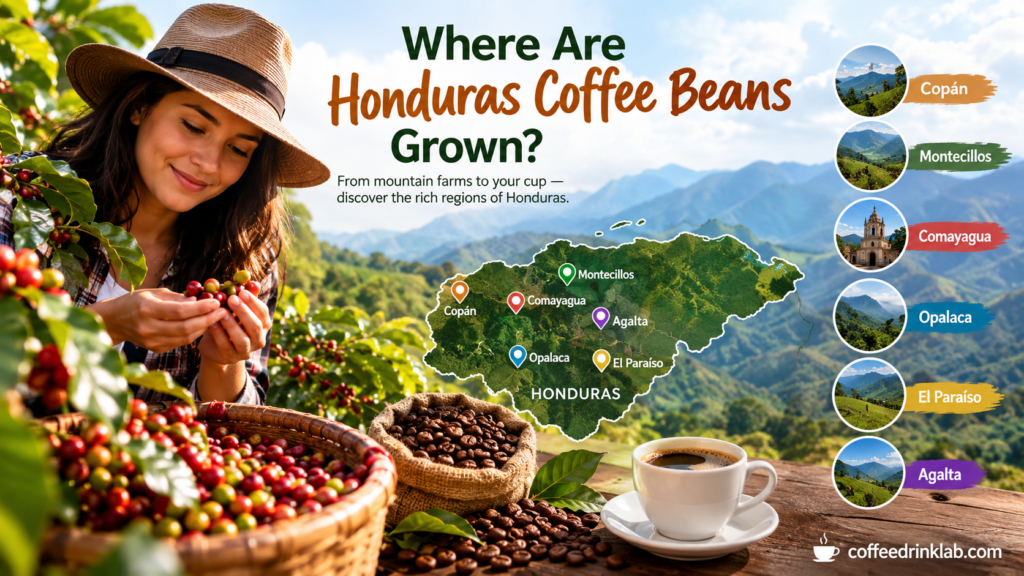
Honduran coffee comes from several mountainous coffee-growing areas. Among the best-known regions are Copán, Montecillos, Agalta, Opalaca, Comayagua, and El Paraíso.
Each growing area has its own combination of elevation, climate, soil, coffee varieties, and farming practices. Therefore, two bags labeled simply “Honduras” may taste quite different.
1. Copán
Copán coffees are often associated with sweet, balanced cups featuring chocolate, caramel, nuts, and mild fruit characteristics. They can be an excellent choice if you enjoy a traditional, approachable coffee.
2. Montecillos
Montecillos is known for high-elevation coffee and complex cups. Depending on the lot and processing method, you may notice citrus, fruit, caramel, chocolate, or floral notes.
3. Comayagua
Comayagua is another important coffee-producing area. Coffees from this region can offer a balanced combination of sweetness, acidity, and body, making them especially versatile for everyday brewing.
4. Opalaca and El Paraíso
These areas can produce coffees with more pronounced fruit, floral, or sweet characteristics. However, the exact flavor still depends heavily on the individual farm, variety, processing method, and roast.
Honduras Coffee Beans Taste: What Should You Expect?
The Honduras coffee beans taste is best described as balanced rather than having one universal flavor. Depending on the origin and processing method, your cup may contain notes of milk chocolate, caramel, brown sugar, citrus, stone fruit, berries, nuts, or gentle spice.
Medium roasts often preserve a good balance between sweetness and acidity. Meanwhile, darker roasts can emphasize chocolate, roasted nuts, and deeper caramel flavors while reducing some of the brighter fruit characteristics.
A simple flavor guide looks like this:
| Roast/Style | Possible Flavor Notes | Best For |
|---|---|---|
| Light roast | Citrus, fruit, floral notes | Pour-over |
| Medium roast | Caramel, chocolate, nuts, fruit | Everyday coffee |
| Medium-dark roast | Cocoa, toasted nuts, brown sugar | Drip and French press |
| Dark roast | Dark chocolate, roasted flavors | Strong black coffee |
Remember that these are general tendencies, not guarantees. In fact, processing and growing conditions can sometimes have as much influence on flavor as the roast itself.
Best Honduras Coffee Beans for Beginners
The best Honduras coffee beans for beginners are usually freshly roasted, 100% Arabica beans with a medium roast. This combination tends to provide enough sweetness and body to feel familiar while still allowing you to discover the characteristics of the origin.
If you are new to single-origin coffee, look for a bag that lists tasting notes such as chocolate, caramel, nuts, honey, or citrus. These descriptions can help you choose a flavor direction before opening the bag.
For an easy starting point, consider:
- Medium roast for a balanced cup
- Whole beans for better freshness
- A roast date rather than only a “best by” date
- Single-origin Honduras coffee for clearer regional character
- Medium grind for drip brewing
- Coarser grind for French press
Most importantly, do not assume that a more expensive bag will automatically taste better to you. Personal preference matters more than price.
Honduras Green Coffee Beans: What Are They?
Honduras green coffee beans are unroasted coffee beans before they undergo the roasting process. They are typically firm, pale green, and have a very different aroma and flavor from roasted coffee.
Green beans are commonly purchased by coffee roasters rather than ordinary home drinkers. Roasters use different temperature profiles and roasting times to develop sweetness, acidity, body, and aroma.
If you are interested in roasting at home, Honduran green coffee can be an interesting origin to experiment with. However, roasting requires appropriate equipment, ventilation, and careful temperature control.
Organic Honduras Coffee Beans Melbourne: Why Does This Search Appear?
The phrase organic Honduras coffee beans Melbourne can appear in searches from people looking for certified organic Honduran coffee outside the United States. If you encounter this phrase while shopping online, focus on the actual certification and product origin rather than assuming that every Honduran coffee is organic.
Organic certification depends on how the coffee was produced and certified. Therefore, look for specific certification information on the packaging or seller’s product page.
For US buyers, the same principle applies: check whether the coffee is actually certified organic instead of relying only on marketing language.
How Processing Changes the Cup
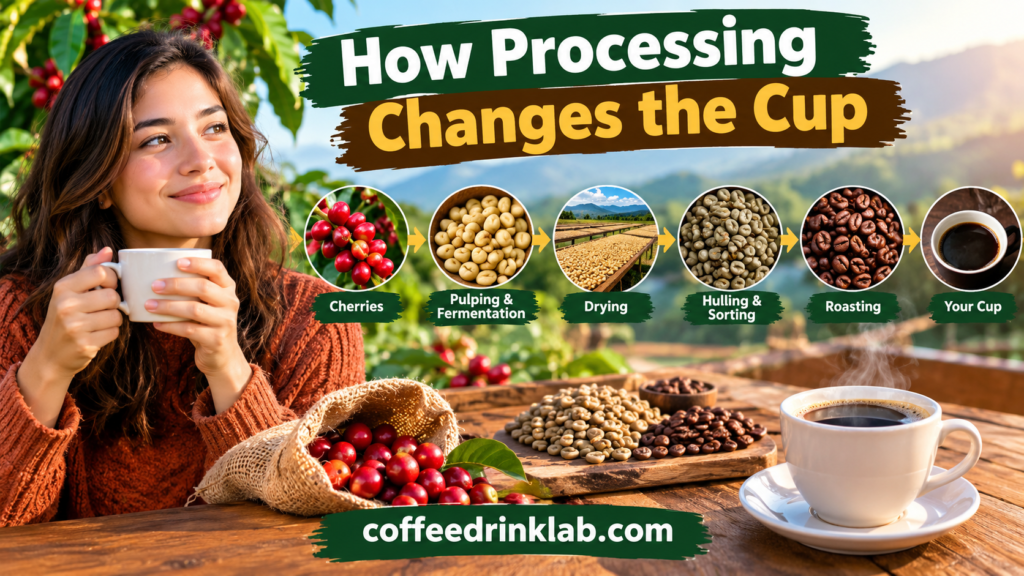
Processing happens after coffee cherries are harvested and can significantly influence the finished flavor. The most common methods include washed, honey, and natural processing.
Washed coffees often have a cleaner, brighter character. Honey processing can emphasize sweetness and body, while natural processing may create stronger fruit-like aromas and flavors.
As a result, two Honduras coffee beans from the same region can still taste dramatically different if they were processed differently.
4. How to Brew Honduras Coffee Beans at Home
Honduran coffee is flexible enough to work well with several brewing methods. Your best choice depends on whether you prefer clarity, body, convenience, or intensity.
1. Pour-Over
A pour-over can highlight acidity, sweetness, and delicate fruit or floral notes. It is particularly useful for lighter and medium-roasted Honduran coffee because the slower brewing process gives you greater control.
2. Drip Coffee Maker
A drip machine is one of the easiest ways to enjoy Honduran coffee every morning. Medium-roasted beans with chocolate, caramel, and nutty notes generally work especially well in this method.
3. French Press
French press brewing produces more body and mouthfeel. Consequently, it can be a good option if you prefer a fuller cup with deeper chocolate, caramel, and roasted-nut characteristics.
4. Espresso
Honduras beans can also work well for espresso. A medium or medium-dark roast may produce a sweet shot with chocolate and caramel notes, while lighter roasts can create a brighter and more acidic espresso.
Honduras Coffee vs. Colombia: What’s the Difference?
Honduras and Colombia are both major coffee-producing countries, but their coffees are not identical. Colombian coffee is often associated with bright acidity, caramel sweetness, citrus, and balanced fruit characteristics, although there is substantial regional variation.
Honduran coffee can also be sweet and balanced, but it frequently offers chocolate, caramel, nutty, citrus, and fruit notes depending on its origin and processing.
| Factor | Honduras | Colombia |
|---|---|---|
| Common profile | Chocolate, caramel, fruit, citrus | Caramel, fruit, citrus, nuts |
| Body | Medium to full | Light to medium/full |
| Acidity | Low to bright | Often bright |
| Best for | Drip, pour-over, espresso | Pour-over, drip, espresso |
| Regional variation | High | High |
If you prefer a sweeter, chocolate-forward cup, Honduras may be particularly appealing. On the other hand, if you enjoy brighter acidity and fruit character, Colombian coffees are also worth exploring.
How to Choose Coffee Beans Honduras Shoppers Will Love
When shopping for coffee beans Honduras products, don’t stop at the country name. A good product description should ideally tell you the region, roast level, processing method, variety, and tasting notes.
Freshness is also important. Whole beans generally retain their aroma better than pre-ground coffee because grinding exposes more surface area to oxygen.
Before buying, check:
- Country and growing region
- Roast level
- Roast date
- Processing method
- Arabica variety
- Tasting notes
- Whole bean or ground format
- Organic or certification claims, if important to you
Additionally, buy an amount you can reasonably finish while the coffee is fresh rather than stocking up on a large quantity.
Honduras Coffee Brands and Buying Options
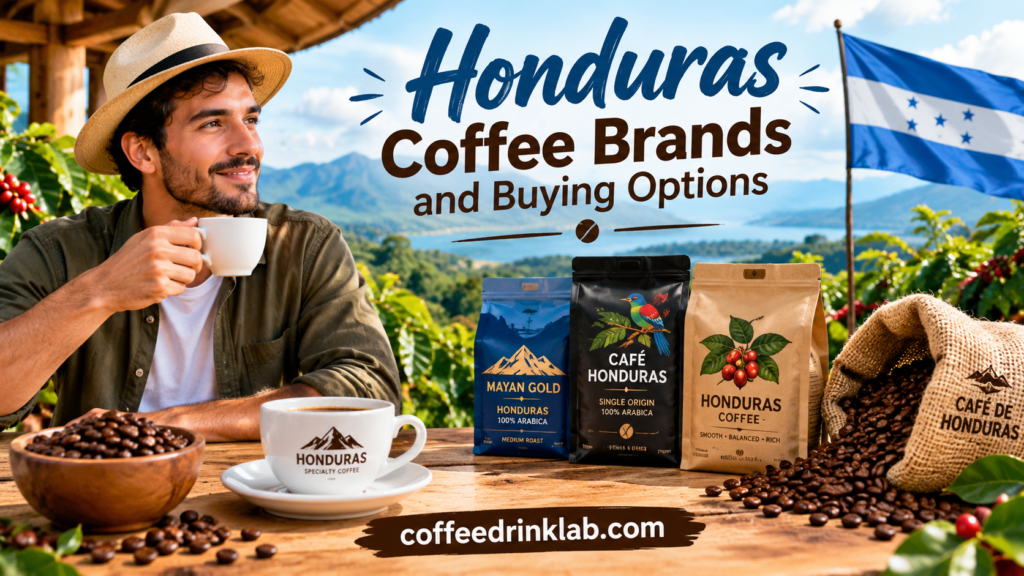
There is no single “best” Honduras coffee brand because roasters source different farms, regions, varieties, and processing styles. Instead, look for brands that clearly identify the origin and provide useful information about the coffee.
If you see Honduras coffee at ALDI or another grocery store, check the package carefully. A blend containing Honduran beans is not necessarily the same as a single-origin Honduras coffee.
Likewise, searches such as “Honduras coffee near me” can help you discover local roasters. However, ask whether the coffee is actually sourced from Honduras and whether the bag identifies a specific region or farm.
Some shoppers also search for a Honduras Coffee Company or similar supplier. In that situation, compare freshness, origin information, roast date, and processing details rather than choosing solely based on the company name.
Can Honduras Coffee Be Paired With Whiskey?
Coffee and whiskey can complement each other because both can offer roasted, caramel, chocolate, spice, and oak-like impressions. However, the best pairing depends heavily on the coffee roast and the whiskey style.
A medium-dark Honduran coffee with chocolate and caramel notes can pair naturally with a whiskey that has warm vanilla, oak, or spice characteristics. For a lighter Honduran coffee, a heavily smoky or intense whiskey may overpower its delicate fruit and citrus notes.
For most coffee lovers, however, trying the coffee on its own first is the best way to understand its natural character.
The Final Talk
Honduras coffee beans offer an exciting combination of sweetness, balance, body, and regional character. From chocolate and caramel to citrus, fruit, nuts, and floral notes, there is plenty of variety for both beginners and experienced coffee drinkers. Moreover, the region, altitude, coffee variety, processing method, and roast can all change what you experience in the cup.
If you are buying Honduran coffee for the first time, start with a fresh medium roast and choose tasting notes that already sound appealing to you. Then, try the same origin through a pour-over, drip machine, or French press to see how brewing changes the experience.
Ultimately, exploring coffee beans from Honduras is less about finding one “perfect” bag and more about discovering the flavors you personally enjoy. So grab a fresh bag, brew it your favorite way, and let Honduras become your next coffee adventure.
FAQs:
Medium-roasted 100% Arabica beans are a great starting point for beginners. Look for chocolate, caramel, nut, or brown-sugar tasting notes if you prefer a familiar and smooth coffee profile.
Start with your preferred brewing method and flavor profile. Then consider the roast level, region, processing method, freshness, and tasting notes before buying.
Absolutely. Honduras coffee beans work well in drip coffee makers, pour-over brewers, French presses, espresso machines, and other common home brewing methods. Choose the grind size according to your brewing equipment.
The most popular Honduran coffees are generally Arabica beans from recognized growing regions such as Copán, Montecillos, Comayagua, Opalaca, and El Paraíso. Medium-roasted beans are particularly approachable because they can balance chocolate, caramel, fruit, and citrus characteristics.
The main differences come from growing region, altitude, coffee variety, processing method, and roast level. Therefore, two Honduras coffee beans can have noticeably different acidity, sweetness, body, and flavor notes.
Discover More Blends
Yuban Coffee: Where It’s From, Reviews, Roasts & Availability
How Long Do Coffee Beans Last? Freshness Guide
Coffee Machines & Equipment: The Complete Buying Guide







2 Comments