
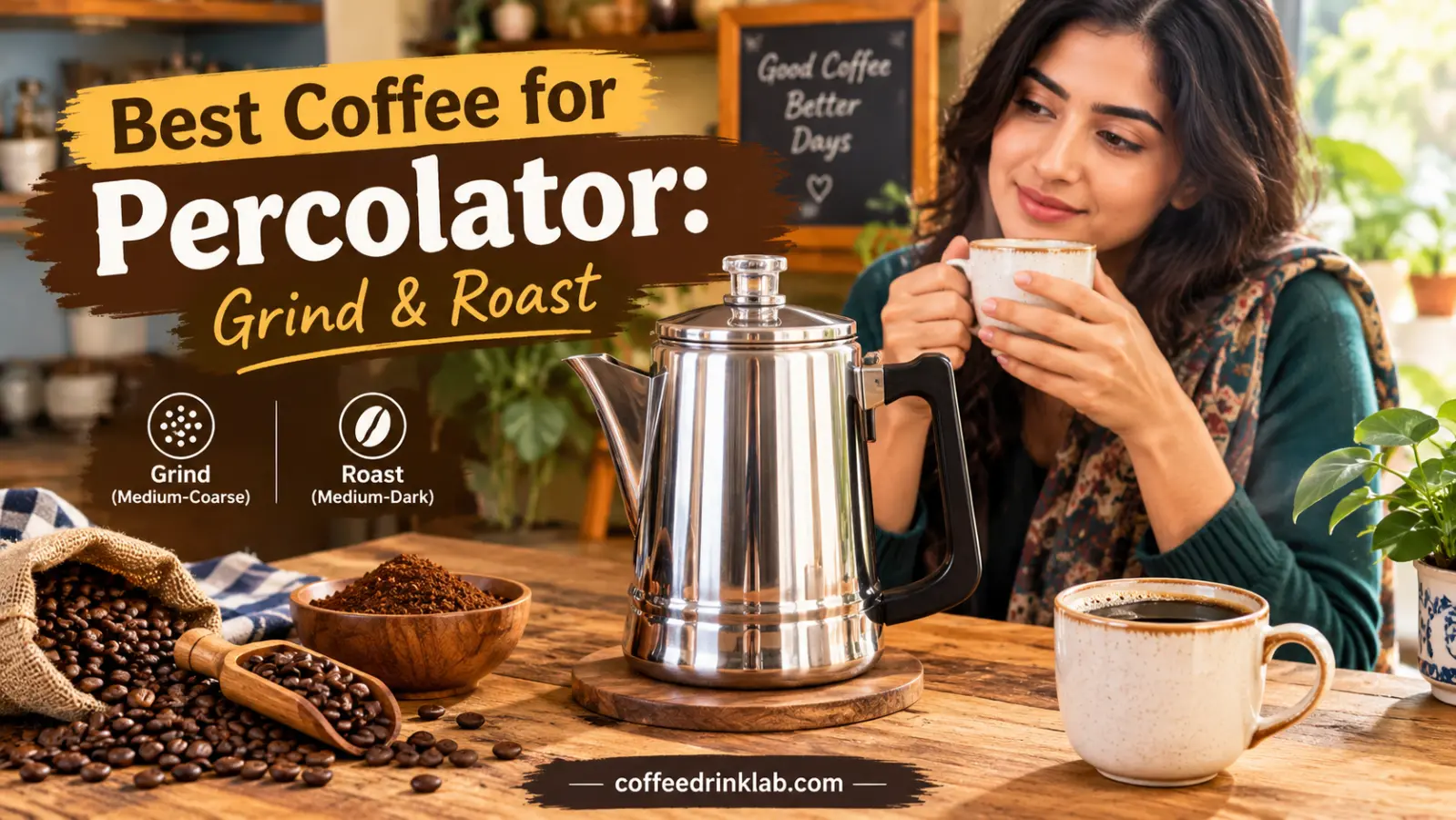
Best Coffee for Percolator: Grind & Roast
Finding the best coffee for percolator brewing is mostly about choosing the right roast, freshness, and grind size. For most home brewers, the sweet spot is a medium to medium-dark coffee with a coarse or medium-coarse grind. If you are wondering about the best coffee for a 55 cup percolator, the same principle applies, although a large batch benefits from a dependable, balanced blend that stays flavorful without becoming harsh.
Percolators repeatedly circulate hot water through coffee grounds, creating a bold, full-bodied cup. Therefore, coffee that tastes balanced in a drip machine may behave differently in a percolator. The good news is that you do not need a special bean labeled “percolator coffee” to get excellent results.
1. Best Coffee Brand for Percolator
The best coffee brand for a percolator depends on how you like your cup to taste. Medium and medium-dark blends are particularly versatile because they provide enough body for repeated extraction without making every cup taste overly smoky or bitter.
For an everyday option, Eight O’Clock The Original is worth considering because its approachable medium-roast character works well for people who prefer a traditional grocery-store coffee. Peet’s Major Dickason’s Blend is a stronger choice for drinkers who enjoy a darker, richer cup. Specialty options such as Kicking Horse Three Sisters can also work well when purchased as whole beans and ground appropriately. Current coffee guides similarly favor medium to medium-dark coffees with coarse grinds for percolators.
1. Best Coffee Beans for Percolator
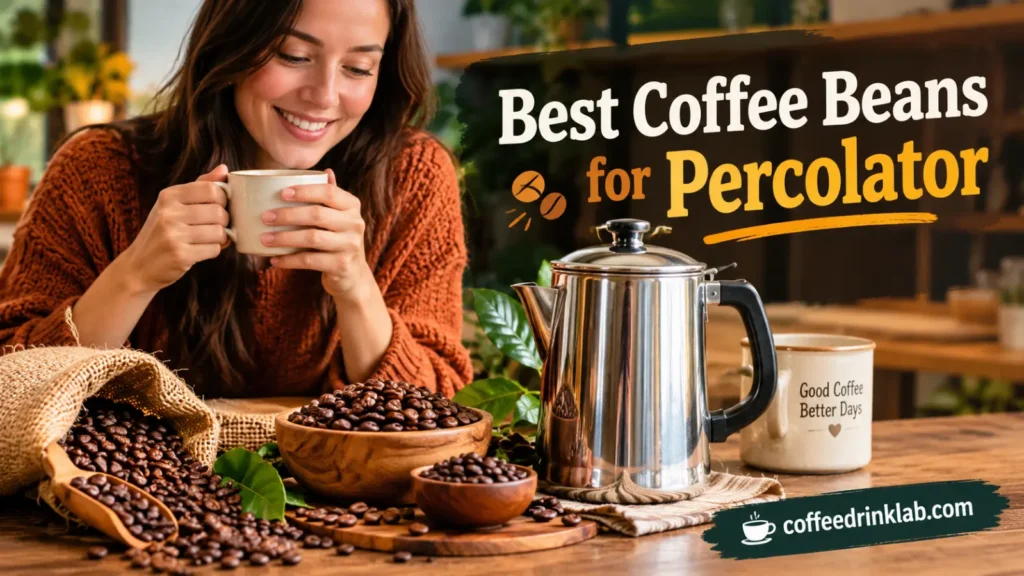
Whole beans give you more control because you can grind them immediately before brewing. Freshly ground beans generally produce a more aromatic cup, and a burr grinder makes it easier to create a consistent grind.
Look for:
- 100% Arabica or a balanced Arabica blend
- Medium or medium-dark roast
- Fresh roast date when available
- Chocolate, caramel, nutty, or balanced flavor notes
- Low to moderate oiliness
Very delicate light roasts can work, but their brighter acidity may become less noticeable during repeated hot-water extraction. On the other hand, a balanced medium roast gives you more room to adjust strength without overwhelming the cup.
3. Best Coffee for Percolator: Choosing the Right Roast
If you ask, what is the best coffee for percolator?, there is no single bean that wins for everyone. However, medium and medium-dark roasts are the safest starting points because they have enough body and flavor to handle the brewing method.
1. Medium Roast
Medium roast is an excellent starting point for beginners. It can provide caramel, chocolate, nutty, and mild fruit notes while retaining more origin character than a very dark roast.
It is especially useful if you drink your coffee black because the flavor can remain balanced rather than excessively smoky.
2. Medium-Dark Roast
A medium-dark roast is ideal when you want more body and a stronger traditional coffee character. It pairs especially well with milk, cream, or a hearty breakfast.
Furthermore, this roast level is a good middle ground if dark coffee sometimes tastes too bitter but light coffee feels too delicate.
3. Dark Roast
Dark roast works for people who genuinely enjoy bold, roasty flavors. Peet’s Major Dickason’s Blend and Starbucks Espresso Roast are examples of dark-roast styles that can produce a powerful cup when used appropriately.
However, because a percolator exposes coffee to repeated hot-water contact, an already very dark and oily bean can become harsh if the brewing cycle runs too long.
1. Best Coffee Grind for Percolator
The best coffee grind for percolator brewing is generally coarse or medium-coarse. The grounds should look noticeably larger than standard drip coffee rather than powdery or fine.
A coarse grind helps slow extraction and reduces the amount of tiny particles that can escape through the basket. Coffee enthusiasts commonly recommend coarse grounds for traditional percolators, while some grinder systems provide a dedicated percolator setting between coarse and medium.
1. Best Coarse Ground Coffee for Percolator
When shopping for best coarse ground coffee for percolator use, check the package carefully. Many supermarket coffees are ground primarily for drip machines, which means they can be finer than what a traditional percolator needs.
If you buy whole beans, grind them until they resemble coarse sea salt. If your cup contains sediment, tastes excessively bitter, or becomes muddy, the grind may be too fine.
Avoid using espresso-fine coffee in a traditional percolator. Finer particles can pass through the basket more easily and can also extract too aggressively.
Best Coffee for a 55 Cup Percolator
A large 55-cup percolator needs a coffee that remains pleasant across a big batch. For this reason, a medium or medium-dark commercial blend is often a practical choice rather than an extremely delicate specialty coffee.
For large gatherings, consistency matters as much as flavor. A balanced blend with chocolate, nutty, caramel, or classic roasted notes can satisfy a wider range of guests.
When preparing a large batch, pay attention to your specific percolator’s capacity markings and brewing instructions. Do not automatically multiply a small home recipe without checking how your particular machine measures a “cup.”
Best Coffee for Stovetop Percolator
The best coffee for stovetop percolator brewing is usually a fresh medium or medium-dark roast ground coarse. Stovetop brewing gives you more control over heat, so the coffee can be adjusted according to how quickly the liquid is circulating.
A medium roast is a good starting point if you want a cleaner, more balanced cup. Meanwhile, a medium-dark or dark roast works better if you enjoy a traditional strong coffee flavor.
Most importantly, avoid excessive heat. Once the coffee begins actively percolating, controlling the temperature can help prevent an unpleasantly bitter result.
Best Coffee for Electric Percolator
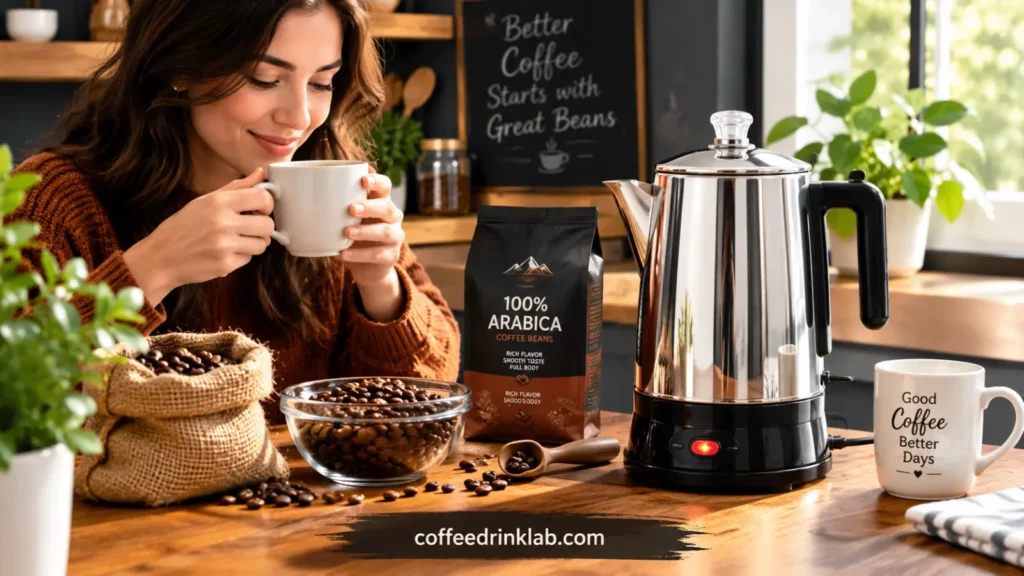
The best coffee for electric percolator use follows the same basic rule: choose a balanced roast and use a coarse grind. The major difference is convenience because the electric unit controls the heating process for you.
For an everyday electric percolator, a medium roast can be particularly forgiving. If you prefer stronger coffee, move toward medium-dark rather than immediately choosing the darkest roast available.
Electric percolators are also convenient for people who want a traditional percolator experience without monitoring a stovetop pot. Some current coffee enthusiasts specifically favor electric models because they maintain heat consistently.
Pre-Ground vs. Whole Bean Coffee for Percolators
Whole bean coffee gives you the greatest control over freshness and grind size. You can grind the exact amount you need immediately before brewing, which is particularly useful when your percolator requires a coarse grind.
Pre-ground coffee is more convenient, especially for large gatherings or everyday brewing. However, finding the right grind can be harder because much of the coffee sold in American grocery stores is designed for drip brewing rather than traditional percolators.
If convenience matters most, look for a package specifically labeled coarse ground or percolator grind. Otherwise, buying whole beans and grinding them yourself gives you more flexibility.
How to Choose the Best Coffee for Percolator Use
Choosing the right coffee becomes much easier when you consider your preferred flavor rather than chasing one “perfect” brand.
| Preference | Recommended Roast | Grind | Best For |
|---|---|---|---|
| Balanced everyday cup | Medium | Coarse | Beginners |
| Rich and smooth | Medium-dark | Coarse | Daily home brewing |
| Bold traditional flavor | Dark | Coarse | Strong coffee lovers |
| Large gatherings | Medium/medium-dark blend | Coarse | 55-cup percolators |
| Stovetop brewing | Medium | Coarse | More heat control |
| Electric percolator | Medium/medium-dark | Coarse | Easy daily brewing |
| Maximum freshness | Any suitable roast | Grind fresh | Coffee enthusiasts |
If you are buying the best coffee percolator for home use, remember that the brewer itself and the coffee are separate decisions. A quality percolator cannot completely compensate for stale beans or an unsuitable grind.
Grocery Store Coffee for Percolator
For shoppers searching for the best grocery store coffee for percolator, you do not necessarily need an expensive specialty bag. In fact, many coffee drinkers report getting enjoyable results from inexpensive supermarket brands when the grind and brewing process are right.
Eight O’Clock The Original is one reasonable starting point for a traditional medium-roast profile. Folgers and other familiar supermarket coffees can also work, although you may need to adjust the grind, strength, and brewing time to suit your percolator.
The important thing is to judge the finished cup. If it tastes thin, increase the coffee slightly; if it tastes harsh, check the grind and brewing time before simply switching to a darker roast.
Is Starbucks Coffee Good for a Percolator?
Yes, Starbucks coffee can work in a percolator, particularly when you choose a suitable roast and grind it coarse. Starbucks offers a range of roast levels, so the best choice depends on whether you prefer balanced, bold, or darker flavors.
For a percolator, a whole-bean Starbucks coffee gives you an advantage because you can control the grind yourself. Starbucks also recommends coarse grounds for its coffee-press brewing method, illustrating why a coarser grind can be useful for brewing methods with longer coffee contact.
However, avoid assuming that a particular brand automatically makes better percolator coffee. Grind size, freshness, heat, and brewing time can have just as much influence.
What Is the Best Coffee for Percolator Brewing?

So, what is the best coffee for a percolator overall? For most people, the easiest answer is a fresh medium or medium-dark Arabica coffee ground coarse or medium-coarse.
If you prefer bold traditional coffee, choose a darker blend. If you drink it black and want more balance, start with medium roast. If you are brewing for a crowd, choose a dependable blend with broad appeal rather than an unusually delicate single-origin coffee.
Ultimately, the best cup is the one that matches your taste and works with your particular percolator.
The Final Talk
The best coffee for percolator brewing does not have to be expensive or difficult to find. A fresh medium or medium-dark Arabica coffee, combined with a coarse or medium-coarse grind, is the most reliable starting point for most home brewers. From there, you can experiment with darker blends, whole beans, supermarket favorites, or specialty coffees until you find your ideal cup.
For a stovetop percolator, focus on heat control and avoid over-brewing. For an electric model, choose a consistent coffee and let the machine handle the heating. Meanwhile, large 55-cup percolators benefit from dependable blends that taste good to a crowd.
Most importantly, do not get trapped by the idea that one brand is automatically the winner. Your roast preference, grind size, freshness, brewing time, and desired strength all work together. Start with coarse-ground medium roast, taste the result, and adjust from there.
FAQs:
A medium roast with a coarse grind is the easiest place to start. It gives beginners enough body without making the coffee excessively smoky or bitter.
Start with the roast you normally enjoy, then make sure the grind is coarse enough for your brewer. If possible, buy whole beans and grind them immediately before brewing for greater control.
Absolutely. Traditional stovetop and electric percolators are both suitable for home use. The key is using the appropriate grind and controlling the brewing process so the coffee does not become over-extracted.
Popular choices include medium and medium-dark blends from familiar brands such as Eight O’Clock, Peet’s, Starbucks, and Kicking Horse. The better choice depends on whether you want a smooth everyday cup or a darker, stronger flavor.
The biggest differences are roast level, bean origin, flavor profile, freshness, and grind size. A medium roast generally tastes more balanced, while a dark roast produces a heavier and more roasty cup.
Discover More Blends
Flavored Coffee Beans: Best Flavors & Buying Guide
Can You Drink Coffee After Wisdom Teeth Removal?
Brazilian Coffee Beans: Origin, Taste & Roasts






2 Comments