

Brazilian Coffee Beans: Origin, Taste & Roasts
If you’re looking for the best Brazilian coffee beans, you’re exploring coffee from the world’s largest coffee-producing country. Brazilian coffee is famous for its smooth body, balanced sweetness, and dependable quality, making it a favorite among home brewers and specialty coffee lovers alike.
So, what is Brazilian coffee? It refers to coffee grown in Brazil’s diverse coffee regions, where ideal climate and rich soil produce beans with distinctive flavor profiles. The typical Brazilian coffee taste features chocolate, roasted nuts, caramel, cocoa, and mild fruit sweetness with low acidity. Whether you’re brewing espresso, drip coffee, French press, or pour-over, Brazilian coffee beans consistently deliver a rich and satisfying cup.
What Are Brazilian Coffee Beans?
Brazilian coffee beans come from coffee-growing regions throughout Brazil, where differences in altitude, climate, soil, varieties, and processing methods create a wide range of flavor profiles.
Additionally, most specialty-grade coffees from Brazil are made from arabica varieties, although robusta is also cultivated in certain areas.
What makes Brazilian coffee special is its balance. Instead of intense fruity acidity, these coffees often offer comforting flavors like chocolate, caramel, toasted nuts, and brown sugar. Consequently, they work exceptionally well as both single-origin coffees and components in espresso blends.
Typical flavor notes include:
- Milk chocolate
- Cocoa
- Caramel
- Almond
- Hazelnut
- Brown sugar
- Mild fruit sweetness
4. Brazilian Coffee Taste, Flavor Notes & Characteristics
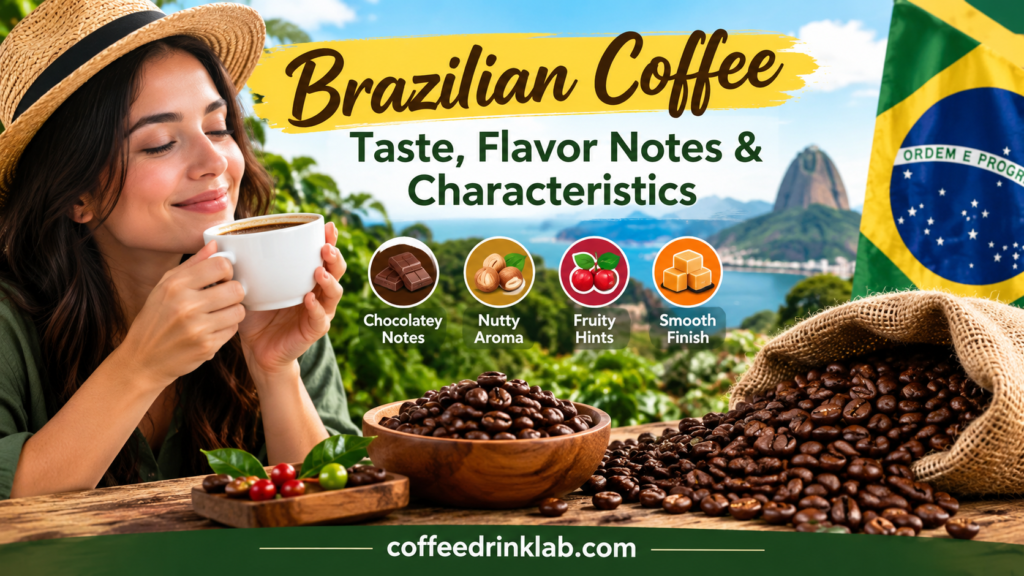
One reason coffee lovers choose Brazilian coffee is its approachable flavor profile. The classic Brazilian coffee taste is smooth, naturally sweet, and generally lower in acidity than many African or Central American coffees.
Common Brazil coffee flavor notes include:
- Milk chocolate
- Cocoa
- Roasted almonds
- Hazelnut
- Brown sugar
- Caramel
- Mild citrus
- Soft dried fruit
The Brazil coffee beans taste can vary considerably depending on the growing region, processing method, variety, and roast level. A medium-roast coffee may emphasize caramel and milk chocolate, while a lighter roast can reveal more fruit and floral character.
When evaluating Brazil coffee tasting notes, professional tasters often look for sweetness, body, balance, nuttiness, chocolate, and subtle fruit characteristics. These qualities make these beans particularly versatile for both black coffee and milk-based drinks.
The most recognizable Brazilian coffee notes are usually chocolate, caramel, nuts, cocoa, and brown sugar, although specialty lots can offer more complex fruit-forward flavors.
1. Brazilian Coffee Beans Characteristics
The most important Brazil coffee characteristics include a smooth mouthfeel, moderate to full body, balanced sweetness, and relatively gentle acidity. However, Brazil is a huge coffee-growing country, so beans can taste different from one region or farm to another.
For shoppers comparing Brazilian coffee with other origins, the combination of sweetness, body, and approachable acidity is one of its biggest advantages.
2. Brazilian Coffee Beans Roasting
The roasting process has a major influence on the final cup. Coffee from Brazil roasted at lighter levels generally preserve more of their origin character, while medium and dark roasting brings out deeper chocolate, caramel, nutty, and cocoa flavors.
For many coffee drinkers, medium-roasted Brazil coffee offer an excellent balance between sweetness and body. This roast can highlight Brazilian coffee beans roasted chocolate notes, including milk chocolate, cocoa, caramel, and toasted nuts.
If you enjoy darker coffee, dark Brazilian coffee beans roasted for espresso can produce a fuller body with bold cocoa and toasted flavors. Always check the roast date when buying freshly roasted coffee because freshness has a major effect on aroma and flavor.
Coffee enthusiasts may also search for Brazil coffee roasted close up when comparing bean appearance. Freshly roasted beans typically have a consistent color appropriate to their roast level, while very dark beans may show more surface oil.
3. Brazilian Coffee Beans Roasting at Home
Home roasting gives coffee enthusiasts more control over the final flavor. During Brazilian coffee beans roasting, the roast level can be adjusted to emphasize different characteristics. A lighter roast can preserve more acidity and fruit, medium roasting can emphasize caramel and chocolate, and darker roasting can create stronger cocoa and toasted notes.
For beginners, a medium roast is a practical starting point because it allows the natural sweetness and chocolate character of Brazilian coffee to remain noticeable without overwhelming the cup.
4. Why Espresso Uses Brazilian Coffee
Many specialty espresso blends are built around Espresso Origin Brazil because Brazilian beans provide exceptional sweetness, heavy body, and reliable crema.
Professional roasters frequently choose Brazil as the base origin for espresso since it balances brighter coffees from Ethiopia, Colombia, or Central America. If you enjoy milk drinks like cappuccinos, flat whites, or lattes, espresso made with Brazilian coffee creates a smooth, chocolatey foundation.
Organic Brazilian Coffee Beans
Demand for organic Brazilian coffee beans continues to grow as consumers look for environmentally responsible farming practices. Organic farms avoid synthetic pesticides and fertilizers while focusing on soil health and sustainable cultivation.
Although organic certification doesn’t automatically mean better flavor, many specialty organic Brazilian coffees offer exceptional quality alongside environmentally friendly production methods.
2. Buying Brazilian Coffee Beans Wholesale
Coffee shops, cafés, importers, and commercial roasters often buy Brazilian coffee beans wholesale because Brazil produces large volumes of coffee with a wide range of quality grades and flavor profiles.
Wholesale buyers can compare beans according to origin, variety, processing method, screen size, roast profile, certification, and freshness. Specialty buyers may also look for traceable farm or regional lots from areas such as Minas Gerais and Cerrado Mineiro.
1. Brazilian Coffee Beans Price
The Brazilian coffee beans price can vary significantly depending on bean quality, origin, processing method, certification, quantity, shipping costs, and market conditions. Specialty-grade single-origin beans generally cost more than commercial-grade coffee purchased in larger quantities.
For businesses, comparing the cost per kilogram or pound is more useful than looking only at the retail package price. Home coffee drinkers, meanwhile, can often find good value in freshly roasted medium-roast Brazilian beans.
2. Export Brazilian Coffee Beans
Brazil is one of the world’s major coffee exporters, supplying green coffee to roasters and importers in many international markets. Export Brazilian coffee beans may be sold as commercial-grade lots, specialty coffee, or traceable single-origin lots.
For buyers, important considerations include origin documentation, processing method, grade, certifications, shipping requirements, and freshness after roasting.
Why Brazil Is the World’s Coffee Powerhouse
Brazil has dominated coffee production for more than a century. In fact, the country supplies roughly one-third of the world’s coffee.
Several factors contribute to Brazil’s success. First, the climate provides ideal growing conditions. Additionally, vast coffee farms, advanced harvesting techniques, and generations of expertise help maintain consistent quality year after year.
Most importantly, Brazilian producers continue to innovate while preserving traditional growing methods. Therefore, consumers benefit from both dependable quality and exciting specialty coffees.
2. Brazilian Coffee Beans Growing Regions
Coffee from different parts of Brazil can taste surprisingly different. Although the flavor profile remains generally smooth and sweet, regional variations create unique experiences.
1. Minas Gerais

Minas Gerais is often considered the heart of Brazilian coffee production. In fact, many of the country’s highest-rated coffees come from this region.
These coffees are typically balanced and approachable, featuring notes of chocolate, caramel, and roasted nuts. Furthermore, their medium body makes them excellent for everyday brewing.
Common characteristics:
- Chocolate sweetness
- Medium acidity
- Nutty finish
- Smooth body
Arabica vs Robusta in Brazilian Coffee
Furthermore Brazil grows both arabica and robusta coffee. However, arabica dominates specialty coffee production, while robusta often appears in commercial blends and instant coffee.
Before choosing your beans, it helps to understand how these two coffee species differ.
| Feature | Arabica | Robusta |
| Flavor | Sweet and complex | Bold and earthy |
| Caffeine | Lower | Higher |
| Acidity | Higher | Lower |
| Cost | More expensive | More affordable |
| Best Use | Specialty coffee | Espresso blends |
| Growing Conditions | Higher elevations | Lower elevations |
If you enjoy nuanced flavor notes and smooth sweetness, arabica is usually the better choice. On the other hand, robusta may appeal to those who prefer stronger caffeine content and a heavier body.
4. Best Brazilian Coffee Beans for Home Brewing
1. Best Brazilian Coffee Beans for Espresso & Home Brewing
If you’re looking for the best Brazil-grown coffee for espresso, medium- to dark-roasted Brazilian arabica is a strong option. These beans can produce a sweet, full-bodied espresso with chocolate, caramel, nutty, and cocoa characteristics.
Brazilian coffee is especially popular in espresso blends because its sweetness and body can balance brighter origins while producing a satisfying base for cappuccinos, flat whites, and lattes.
Many specialty espresso blends rely on Brazilian coffee as their foundation because it delivers consistent crema and rich flavor.
2. French Press Brewing
Generally french press brewing highlights the heavier body of Brazilian coffee. Consequently, chocolate and nutty flavors become more pronounced.
Many coffee drinkers prefer medium-roast Brazilian beans in a French press because they produce a rich and satisfying cup.
3. Pour-Over Coffee
Pour-over brewing reveals more subtle characteristics. Light and medium roasts often showcase caramel sweetness and delicate fruit notes.
Furthermore, this brewing method provides exceptional clarity, allowing you to appreciate regional differences.
4. Drip Coffee Makers
Consequently for everyday convenience, Brazilian coffee performs wonderfully in drip machines. Its balanced flavor profile remains enjoyable even when brewed in larger batches.
As a result, it’s one of the most popular coffee origins among home brewers.
3. Roast Levels and Their Impact
Most importantly roast level dramatically influences how coffee tastes in your cup.
1. Light Roast
Generally, light roast preserves more of the bean’s original characteristics.
Expect:
- Brighter flavors
- Mild fruit notes
- Increased acidity
- More origin character
2. Medium Roast
Meanwhile, medium roast is often considered the sweet spot for Brazilian coffee.
You’ll typically notice:
- Chocolate notes
- Caramel sweetness
- Balanced acidity
- Smooth finish
3. Dark Roast
On the other hand, dark roast emphasizes boldness and body.
Common characteristics include:
- Dark chocolate
- Smoky undertones
- Reduced acidity
- Rich mouthfeel
Single-Origin vs Blend Coffee
Meanwhile many shoppers encounter both single-origin Brazilian coffees and coffee blends.
Single-origin coffees allow you On the other hand to experience the unique characteristics of one region or farm. Meanwhile, blends combine multiple origins to create a consistent and balanced flavor profile.
For coffee enthusiasts who enjoy exploring flavor nuances, single-origin coffee is often the preferred choice. However, for everyday drinking, blends can provide excellent consistency and value.
How to Choose Brazilian Coffee Beans
Before making a purchase, choosing the right Brazilian coffee depends on your taste preferences and brewing style.
Consider these factors:
- Preferred roast level
- Brewing method
- Flavor profile
- Freshness
- Single-origin or blend
Additionally, always look for recently roasted beans whenever possible. Fresh coffee simply tastes better and delivers more vibrant flavors.
3. Where to Buy Brazilian Coffee Beans
Where you buy Brazilian coffee can affect freshness, roast options, and available origins. Coffee shoppers may search for coffee from Brazil near me or Brazil coffee close to me when looking for locally roasted beans.
Local specialty coffee shops and independent roasters are often good places to compare Brazilian single-origin coffees because they may provide information about the farm, region, processing method, roast date, and tasting notes.
1. Brazilian Coffee Beans in the UK


Coffee drinkers searching for Brazilian coffee beans UK can look for specialty roasters and online coffee retailers that offer Brazil single-origin beans. Check the roast date and origin information before buying, especially when choosing specialty coffee.
2. Brazilian Coffee Beans in the UAE
Demand for specialty coffee has also made Brazilian coffee beans UAE searches increasingly useful for shoppers comparing imported and locally roasted coffee. Buyers should compare roast freshness, bean origin, roast level, and delivery options.
For shoppers who prefer ordering online, these beans UAE online can be a convenient option. Look for clear information about the Brazilian growing region, roast date, processing method, and expected delivery time.
3. What to Check Before Buying
Whether you’re shopping locally or online, compare:
- Roast date
- Roast level
- Brazilian growing region
- Arabica or robusta
- Processing method
- Flavor notes
- Whole-bean freshness
- Package size
- Shipping or delivery time
These details make it easier to choose Brazilian coffee that matches your brewing method and preferred flavor profile.
Summary Chart of Brazilian Coffee Beans
| Type/Category | Flavor Profile | Caffeine Level | Best For |
| Arabica | Sweet, complex, chocolatey | Moderate | Specialty coffee |
| Robusta | Strong, earthy, bold | High | Espresso blends |
| Light Roast | Bright and nuanced | Moderate | Pour-over |
| Medium Roast | Balanced and sweet | Moderate | Most brewing methods |
| Dark Roast | Rich and bold | Moderate | Espresso and milk drinks |
| Single-Origin | Distinct regional flavors | Moderate | Coffee exploration |
| Blend | Consistent and balanced | Moderate | Daily drinking |
Conclusion
However brazilian coffee beans continue to earn their reputation as some of the most versatile and enjoyable coffees available today. Their smooth texture, balanced sweetness, and approachable flavor profile make them an excellent choice for nearly every brewing method, from espresso makers and drip machines to French presses and pour-over setups.
Whether you’re searching for the best Brazilian coffee beans, exploring organic Brazilian coffee beans, or comparing different roast levels, Brazil offers outstanding options for nearly every coffee drinker. From smooth drip coffee to rich espresso origin Brazil blends, the country’s beans continue to set the global standard for consistency, sweetness, and balanced flavor.
FAQs:
Medium-roast arabica Brazilian coffee is usually best for beginners. It offers smooth sweetness, low acidity, and balanced flavors that are easy to enjoy. Additionally, it works well with most brewing methods.
On the other hand start by considering how you brew coffee and which flavors you enjoy most. If you prefer chocolatey, smooth coffee, choose a medium-roast arabica from Minas Gerais or Cerrado Mineiro. Also, prioritize freshness whenever possible.
Absolutely. Brazilian coffee works exceptionally well in home brewing setups, including drip machines, French presses, espresso makers, and pour-over brewers. Their balanced flavor profile makes them one of the easiest coffees to brew successfully.
On the other hand the most popular brazilian coffee beans typically come from Minas Gerais, Cerrado Mineiro, Sul de Minas, and Mogiana. These regions consistently produce high-quality arabica coffees known for chocolate, caramel, and nutty flavor notes. Many specialty roasters feature these origins in both single-origin offerings and espresso blends.
Brazilian coffee beans vary based on region, altitude, processing method, and roast level. Some coffees emphasize chocolate and caramel flavors, while others display subtle fruit notes and brighter acidity. These differences create unique flavor experiences across various regions.
Discovers More Blends
Can You Grind Coffee Beans in a Food Processor Without a Grinder?
How to Grow Coffee Beans: Beginner’s Guide
How Long Are Coffee Beans Good For? A Complete Freshness Guide







3 Comments