Can You Grind Coffee Beans in a Food Processor Without a Grinder?
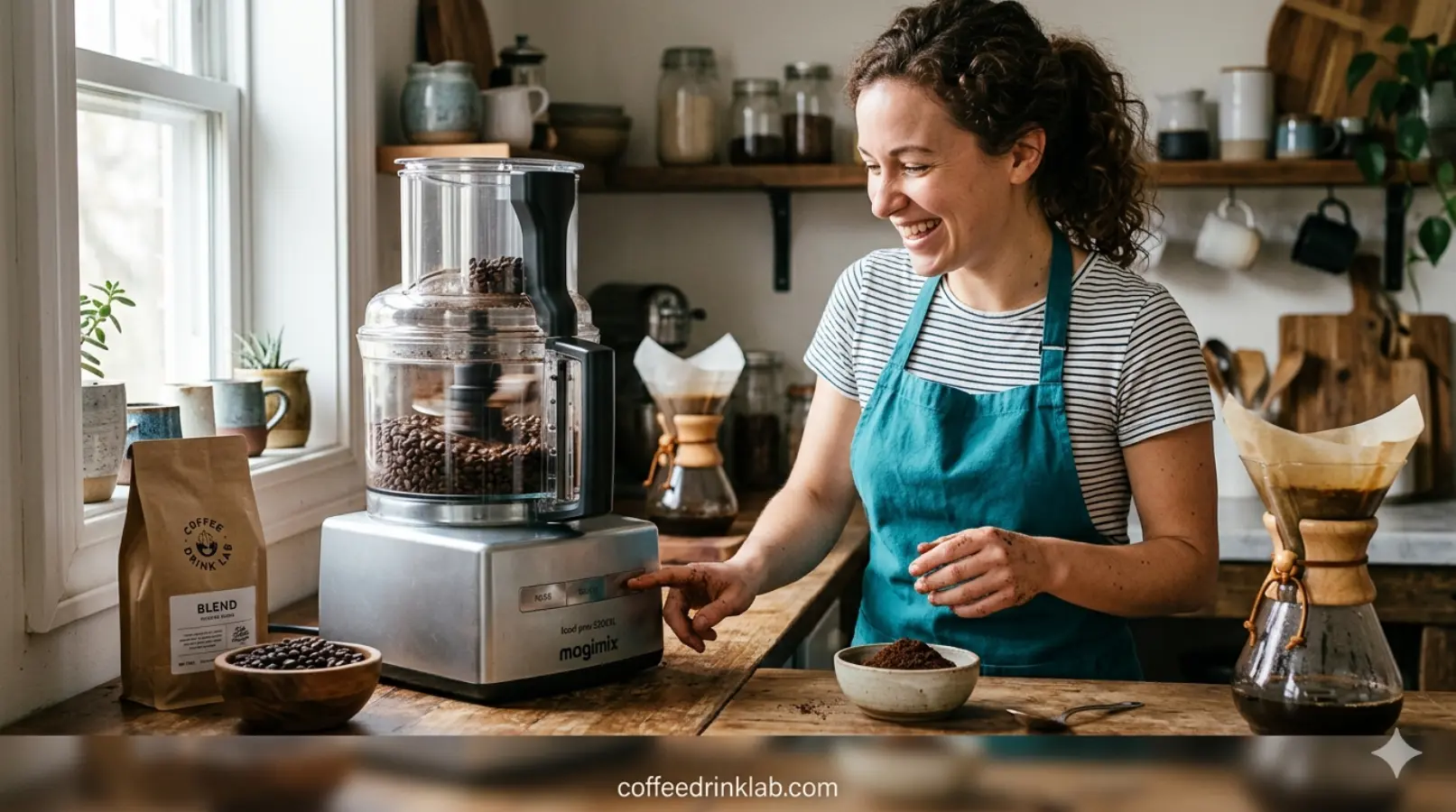
If you’ve ever run out of pre-ground coffee and only have whole beans at home, you may wonder: can you grind coffee beans in a food processor? The short answer is yes, but the results depend on your technique and expectations. In fact, many coffee lovers use this method when they need a quick solution and don’t have access to a dedicated grinder.
One of the most common questions is whether a food processor for grinding coffee beans at home can produce grounds suitable for different brewing methods. While it won’t deliver the same consistency as a burr grinder, it can still work surprisingly well for drip coffee, French press, and even some cold brew recipes. Let’s explore how it works, when it’s a good idea, and how to get the best results from your beans. ☕
Can You Grind Coffee Beans in a Food Processor?
Yes, you can grind coffee beans in a food processor. The sharp blades chop and break down the beans into smaller particles, creating coffee grounds that can be used for brewing.
However, there’s an important difference between a food processor and a coffee grinder. Coffee grinders—especially burr grinders—are designed to create uniform particle sizes. A food processor, on the other hand, chops beans unevenly, which can affect extraction and flavor.
Still, if you’re in a pinch, a food processor can be a practical backup option.
Why People Use a Food Processor for Coffee
Many households already own a food processor, making it a convenient alternative when a grinder isn’t available. Additionally, it can handle larger batches of beans than some small coffee grinders.
Common reasons include:
- No coffee grinder available
- Emergency brewing situations
- Grinding larger quantities
- Saving money on extra equipment
- Occasional coffee preparation
How to Grind Coffee Beans in a Food Processor ☕🔥
Getting the best results requires a little technique. Simply turning the machine on continuously can create inconsistent grounds and excess heat.
Step 1: Measure Your Beans
Start with the amount of coffee you need. Avoid filling the processor bowl completely, as overcrowding reduces grinding consistency.
Step 2: Use the Pulse Function
Instead of running the machine continuously, pulse it in short bursts. This helps move the beans around and creates a more even grind size.
Step 3: Shake Between Pulses
After a few pulses, gently shake the processor or stir the beans. This helps larger pieces move toward the blades.
Step 4: Check Grind Size
Continue pulsing until you reach the desired consistency for your brewing method.
Step 5: Brew Immediately
Coffee begins losing freshness after grinding. Therefore, use the grounds as soon as possible for the best flavor profile. 😍
Best Grind Sizes for Different Brewing Methods
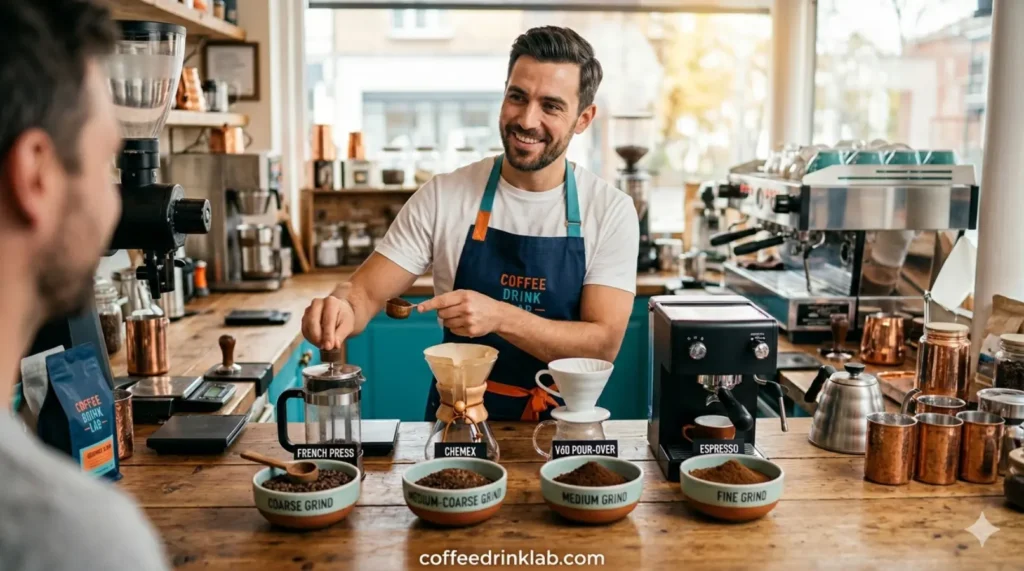
Different brewing methods require different grind sizes. Because food processors produce less consistent grounds, some brewing methods perform better than others.
| Brewing Method | Recommended Grind | Food Processor Suitability |
|---|---|---|
| French Press | Coarse | Good |
| Cold Brew | Coarse | Excellent |
| Drip Coffee | Medium | Good |
| Pour Over | Medium-Fine | Fair |
| Espresso | Fine | Poor |
| Moka Pot | Fine | Limited |
Generally, coarse and medium grinds are easier to achieve with a food processor than very fine espresso-style grinds.
Pros of Grinding Coffee Beans in a Food Processor 🌿
Using a food processor isn’t perfect, but it does offer several advantages.
Convenient and Accessible
Most kitchens already have a food processor. Therefore, there’s no need to purchase additional equipment immediately.
Works in an Emergency
When your grinder breaks or you receive whole beans unexpectedly, a food processor can save the day.
Handles Large Batches
Many food processors have larger capacities than compact grinders, making them useful for grinding coffee for groups.
Multi-Purpose Appliance
Unlike dedicated coffee equipment, a food processor serves multiple kitchen functions, which can be valuable for households with limited storage.
Cons of Grinding Coffee Beans in a Food Processor ⚠️
While convenient, there are some drawbacks coffee enthusiasts should understand.
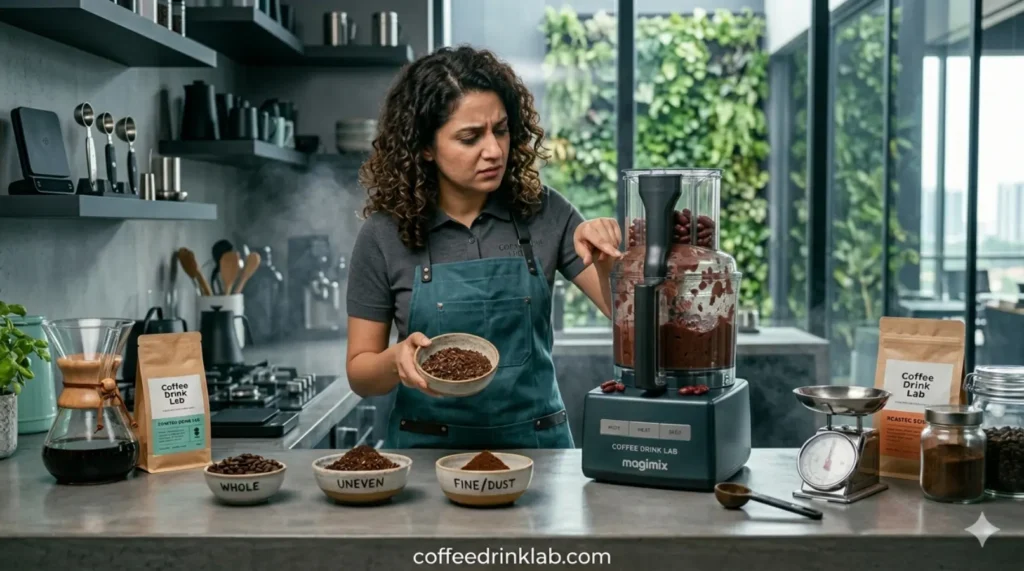
Inconsistent Grind Size
This is the biggest limitation. Uneven grounds can lead to over-extraction and under-extraction happening simultaneously.
As a result, the brewed coffee may taste bitter and sour at the same time.
Heat Buildup
Long grinding sessions generate heat. Excess heat can affect the delicate flavor notes found in specialty coffee beans.
Not Ideal for Espresso
Espresso requires a very precise fine grind. Most food processors simply cannot achieve the consistency needed.
More Coffee Dust
Food processors often create a mix of larger chunks and very fine particles, reducing brewing precision.
Food Processor vs Coffee Grinder 🫘
If you regularly brew coffee, it’s helpful to understand how these tools compare.
| Feature | Food Processor | Coffee Grinder |
| Grind Consistency | Moderate | Excellent |
| Espresso Capability | Poor | Excellent |
| Cost | Often Already Owned | Additional Purchase |
| Ease of Use | Easy | Easy |
| Flavor Quality | Good | Better |
| Grind Control | Limited | Precise |
| Coffee Freshness | Good | Excellent |
For occasional use, a food processor works fine. However, dedicated coffee grinders consistently produce better results.
Tips for Better Coffee Grounds from a Food Processor
Over the years, many home coffee drinkers have developed techniques to improve grind quality.
Use Small Batches
Smaller quantities allow the blades to work more effectively and evenly.
Pulse Instead of Continuous Grinding
Short bursts create better particle distribution and reduce heat generation.
Sift the Grounds
For improved consistency, consider using a fine mesh strainer to remove oversized pieces.
Choose Medium or Dark Roast Beans
Medium roast and dark roast beans tend to grind more easily than very light roast beans.
Clean Thoroughly
Food processors often retain odors from previous foods. Clean the bowl and blades carefully to avoid affecting your coffee’s flavor profile.
What Coffee Beans Work Best?
The good news is that nearly all coffee beans can be ground in a food processor.
Whether you’re using:
- Arabica beans
- Robusta beans
- Single-origin coffee
- Specialty blends
- Light roast coffee
- Medium roast coffee
- Dark roast coffee
The processor will break them down effectively. However, darker roasts often produce slightly more consistent grounds due to their brittle structure.
When Should You Buy a Coffee Grinder?
If coffee is part of your daily routine, upgrading to a grinder can significantly improve flavor and consistency.
Consider purchasing a grinder if:
- You brew coffee every day
- You enjoy specialty coffee
- You use pour-over equipment
- You make espresso
- You want greater control over grind size
Burr grinders are especially popular because they produce uniform grounds that maximize extraction and flavor.
Conclusion
So, can you grind coffee beans in a food processor? Absolutely. While it won’t match the precision of a burr grinder, it’s a practical and effective solution for many brewing methods. For French press, drip coffee, and cold brew, a food processor can produce usable grounds that deliver a satisfying cup of coffee. ☕🫘
Ultimately, the best choice depends on how often you brew and how particular you are about flavor. If you’re a casual coffee drinker, a food processor may be all you need. However, if you’re passionate about exploring origin characteristics, roast levels, and brewing techniques, investing in a dedicated grinder can elevate your coffee experience. Either way, freshly ground beans will almost always taste better than pre-ground coffee, so don’t hesitate to experiment and discover what works best for your morning cup. 😍
Frequently Asked Questions
What are the most popular can you grind coffee beans in a food processor?
People typically use food processors to create coarse and medium coffee grounds for French press, drip coffee, and cold brew. These brewing methods are more forgiving of inconsistent particle sizes. As a result, they tend to produce the best results when using a food processor.
What is the difference between can you grind coffee beans in a food processor?
The main difference lies in grind consistency. A food processor chops beans unevenly, while a dedicated coffee grinder produces more uniform particles. This difference can impact extraction, flavor balance, and overall coffee quality.
Which can you grind coffee beans in a food processor is best for beginners?
For beginners, using a food processor for medium-grind drip coffee is usually the easiest approach. The brewing method is forgiving and requires less precision than espresso or pour-over coffee.
How do I choose the right can you grind coffee beans in a food processor?
Focus on your brewing method. If you’re making French press or cold brew, a food processor can work quite well. However, if you regularly brew espresso, a dedicated grinder is the better choice.
Can I use can you grind coffee beans in a food processor at home?
Yes, many people successfully grind coffee beans in a food processor at home. By pulsing in short bursts and using small batches, you can achieve grounds suitable for several popular brewing methods.
Discovers More Blends
How to Grow Coffee Beans: Beginner’s Guide
How Long Are Coffee Beans Good For? A Complete Freshness Guide
Do Coffee Beans Go Bad After Opening?