
Best Coffee Beans for Cold Brew: Top Picks & Buying Guide 2026
Cold brew has become one of the most popular coffee drinks in America, and choosing the best coffee beans for cold brew can make a major difference in flavor, smoothness, and overall enjoyment. The right coffee beans for cold brew can create a naturally sweet, balanced, and low-bitterness cup when paired with the right roast and grind size.
If you’re searching for the best coffee beans for cold brew at home, focus on roast level, bean origin, freshness, and grind size. Whether you prefer a chocolatey Brazilian coffee, balanced Colombian beans, or fruity Ethiopian coffee, the best choice ultimately depends on your preferred flavor profile and brewing method.
Quick Answer: For most people, medium-roast Arabica beans are an excellent starting point for cold brew because they offer a balance of sweetness, body, and acidity. Brazilian and Colombian coffees are especially good for chocolatey, nutty, and caramel-like flavors, while Ethiopian beans work well for fruitier results.
Best Coffee Beans for Cold Brew: Quick Picks
| Cold Brew Preference | Recommended Bean | Why It Works |
|---|---|---|
| Best Overall | Medium-Roast Arabica | Balanced sweetness, body, and smoothness |
| Best for Chocolate Flavor | Brazilian Coffee | Rich cocoa, nutty, and caramel notes |
| Best Balanced Option | Colombian Coffee | Smooth, sweet, and approachable flavor |
| Best for Fruity Flavor | Ethiopian Coffee | Berry, citrus, and floral notes |
| Best for Bold Flavor | Sumatran Coffee | Full body with earthy and spicy notes |
| Best for Beginners | Medium-Roast Blend | Consistent and easy-to-enjoy flavor |
| Best for Cold Brew at Home | Fresh Whole Beans | Better freshness and flavor control |
| Best for Espresso Beans | Medium-Dark Espresso Blend | Rich chocolate and caramel characteristics |
Why Choosing the Best Coffee Beans for Cold Brew Matters

Unlike hot brewing methods, cold brew extracts coffee slowly over 12 to 24 hours using cold water. As a result, the coffee develops a smoother texture and highlights sweeter flavor compounds while reducing bitterness.
Because extraction happens differently, some beans perform better than others. Certain origins produce chocolatey richness, while others create fruity and refreshing flavors. Therefore, selecting the right beans directly impacts the final taste of your cold brew.
Best Coffee Beans for Cold Brew: What to Look For
When evaluating coffee beans for cold brew, several factors deserve attention.
When choosing beans for cold brew, look beyond the roast name alone. Freshness, origin, flavor profile, and grind size all affect the final cup. If you’re deciding between cold brew beans and your regular coffee, choose fresh whole beans that can handle a long extraction without becoming overly bitter or muddy.
What Are the Best Coffee Beans for Cold Brew?
There is no single coffee bean that is perfect for everyone. However, medium to medium-dark Arabica beans are among the most reliable choices for cold brew. They usually provide a smooth body with pleasant chocolate, caramel, nutty, and naturally sweet flavors.
If you prefer a balanced and easy-drinking cold brew, Colombian or Brazilian coffee beans are excellent starting points. For a richer and bolder cup, try medium-dark or Sumatran beans. Meanwhile, Ethiopian coffee can be a great choice if you enjoy fruity and floral flavors.
The best coffee bean for cold brew ultimately depends on your preferred taste, roast level, and brewing method. For beginners, fresh whole beans with a medium roast and a coarse grind are a simple and dependable choice.
1. Roast Level
Roast level significantly influences flavor.
- Light roast: Bright, fruity, and complex
- Medium roast: Balanced sweetness and acidity
- Dark roast: Bold, chocolatey, and rich
For most cold brew drinkers, medium and medium-dark roasts provide the best balance of sweetness and body.
2. Bean Origin
Coffee-growing regions contribute unique characteristics.
- Latin American coffees often offer chocolate and nutty notes.
- African coffees deliver fruity and floral flavors.
- Indonesian coffees provide earthy, full-bodied richness.
3. Freshness
Freshly roasted beans produce more vibrant flavors. For the best results, choose coffee roasted within the previous four weeks.
4. Grind Size
Cold brew requires a coarse grind. Fine grounds can over-extract and create sediment, resulting in a muddy cup.
5. Best Coffee Beans for Cold Brew Recommendations
For a reliable starting point, choose medium-roast Colombian or Brazilian Arabica beans if you prefer smooth, chocolatey, and balanced flavors. Ethiopian beans are a better option for fruity and floral notes, while Sumatran coffee suits drinkers who prefer a heavier, earthy profile. These recommendations cover the most common flavor preferences without suggesting that one origin is best for every cold brew drinker.
Coarse Grind: Why It Matters for the Best Coffee Beans for Cold Brew
For anyone searching for the best coffee beans for cold brew coarse grind recommendations, the key point is that the grind should be coarse and even. Cold brew beans remain in contact with water for many hours, so a coarse grind helps slow extraction and makes filtering easier. The beans themselves can vary by origin and roast, but an appropriately coarse grind is essential for a clean, smooth result.
A coarse grind is generally the best choice for cold brew because the coffee grounds stay in contact with water for many hours. Using a coarse grind helps create a smoother extraction and makes it easier to filter the finished coffee.
Very fine grounds can over-extract during a long cold brew steep, which may result in excessive bitterness, a cloudy texture, and more sediment. For this reason, whether you use Arabica, Robusta, espresso beans, or a coffee blend, grind size is just as important as the type of beans you choose.
If you are making cold brew at home, grind your whole beans shortly before brewing and aim for a coarse, even grind. A burr grinder can help produce more consistent grounds and improve the final result.
Best Roast Levels for Cold Brew
Many coffee enthusiasts wonder whether light, medium, or dark roasts work best.
1. Medium Roast: The Crowd Favorite

Medium roast beans are often considered the sweet spot for cold brew. They balance sweetness, body, and complexity without overwhelming bitterness.
Common flavor notes include:
- Chocolate
- Caramel
- Brown sugar
- Nuts
Is medium roast the best choice for cold brew? For many people, yes. Medium-roast Arabica beans provide enough body for a smooth cold brew while retaining sweetness and the coffee’s natural flavor. If you prefer a darker, richer taste, medium-dark beans may be a better option. These flavors become exceptionally smooth during cold extraction.
2. Is Medium Roast the Best Coffee Bean for Cold Brew?
Medium roast is often one of the best choices for cold brew because it offers a balanced combination of sweetness, body, and acidity. However, there is no single best coffee bean for cold brew for everyone. Your ideal choice depends on the flavor you enjoy.
For people who prefer smooth, balanced, and slightly sweet cold brew, medium-roast Arabica beans are an excellent option. Colombian and Brazilian medium roasts are especially popular because they can produce chocolate, caramel, nutty, and naturally sweet flavors.
If you prefer a stronger and bolder cup, a medium-dark or dark roast may be a better choice. Therefore, When choosing the best coffee beans for cold brew, medium roast is a reliable starting point because it balances sweetness, body, and acidity without overwhelming the natural flavor of the coffee.
3. Medium-Dark Roast: Rich and Bold
If you enjoy a stronger coffee flavor, medium-dark roasts are excellent choices. Furthermore, they produce a creamy mouthfeel and rich chocolate notes.
Common tasting notes include:
- Dark chocolate
- Toffee
- Roasted nuts
- Molasses
4. Light Roast: Bright and Fruity
Although less common, light roasts can create outstanding cold brew. However, they appeal most to coffee enthusiasts who enjoy vibrant fruit-forward flavors.
Expect notes of:
- Citrus
- Berry
- Floral sweetness
- Tropical fruit
4. Coffee Origins That Work Well in Cold Brew
Different coffee regions shine in unique ways when brewed cold.
1. Colombian Coffee
Known for their balanced sweetness and mild acidity, Colombian beans are among the safest choices for beginners.
Cold brew made from Colombian coffee often tastes naturally sweet and approachable.
2. Brazilian Coffee
Brazilian beans are famous for their nutty and chocolate-forward profiles. As a result, they create exceptionally smooth cold brew concentrates.
Many commercial cold brew brands rely heavily on Brazilian coffees.
3. Ethiopian Coffee
Ethiopian beans provide bright fruit flavors and floral aromas. Meanwhile, cold brewing softens their acidity while preserving their complexity.
Coffee lovers seeking unique flavors often gravitate toward Ethiopian cold brews.
4. Sumatran Coffee
Sumatran coffees deliver earthy richness and heavy body. Consequently, they create bold cold brew with deep chocolate and spice notes.
These beans are ideal for those who enjoy strong black coffee.
Single-Origin vs Blend: Which Coffee Beans Are Best for Cold Brew?
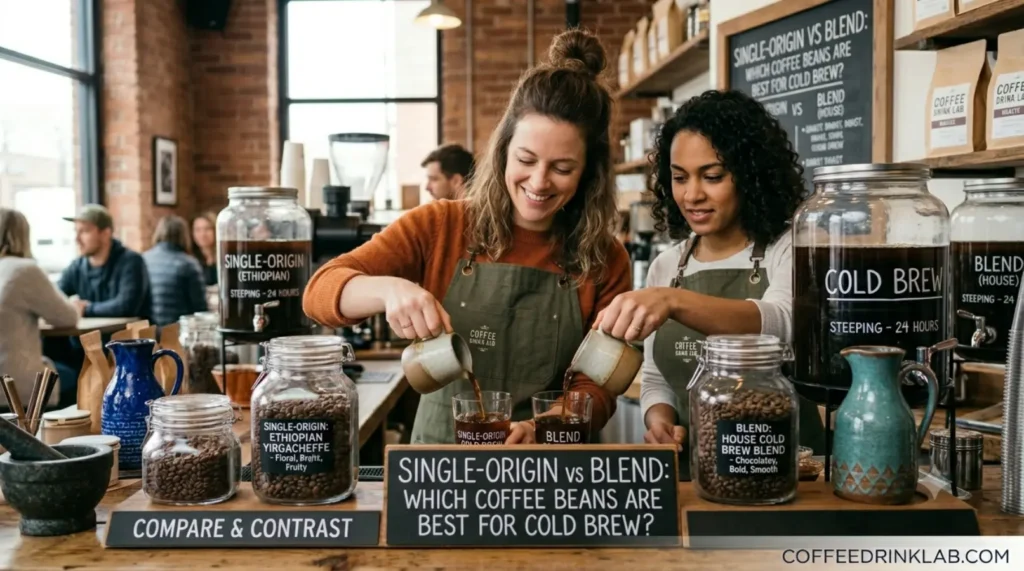
One common question is whether single-origin coffee or blends work better.
| Feature | Single-Origin | Blend |
|---|---|---|
| Flavor Complexity | High | Moderate |
| Consistency | Seasonal | Consistent |
| Unique Characteristics | Strong | Balanced |
| Beginner Friendly | Sometimes | Usually |
| Price | Often Higher | Often Lower |
Single-origin coffees showcase a region’s unique flavor profile. However, blends are designed for balance and consistency.
For beginners, blends often provide a safer starting point. Meanwhile, experienced coffee drinkers may enjoy exploring single-origin options.
Best Flavor Profiles for Cold Brew
Not every flavor profile works equally well in cold brew.
1. Chocolate and Cocoa Notes
Chocolate-forward coffees create rich, dessert-like cold brews. Furthermore, these flavors appeal to a wide audience.
2. Caramel and Brown Sugar
These sweet notes become even more pronounced during cold extraction.
3. Nutty Profiles
Almond, hazelnut, and pecan flavors contribute warmth and smoothness.
4. Fruit-Forward Coffees
Berry and citrus notes create refreshing summer drinks, especially when served over ice.
Arabica vs. Robusta for Cold Brew
Most specialty cold brew uses Arabica beans, but Robusta has its place as well.
| Factor | Arabica | Robusta |
| Flavor | Sweet and complex | Strong and earthy |
| Acidity | Higher | Lower |
| Caffeine | Moderate | High |
| Smoothness | Excellent | Moderate |
| Cold Brew Popularity | Very High | Moderate |
Arabica generally produces a smoother and more flavorful cold brew. However, Robusta can add extra caffeine and body when included in blends.
If you’re new to cold brew, Arabica is usually the better choice.
Can You Use Espresso Beans for Cold Brew?
Yes, you can use espresso beans for cold brew. The term “espresso beans” usually refers to coffee beans that are selected or roasted for espresso brewing, rather than a separate type of coffee bean. Many espresso blends have chocolate, caramel, nutty, or low-acidity flavors that can work very well in cold brew.
These same beans can also work well as espresso beans for iced coffee, although iced coffee and cold brew use different brewing methods.
It is also important to understand the difference between cold brew and iced coffee. Cold brew is made by steeping coffee grounds in cold or room-temperature water for several hours, while iced coffee is usually hot-brewed coffee that is cooled and served over ice. Therefore, espresso beans can be used for both, but the brewing process and final flavor will be different.
How to Choose the Best Coffee Beans for Cold Brew at Home
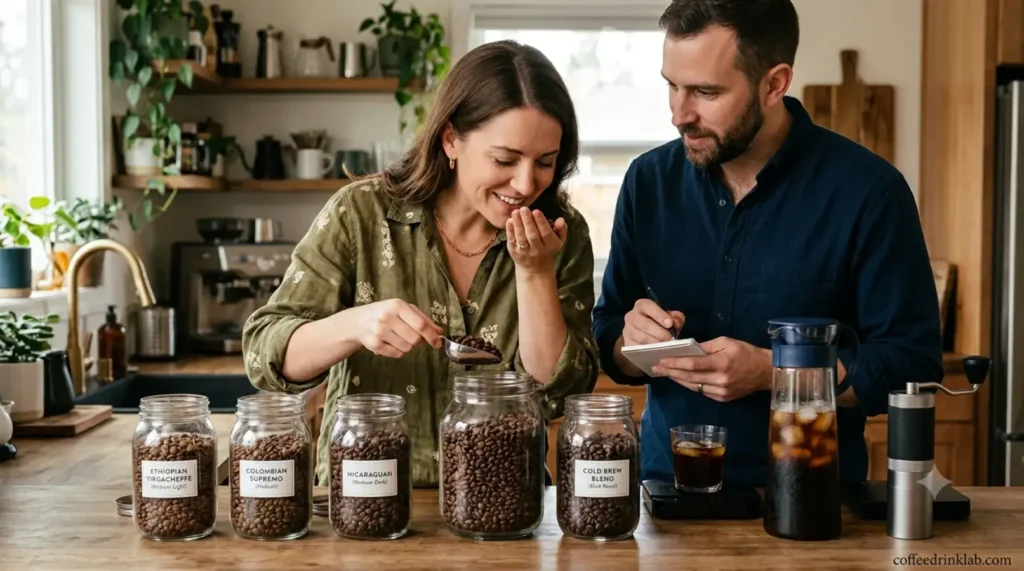
Finding the right beans depends on personal taste.
If you enjoy sweet and balanced coffee, choose a medium-roast Colombian or Brazilian coffee. On the other hand, if you prefer bold flavors, look for medium-dark or Sumatran beans.
For adventurous coffee drinkers, Ethiopian coffees provide exciting fruit-forward experiences. Most importantly, always buy fresh whole beans and grind them just before brewing, fresh whole beans, a coarse grind, and a flavor profile that suits cold extraction rather than simply choosing the most expensive coffee.
When choosing the best coffee beans for cold brew at home, use this simple checklist:
- Choose fresh whole beans with a recent roast date.
- Start with a medium or medium-dark roast based on your preferred flavor.
- Look for chocolate, caramel, nutty, or naturally sweet tasting notes if you want a smooth cold brew.
- Grind the beans coarsely immediately before brewing.
- Experiment with different origins and blends until you find the flavor profile you enjoy most.
2026 Buying Tip: What to Look for in Cold Brew Beans
Current-year coffee buying decisions should focus on the roast date, freshness, bean quality, origin, and intended flavor profile rather than simply choosing the newest product or most expensive bag. For cold brew, fresh whole beans and a coarse grind remain more important than the year printed in a product name.
4. Common Mistakes When Choosing Cold Brew Beans
1. Using Very Dark, Oily Beans
Extremely dark roasts can introduce excessive bitterness and smoky flavors.
2. Choosing Pre-Ground Coffee
Pre-ground coffee loses freshness quickly. Therefore, whole beans are usually preferable.
3. Ignoring Roast Dates
Freshness affects flavor significantly. Always check roast dates when possible.
4. Using Fine Grind Sizes
Fine grounds can over-extract and produce cloudy cold brew.
4. Where to Buy Coffee Beans for Cold Brew
Finding good coffee beans for cold brew is usually more important than choosing a specific store. Walmart, Costco, Starbucks, grocery stores, local roasters, and online coffee retailers can all carry suitable options. When comparing products, prioritize roast date, whole-bean freshness, roast level, origin, and tasting notes rather than assuming that a higher price means better cold brew.
1. Choosing Cold Brew Beans by Location
The best coffee beans for cold brew can vary by what is available in your local market. Coffee drinkers searching for the best coffee beans for cold brew in India, Singapore, the Philippines, or Australia can use the same basic selection criteria: look for a recent roast date, fresh whole beans, a suitable medium or medium-dark roast, and a coarse grind. Local specialty roasters can also be a good option because they often provide detailed origin and tasting information.
2. Best Coffee Beans for Cold Brew at Walmart
Walmart can be a convenient option if you want affordable and easily available coffee beans. Look for whole beans with a recent roast date and choose medium or medium-dark roasts if you prefer smooth, chocolatey cold brew.
3. Best Coffee Beans for Cold Brew at Costco
Costco can be useful for buying coffee beans in larger quantities. When choosing beans for cold brew, check the roast date, packaging, and flavor profile. Medium-roast or medium-dark blends can work well for everyday cold brew.
4. Best Coffee Beans for Cold Brew at Starbucks
Starbucks coffee beans can also be used for cold brew at home. If you prefer a bold and rich flavor, look for beans with chocolate, caramel, or roasted-nut tasting notes and grind them coarsely before brewing.
5. Local Roasters and Online Coffee Shops
Local coffee roasters and specialty online coffee shops can be excellent choices when freshness is a priority. They often provide roast dates, origin information, tasting notes, and different roast options, making it easier to choose beans specifically for cold brew.
Cold Brew Bean Comparison Chart
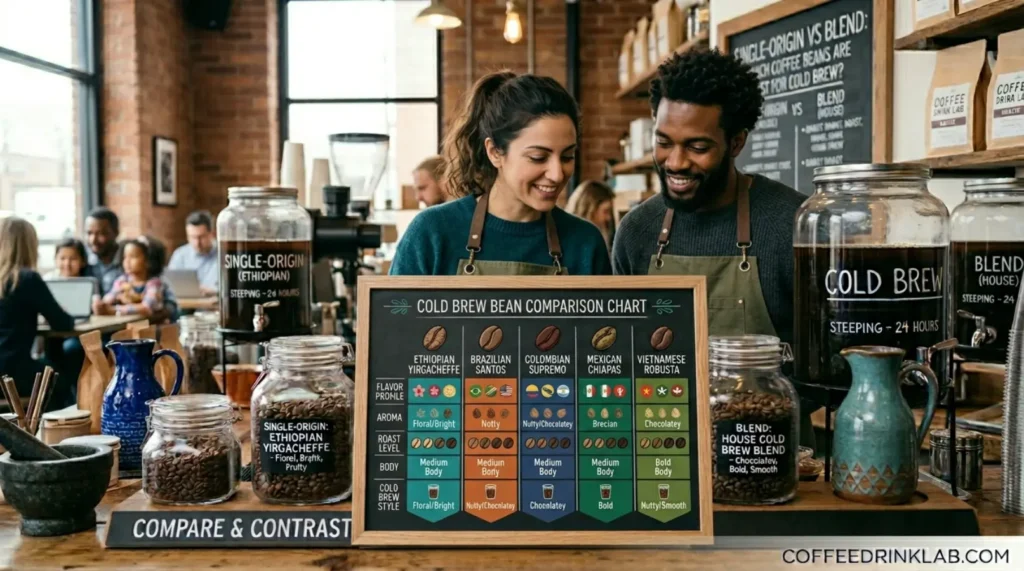
| Bean Type | Flavor Notes | Body | Best For |
| Colombian | Chocolate, caramel | Medium | Beginners |
| Brazilian | Nutty, cocoa | Full | Everyday cold brew |
| Ethiopian | Berry, citrus | Light-Medium | Fruity flavors |
| Sumatran | Earthy, spice | Heavy | Bold coffee lovers |
| Blend | Balanced sweetness | Medium-Full | Consistent results |
Final Verdict: Choosing the Best Coffee Beans for Cold Brew
Choosing the best coffee beans for cold brew ultimately comes down to your flavor preferences, but medium-roast Arabica beans remain the most reliable starting point. Whether you prefer chocolatey Brazilian coffees, balanced Colombian beans, fruity Ethiopian varieties, or bold Sumatran roasts, the right choice can transform your cold brew experience.
Fortunately, cold brew is one of the most forgiving brewing methods. As a result, you can experiment with different origins, roast levels, and blends until you discover your perfect cup. Start with freshly roasted beans, use a coarse grind, and allow plenty of steeping time. Before long, you’ll be enjoying café-quality cold brew right at home while developing a deeper appreciation for the incredible variety found in specialty coffee.
FAQs:
Medium-roast Arabica beans are a great starting point for most cold brew drinkers. Colombian and Brazilian beans work particularly well if you enjoy smooth, chocolatey, caramel, or nutty flavors. Ethiopian beans are better suited to fruity and floral profiles, while Sumatran beans can provide a heavier, more earthy cup. The best coffee beans for cold brew ultimately depend on your preferred flavor and roast level.
There is no single best coffee bean for everyone. Medium-roast Colombian or Brazilian Arabica beans are reliable choices for balanced and smooth cold brew, while Ethiopian beans are better for fruity flavors and Sumatran beans work well for a bold, full-bodied cup.
Medium roast is one of the most versatile choices for cold brew. It provides a good balance of sweetness, body, and acidity. Medium-dark roast is another good option if you prefer a richer and bolder flavor.
Yes, espresso beans can be used for cold brew. Espresso beans are simply beans selected or roasted for espresso brewing and are not a separate type of coffee bean. Medium-dark espresso blends with chocolate, caramel, or nutty notes can work particularly well in cold brew.
Yes. Medium-roast coffee beans are often an excellent choice for cold brew because they can provide balanced sweetness, moderate body, and a smooth flavor. Colombian and Brazilian medium roasts are particularly suitable for beginners.
Discover More Blends
Can You Grind Coffee Beans in a Food Processor Without a Grinder?
Brazilian Coffee Beans: Origin, Taste & Roasts







6 Comments