

Do Coffee Beans Go Bad? Shelf Life Guide
If you have ever opened an old bag of coffee and wondered do coffee beans go bad, you are not alone. The good news is that roasted coffee beans are generally shelf-stable, so they usually become stale and lose flavor before they become unsafe.
For most coffee lovers, the bigger concern is freshness, aroma, moisture, heat, oxygen, and proper storage. In this guide, we’ll explain how long coffee beans last, when coffee beans go bad, whether sealed or opened beans are different, and how the freezer, fridge, heat, and expiration dates affect your coffee.
1. Do Coffee Beans Go Bad? The Short Answer
Yes, coffee beans can eventually become unpleasant or potentially unsuitable to use, but they usually stale rather than “spoil” like fresh foods. The Specialty Coffee Association describes roasted coffee as a shelf-stable product that does not normally spoil through ordinary microbial or enzymatic processes. However, chemical changes gradually reduce aroma and flavor after roasting.
In other words, an old bag may still look perfectly normal while producing a flat, dull, or slightly stale cup. Therefore, freshness and safety are related but not exactly the same thing.
1. What Happens as Coffee Gets Older?
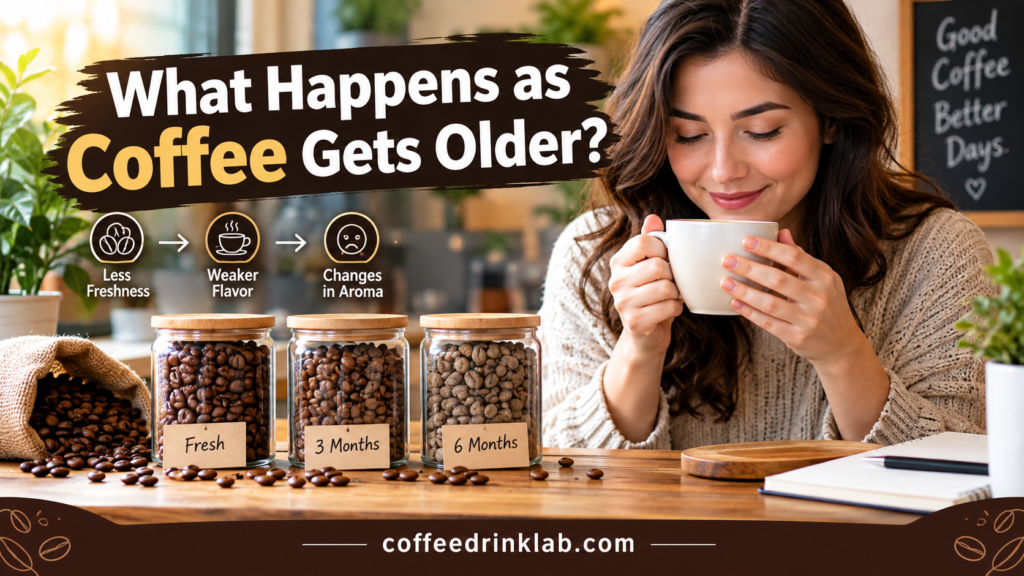
After roasting, coffee slowly releases carbon dioxide and loses volatile aroma compounds. Oxygen, moisture, temperature, and time all contribute to this aging process. The SCA identifies oxygen, moisture, temperature, and time as major enemies of roasted coffee freshness.
Fresh whole beans generally retain more aroma than ground coffee because grinding dramatically increases the coffee’s exposed surface area. As a result, whole beans are usually the better choice when you want a fresher-tasting cup.
How Long Does Coffee Stay Fresh?
There is no single expiration point that applies to every bag. Roast date, packaging, storage conditions, roast level, and exposure to oxygen all influence how quickly the flavor changes.
For the best flavor, many coffee drinkers prefer using roasted whole beans relatively soon after roasting rather than storing them for months. The SCA notes that whole-bean coffee can reasonably be considered fresh for roughly three weeks based on degassing behavior, although coffee can remain usable beyond that period.
A practical way to think about coffee shelf life is:
| Storage situation | What usually happens |
|---|---|
| Freshly roasted, well sealed | Best aroma and flavor |
| Opened and stored properly | Gradual loss of freshness |
| Several months old | Noticeably less aromatic |
| Very old but dry and intact | May still brew, but flavor can be flat |
| Exposed to moisture | Higher risk of quality problems |
| Moldy or visibly contaminated | Discard it |
Therefore, don’t automatically throw away beans simply because they are older. Instead, inspect their condition and consider how they were stored.
1. Do Coffee Beans Go Bad Once Opened?
Do coffee beans go bad once opened? Not immediately. Opening the bag simply exposes the beans to more oxygen, which accelerates the gradual loss of aroma and freshness.
If you open a bag and reseal it properly after each use, the beans can remain useful for quite some time. However, repeatedly leaving the bag open, storing it near heat, or exposing it to humidity can make the coffee deteriorate faster.
1. Do Coffee Beans Go Bad If Sealed?
Do coffee beans go bad if sealed? They can still age, but a properly sealed package can slow freshness loss considerably. Commercial coffee packaging often uses protective materials and one-way valves to help manage gases and limit oxygen exposure.
A sealed bag also isn’t necessarily the same as a perfectly oxygen-free environment. Over time, coffee continues to undergo physical and chemical changes, although good packaging can substantially slow them.
2. Do Coffee Beans Go Bad in the Freezer or Fridge?
Cold storage is one of the most debated coffee-storage topics. The important distinction is that freezing and refrigerating are not identical.
The SCA reports that freezing can significantly slow coffee’s aging and freshness loss when handled correctly. Research discussed by the organization found that sub-zero storage can greatly reduce the rate of off-gassing compared with elevated temperatures.
1. Do Coffee Beans Go Bad in the Freezer?

Do coffee beans go bad in the freezer? Freezing does not automatically ruin coffee beans. In fact, properly frozen coffee can retain freshness for considerably longer than coffee kept at warm temperatures.
However, moisture and temperature changes are important. If cold beans are exposed to humid air while still chilled, condensation can form on the beans. The SCA recommends allowing frozen coffee to return to room temperature before opening its package to reduce this risk.
For everyday coffee, you generally don’t need to freeze a bag you expect to finish quickly. Freezing makes more sense when you need to preserve coffee for a longer period.
2. Do Coffee Beans Go Bad in the Fridge?
The refrigerator is usually less attractive than the freezer for long-term coffee storage. Coffee can absorb moisture and surrounding odors, and repeated temperature changes can create condensation.
So, rather than putting a frequently opened coffee bag in the refrigerator, a cool, dry, dark cupboard is often simpler for everyday storage.
How to Tell If Coffee Beans Have Gone Bad
Because stale coffee can look normal, your senses are useful. Before brewing an old bag, inspect the beans and packaging carefully.
Look for these warning signs:
- Visible mold or unusual growth
- Damp or wet beans
- Strong, unpleasant odors that don’t resemble coffee
- Signs of moisture inside the package
- Insect contamination
- Damaged packaging that allowed moisture inside
If beans have visible mold or have become damp and contaminated, don’t try to rescue them by roasting, grinding, or brewing them.
On the other hand, beans that simply smell less aromatic or produce a weaker cup are more likely stale rather than spoiled. In that situation, the main issue is quality.
1. Do Coffee Beans Go Bad After the Expiration Date?
Do coffee beans go bad after expiration date? Not necessarily. A printed best-by or expiration date should not automatically be treated as the exact moment coffee becomes unsafe.
Coffee quality generally declines gradually rather than switching from “good” to “bad” overnight. USDA guidance for shelf-stable dry foods similarly notes that products can remain safe while losing freshness and quality over time, although moisture or damaged packaging can create problems.
Therefore, consider the date together with the roast date, packaging condition, storage environment, smell, appearance, and moisture exposure.
1. Can You Use Two-Year-Old Coffee?
Coffee beans that are two years old may still be dry and usable, but you should expect a substantial loss of freshness and flavor compared with recently roasted beans.
If the package has remained sealed, dry, and intact, age alone doesn’t prove that the beans are spoiled. Nevertheless, specialty coffee is usually enjoyed much earlier because its delicate aromas and flavor characteristics fade with time.
1. How Fast Do Coffee Beans Go Bad?
How fast do coffee beans go bad? The answer depends heavily on storage. Coffee exposed to oxygen, heat, and moisture ages faster than coffee protected in a suitable package.
Temperature is especially important because warmer conditions accelerate chemical reactions and physical changes. The SCA’s research explains that temperature has a major influence on coffee staling and aroma loss.
1. Do Coffee Beans Go Bad in Heat?
Heat is one of the worst environments for preserving coffee freshness. A bag sitting beside a hot appliance, in direct sunlight, or in a consistently warm kitchen can lose quality faster than the same coffee stored somewhere cool and dark.
Therefore, keep coffee away from ovens, stovetops, sunny windows, and other warm locations. A cupboard away from heat is a much better everyday choice.
Best Way to Store Coffee Beans

For most households, simple storage works best. You don’t need an elaborate coffee laboratory to protect your beans.
Keep roasted coffee in a clean, airtight container or well-sealed original package and place it somewhere cool, dark, and dry. Avoid repeatedly opening the container just to smell the beans because every exposure introduces more air.
A good storage routine includes:
- Buy an amount you can reasonably use while it is still flavorful.
- Keep the beans whole until you are ready to brew.
- Seal the package immediately after taking out coffee.
- Store it away from sunlight and heat.
- Keep it away from moisture and strong household odors.
- Avoid unnecessary temperature changes.
Most importantly, don’t store coffee beside foods with powerful aromas. Coffee can pick up surrounding odors, which can eventually affect the flavor of your morning cup.
Final Thoughts: Do Coffee Beans Go Bad?
Do coffee beans go bad? Usually, coffee’s biggest problem is not sudden spoilage but gradual loss of freshness, aroma, and flavor. A properly stored bag can remain usable well beyond its peak, while heat, oxygen, moisture, and repeated exposure can make that decline happen faster.
For the best cup, buy coffee in reasonable quantities, keep the beans sealed in a cool and dry place, and grind only what you need. If you have a long-term storage situation, freezing can be useful when the coffee is packaged and handled carefully. The SCA’s research shows that freezing can substantially slow freshness-related changes.
Ultimately, trust the condition of the beans as much as the date printed on the package. If they’re dry, clean, and simply less aromatic, they may just be past their flavor peak. If they show moisture, mold, or contamination, it’s time to let them go.
FAQs:
For beginners, freshly roasted Arabica beans with a balanced medium roast are often an approachable starting point. However, personal taste matters, so someone who enjoys bold, smoky flavors may prefer a darker roast.
Consider roast level, origin, flavor notes, freshness, and brewing method. For example, a light roast can highlight fruitier or brighter characteristics, while medium and dark roasts often provide deeper, more developed flavors.
Absolutely. Whole beans are particularly useful at home because grinding immediately before brewing can help preserve more aroma. You can use them with a drip machine, French press, pour-over, espresso maker, or other compatible brewer.
The most common questions involve how long beans last, whether opened or unopened coffee is still good, and what happens after the printed date. People also frequently ask about refrigerators, freezers, sealed bags, heat, and coffee storage.
Stale coffee has mainly lost aroma and flavor because of aging, oxygen exposure, temperature, or other storage factors. Spoiled or contaminated beans are a different matter, especially when moisture, mold, or other contamination is present.
Discover More Blends
Calabria Coffee: Authentic Italian Espresso Guide
How Many Scoops of Coffee Per Cup? Coffee Ratio
Shibam Coffee: Menu, Locations & Best Drinks







One Comment