
Italian Coffee Beans & Types of Italian Coffee: Best Brands, Drinks & Guide
Italy is famous for its espresso tradition, but Italian coffee beans are also an important part of the country’s coffee culture. From traditional espresso blends to beans used for cappuccino, moka pot, and other drinks, Italian roasters are known for creating balanced and full-bodied coffees. This guide explores the best Italian coffee beans, popular Italian coffee drinks, Italian coffee bean brands, where Italian coffee beans come from, and how to choose the right beans for espresso and cappuccino.
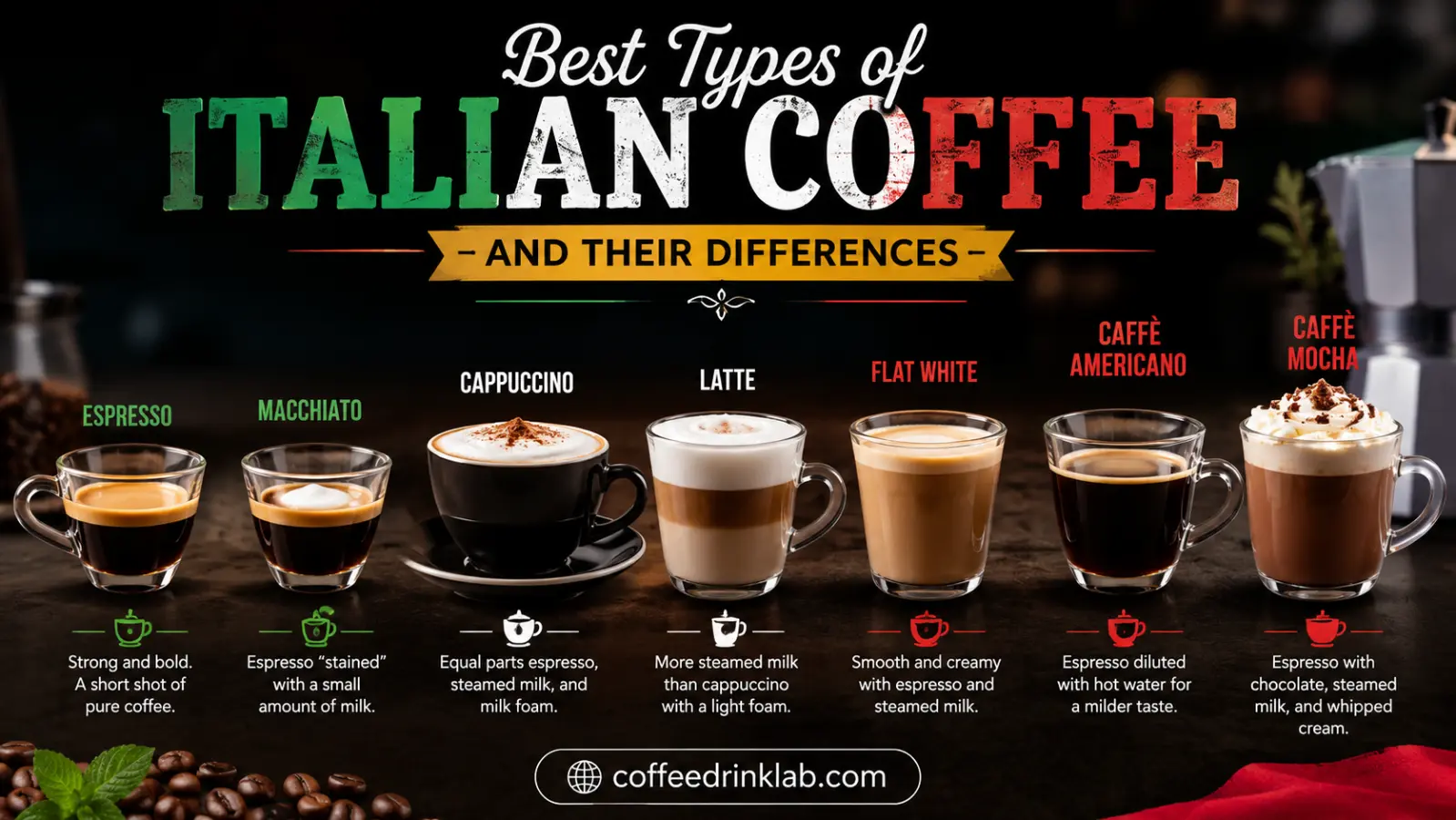
If you’ve ever wondered about the different types of Italian coffee, how many types of Italian coffee are there, or wanted Italian coffee types explained in simple language, this guide covers everything you need to know. We’ll explore the most popular coffee types in Italy, their ingredients, flavor profiles, and the differences that make each drink unique.
Understanding the Types of Italian Coffee 🇮🇹
Italian coffee is more than just caffeine. It’s a daily ritual that emphasizes quality espresso, carefully selected arabica and robusta beans, proper roast levels, and traditional preparation methods.
Most Italian coffee drinks start with a shot of espresso. However, the amount of milk, water, foam, or additional ingredients creates distinct beverages with unique textures and flavor experiences.
Italian Coffee Beans: What Makes Them Different?
Italian coffee beans are closely associated with espresso culture and traditional Italian roasting. While coffee plants are generally not grown commercially in Italy on a large scale, Italian roasters import green coffee beans from producing countries and roast, blend, and package them in Italy. This roasting tradition gives many Italian coffees their characteristic bold body, rich aroma, and balanced espresso flavor.
Where Do Italian Coffee Beans Come From?
If you are wondering where do Italian coffee beans come from, the answer is usually outside Italy. Most coffee is grown in tropical coffee-producing regions such as Brazil, Colombia, Ethiopia, Vietnam, India, and Central America. Italian coffee companies commonly import green beans and then roast and blend them in Italy.
Because of Italy’s climate, coffee beans grown in Italy are not the norm in the commercial coffee industry. The phrase “Italian coffee beans” generally refers to beans roasted or produced by Italian coffee companies rather than beans grown in Italian soil.
Authentic Italian Coffee Beans vs. Italian-Style Coffee
Authentic Italian coffee beans generally means coffee roasted by an Italian company or prepared according to an Italian roasting tradition. Italian-style coffee, however, can be produced anywhere. When shopping, check the roasting location, company origin, bean origin, roast date, and blend information to understand what you are actually buying.
How Many Types of Italian Coffee Are There?
Many people ask, how many types of Italian coffee are there? While there is no official number, Italy has more than 20 traditional espresso-based drinks that vary by region and preparation style.
Some cafés focus on the most common Italian coffee drinks, including espresso, cappuccino, latte, macchiato, americano, lungo, ristretto, marocchino, corretto, and affogato. Regional cafés may also serve specialties such as shakerato, bicerin, caffè freddo, and espresso con panna.
Although every drink starts with espresso, small adjustments in milk, foam, water, chocolate, or liquor create completely different flavors. This variety is one reason the types of coffee in Italy remain popular with both locals and tourists.
Espresso: The Foundation of Italian Coffee
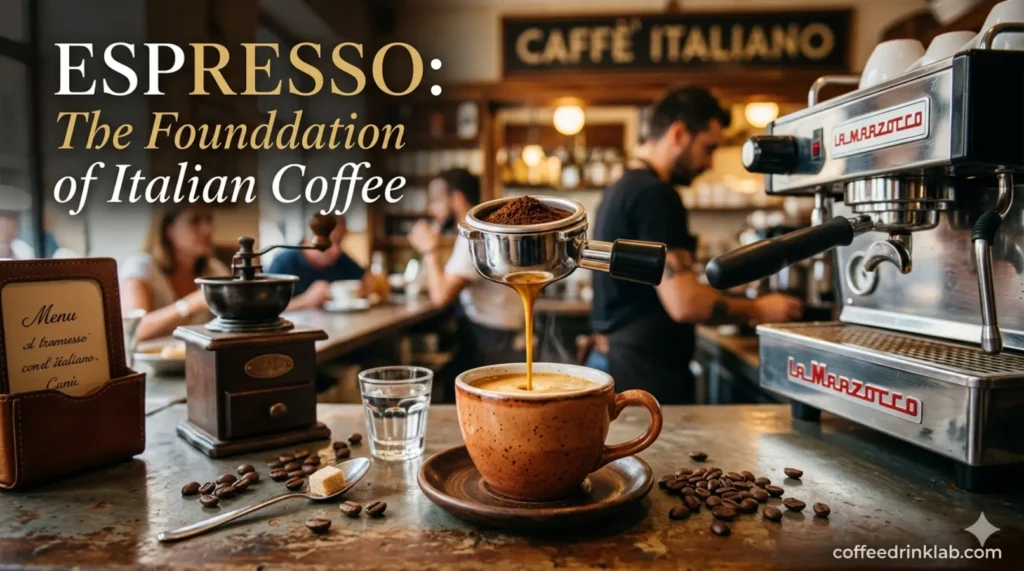
Espresso is the heart of Italian coffee culture. In Italy, when someone orders a “coffee,” they usually receive a freshly brewed espresso shot.
This concentrated black coffee delivers rich flavor, a velvety body, and a golden crema on top. Furthermore, nearly every other Italian coffee drink begins with espresso as its base.
Key Details:
- Strong and concentrated
- Served in a small cup
- Rich crema layer
- Typically consumed quickly while standing at a café
Italian Coffee Types Explained
If you’re searching for Italian coffee types explained, the easiest way to understand them is by separating drinks into three groups.
Espresso-Based Coffee
Espresso, ristretto, lungo, and americano contain little or no milk and highlight the coffee itself.
Milk-Based Coffee
Cappuccino, latte, macchiato, and flat white-inspired drinks combine espresso with steamed milk and foam for a smoother taste.
Dessert Coffee
Affogato and marocchino combine espresso with chocolate, gelato, or cocoa to create sweet coffee experiences.
Understanding these categories makes it easier to order confidently while traveling through Italy or visiting authentic Italian cafés abroad.
Cappuccino: Italy’s Famous Morning Favorite
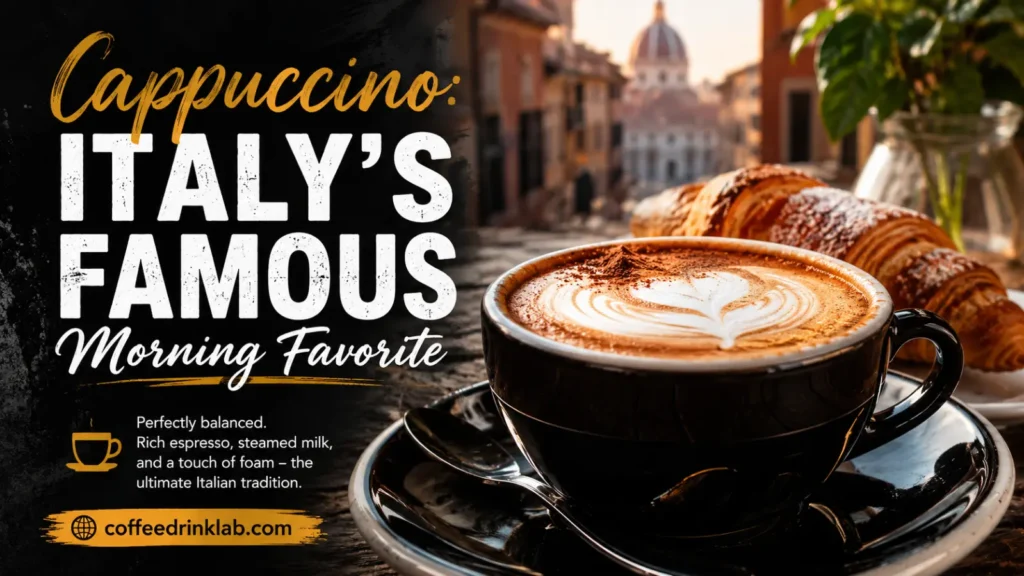
Cappuccino combines espresso, steamed milk, and milk foam in balanced proportions. The result is a creamy, smooth drink that softens espresso’s intensity without overpowering it.
Traditionally, Italians enjoy cappuccino during breakfast rather than after meals. Consequently, ordering one after lunch in Italy may surprise locals.
Choosing the best Italian coffee beans for cappuccino can make a noticeable difference because milk can soften the flavor of espresso. A medium-to-dark Italian espresso blend with good body and balanced acidity often works well with steamed milk.
Key Details:
- 1 part espresso
- 1 part steamed milk
- 1 part milk foam
- Smooth and creamy texture
Caffè Latte: A Milk Lover’s Dream

A generous amount of steamed milk is combined with espresso to create the smooth and creamy caffè latte. Compared with cappuccino, this drink has less foam and a creamier texture. Its mild flavor profile also makes it an approachable choice for beginners who prefer a smoother coffee experience.
Because of its mild flavor profile, many beginners find it easier to enjoy than stronger espresso-based drinks. Additionally, flavored syrups are often added outside Italy, especially in American coffee shops.
Key Details:
- Espresso with steamed milk
- Minimal foam
- Mild coffee flavor
- Popular breakfast choice
Short Strong Italian Coffee Explained
Many users search for short strong Italian coffee, and the answer is simple: it’s usually ristretto or espresso.
A ristretto is brewed with less water than a regular espresso, producing a smaller but more concentrated shot. Espresso is also considered a classic short coffee because it’s served in a small cup with bold flavor and rich crema.
If you enjoy intense coffee without milk, these are among the strongest Italian coffee types available.
Best Italian Coffee Beans and Brands to Consider
If you are searching for the best Italian coffee beans, focus on the roast profile, Arabica-to-Robusta blend, freshness, intended brewing method, and the reputation of the roaster. Italian coffee brands offer everything from traditional dark espresso blends to smoother Arabica-focused options.
Popular Italian Coffee Bean Brands
Popular Italian coffee beans brands include established Italian roasters such as Lavazza, Illy, Kimbo, Segafredo Zanetti, Pellini, and Caffè Borbone. Each brand offers different blends and roast profiles, so the best choice depends on whether you prefer traditional espresso, cappuccino, moka pot coffee, or a smoother Arabica-focused cup.
Where to Buy Italian Coffee Beans
If you are wondering where to buy Italian coffee beans, you can find them through specialty coffee retailers, Italian grocery stores, online coffee shops, and major e-commerce marketplaces. Buying online can provide a wider selection of Italian roasters, blends, roast levels, and whole-bean options.
Italian Coffee Beans Online
Buying Italian coffee beans online makes it easier to compare brands, roast profiles, Arabica and Robusta blends, package sizes, and roast dates. Whenever possible, choose whole beans with a clearly stated roast or best-before date and buy from a reputable seller.
Italian Coffee Beans Near Me
Searching for Italian coffee beans near me? Start with local Italian grocery stores, specialty coffee shops, gourmet food markets, and retailers that carry imported coffee. Look for recognizable Italian roasters and check the packaging to confirm the roasting location and bean information.
Trucillo Espresso and Italian Coffee Beans
Trucillo is an Italian coffee company associated with espresso and traditional Italian coffee roasting. If you are researching Trucillo espresso Italian coffee beans, check the specific product description for its Arabica and Robusta composition, roast profile, and intended brewing method. This helps you determine whether a particular Trucillo blend is suitable for espresso, cappuccino, or moka pot brewing.
Macchiato: Espresso with a Touch of Milk
The word “macchiato” means “stained” or “marked” in Italian. A traditional espresso macchiato is simply an espresso shot topped with a small amount of milk foam.
As a result, it remains strong while gaining a slightly smoother texture. It’s ideal for those who enjoy bold coffee but want just a touch of creaminess.
Key Details:
- Mostly espresso
- Small amount of milk foam
- Strong flavor
- Low milk content
Caffè Americano: Smooth and Easy Drinking
Americano is created by adding hot water to espresso. This process produces a drink similar in strength to drip coffee while maintaining espresso’s flavor characteristics.
Meanwhile, the added water reduces bitterness and creates a lighter mouthfeel, making it a popular choice among American coffee drinkers.
Key Details:
- Espresso plus hot water
- Larger serving size
- Less intense than espresso
- Similar to black coffee
Caffè Ristretto: The Intensely Concentrated Shot
Ristretto uses less water than a standard espresso shot. Therefore, it produces a smaller but more concentrated coffee experience.
Many coffee enthusiasts appreciate ristretto because it highlights sweetness and aroma while reducing some bitter notes.
Key Details:
- Short extraction
- Smaller volume
- Highly concentrated
- Rich flavor profile
Caffè Lungo: A Longer Espresso Experience
Lungo is the opposite of ristretto. It uses more water during extraction, resulting in a larger cup with a milder intensity.
However, because the extraction lasts longer, additional flavor compounds are released, creating a unique taste experience.
Key Details:
- Longer extraction time
- Larger volume
- Mild strength
- Slightly more bitterness
Caffè Corretto: Coffee with a Kick
Caffè corretto combines espresso with a small amount of liquor, often grappa, sambuca, or brandy.
Traditionally enjoyed after meals, this drink offers a warming and flavorful experience that blends coffee and spirits beautifully.
Key Details:
- Espresso plus liquor
- Common after dinner
- Rich aroma
- Traditional Italian favorite
Marocchino: Chocolate Meets Espresso
Marocchino is one of Italy’s most delightful specialty coffee drinks. It combines espresso, cocoa powder, and milk foam in a small glass.
Consequently, it offers a perfect balance of chocolate sweetness and espresso richness without becoming overly heavy.
Key Details:
- Espresso base
- Cocoa powder
- Milk foam topping
- Dessert-like flavor
Affogato: Coffee and Gelato Together
Affogato is technically both a dessert and a coffee drink. It consists of a scoop of vanilla gelato topped with a fresh shot of hot espresso.
As the espresso melts the gelato, it creates a creamy, luxurious treat loved by coffee enthusiasts worldwide.
Key Details:
- Vanilla gelato
- Hot espresso shot
- Sweet and creamy
- Popular dessert coffee
Best Types of Italian Coffee Drinks to Try
If you’re new to Italian coffee culture, some drinks are easier to start with than others. The following comparison table can help you choose.
| Coffee Type | Flavor Strength | Milk Content | Best For |
|---|---|---|---|
| Espresso | Very Strong | None | Traditional coffee lovers |
| Cappuccino | Medium | High | Breakfast drinkers |
| Latte | Mild | Very High | Beginners |
| Macchiato | Strong | Low | Espresso fans |
| Americano | Medium | None | Black coffee drinkers |
| Ristretto | Very Strong | None | Coffee enthusiasts |
| Lungo | Medium-Strong | None | Longer sipping |
| Marocchino | Medium | Moderate | Chocolate lovers |
| Affogato | Mild | Dairy-based | Dessert lovers |
For beginners, a latte or cappuccino often provides the easiest introduction. On the other hand, experienced coffee drinkers may prefer espresso, ristretto, or macchiato for their stronger flavors.
The Role of Italian Coffee Beans in Traditional Espresso
The quality of Italian coffee depends heavily on the beans used. Many Italian roasters blend arabica and robusta beans to achieve balance.
Arabica Beans
The flavor of Italian espresso depends not only on the brewing method but also on the Italian coffee beans selected by the roaster. Many traditional Italian blends combine Arabica and Robusta to create a balance of sweetness, body, crema, aroma, and intensity.
Robusta Beans
Robusta adds body, crema, and higher caffeine content. As a result, many traditional Italian espresso blends include a percentage of robusta.
Best Italian Coffee Beans for Espresso
The best Italian coffee beans for espresso depend on your preferred flavor profile. Arabica-heavy blends can provide greater sweetness and aromatic complexity, while blends containing Robusta often deliver more body, caffeine, and crema. For a traditional Italian espresso experience, look for freshly roasted beans, a suitable espresso roast, and a blend designed specifically for espresso machines.
How Italians Traditionally Drink Coffee
Italian coffee culture follows traditions that may surprise American visitors.
- Espresso is often consumed standing at the bar.
- Cappuccino is typically enjoyed before noon.
- Coffee breaks are short and social.
- Quality is valued over quantity.
Most importantly, coffee in Italy is considered a daily ritual rather than simply a source of caffeine.
Making Italian Coffee at Home
Using the right Italian coffee beans is just as important as choosing the right brewing method. Espresso machines work best with a properly ground espresso blend, while moka pots pair well with medium-fine ground coffee. Freshly roasted beans can also provide better aroma and flavor.
Fortunately, you don’t need to travel to Italy to enjoy authentic Italian coffee.
An espresso maker is the ideal choice. However, a moka pot also creates rich, traditional coffee that closely resembles espresso. Additionally, using freshly roasted beans and proper grind size significantly improves flavor.
For milk-based drinks, whole milk generally creates the richest foam, although oat milk barista blends can provide excellent dairy-free alternatives.
The Final Talk
The many types of Italian coffee showcase why Italy remains one of the world’s most influential coffee cultures. Whether you enjoy bold espresso, creamy cappuccino, smooth latte, or dessert-inspired affogato, each drink highlights a unique aspect of traditional Italian brewing. Understanding the different types of Italian coffee, their ingredients, and when Italians typically drink them makes ordering much easier and more enjoyable.
As these Italian coffee types continue to inspire cafés around the world, learning about authentic coffee types in Italy helps every coffee lover appreciate the history behind each cup. Experiment with several types of Italian coffee drinks to discover your favorite and experience authentic Italian coffee culture from home or while traveling.
FAQs:
The best Italian coffee beans depend on your preferred flavor and brewing method. For traditional espresso, look for a fresh Italian-roasted blend with a balance of Arabica and Robusta or an Arabica-focused blend if you prefer a smoother, more aromatic cup.
Most commercial Italian coffee beans are not grown in Italy. Coffee plants generally require tropical growing conditions, so Italian coffee companies typically import green coffee beans from producing countries and roast them in Italy.
The best Italian coffee beans for cappuccino are usually espresso blends with enough body and intensity to complement steamed milk. A medium-to-dark roast can work particularly well.
You can buy authentic Italian coffee beans from Italian grocery stores, specialty coffee retailers, online coffee shops, and reputable marketplaces. Check the packaging for the Italian roaster, bean origin, and freshness information.
Popular Italian coffee bean brands include Lavazza, Illy, Kimbo, Segafredo Zanetti, Pellini, and Caffè Borbone. Their blends vary in roast level, Arabica and Robusta content, and intended brewing method.
Discover More Blends
Types of Coffee Explained: A Complete Beginner’s Guide
Types of Coffee Grounds and Brewing Methods
Two Types of Coffee







3 Comments