
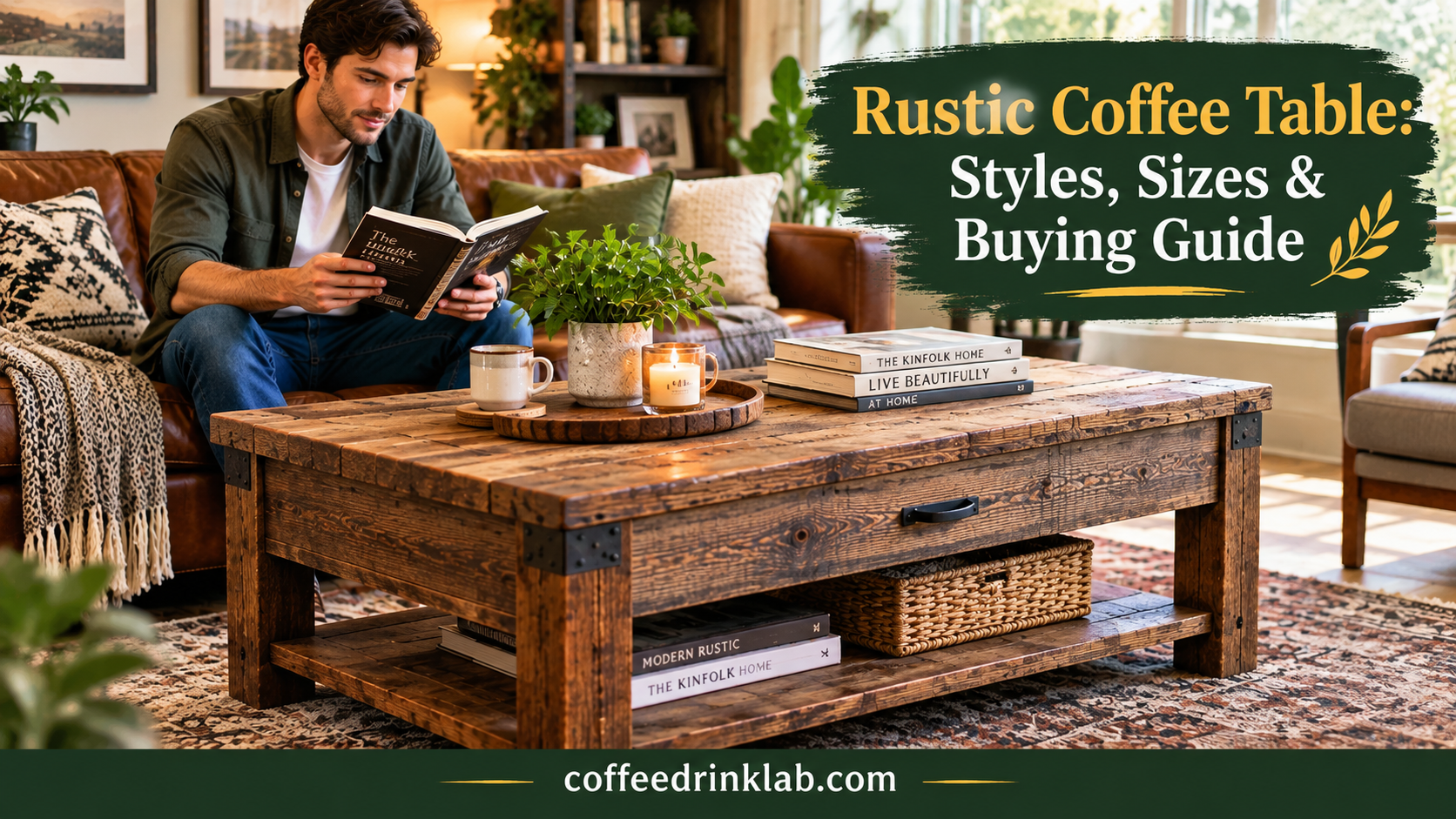
Rustic Coffee Table: Styles, Sizes & Buying Guide
A rustic coffee table can instantly make a living room feel warmer, more relaxed, and inviting. Whether you prefer reclaimed wood, farmhouse details, dark finishes, or a cleaner modern look, the right table can anchor your seating area without making it feel crowded.
If you’re searching for the best rustic coffee table for a farmhouse living room, start by considering your room size, sofa shape, storage needs, and preferred finish. From rectangular and square designs to round tables and rolling options, there is a style for almost every space.
Rectangular Rustic Coffee Table for Everyday Living

A rectangular rustic coffee table is one of the easiest choices for a traditional living room. Its long surface works especially well in front of sofas, sectionals, and larger seating arrangements, while the rustic finish adds character without requiring a complete room makeover.
For a balanced setup, choose a table that is roughly two-thirds the length of your sofa. Additionally, leave enough walking space around the table so people can move comfortably between the seating and other furniture.
A rectangular design is particularly useful when you want room for coffee mugs, books, trays, candles, and decorative pieces.
Rustic Coffee Table With Storage for a Clutter-Free Room
Storage can make a rustic coffee table much more practical. Instead of using the tabletop for everything, you can choose a design with a lower shelf, drawers, baskets, or a lift-top compartment.
A rustic coffee table with storage is especially useful for family rooms where blankets, remote controls, magazines, and board games tend to collect. Meanwhile, an open lower shelf keeps frequently used items accessible while still giving the room a decorative focal point.
Look for:
- Open shelves for baskets and books
- Drawers for smaller items
- Lift-top designs for flexible use
- Hidden compartments when you want a cleaner appearance
Farmhouse Rustic Coffee Table for a Cozy Look
A farmhouse coffee table combines relaxed proportions with natural-looking materials and traditional details. Whitewashed finishes, distressed wood, chunky legs, and visible grain are common choices, although farmhouse furniture doesn’t have to look heavily aged.
In fact, a simple wood table with a slightly weathered finish can create the farmhouse feeling without making your living room look overly themed. Pair it with neutral upholstery, woven baskets, soft throws, and natural textures for a comfortable result.
This style works particularly well in homes that already use farmhouse, country, cottage, or transitional decor.
Square Rustic Coffee Table for Compact Seating Areas
A square farmhouse-style table can be a smart option when your seating arrangement is fairly symmetrical. It works particularly well with sectionals, four-sided seating areas, or sofas paired with chairs.
However, measure the space carefully before buying one. A square tabletop can visually take up more room than expected, especially in a smaller living room.
For compact spaces, choose a table with:
- A relatively slim profile
- Rounded or softened edges
- An open lower shelf
- A finish that complements existing furniture
Round Rustic Coffee Table for Better Flow
A round wooden coffee table introduces softer lines into a room filled with rectangular furniture. Because it has no sharp corners, it can also make movement around the seating area feel more natural.
This shape is particularly appealing for homes with children or narrow walkways because there are fewer corners to navigate around.
Furthermore, a round wood tabletop can become a strong visual centerpiece. Choose a pedestal base for a traditional appearance or a metal frame for a more industrial-rustic feel.
Black Rustic Coffee Table for Contrast
A black rustic coffee table offers a different take on traditional wood furniture. Rather than relying entirely on a natural finish, black paint or stain creates contrast while distressed edges, wood grain, or metal hardware preserve the rustic character.
This option works nicely with lighter sofas, cream-colored rugs, warm wood flooring, and neutral walls. On the other hand, if your room already contains several dark furniture pieces, a natural wood table may create better visual balance.
Black also pairs easily with industrial, modern farmhouse, and contemporary rustic interiors.
Matching Your Living Room Furniture

Buying a rustic coffee table and end table set can make decorating easier because the pieces are designed to coordinate. This is particularly helpful when your living room needs a coffee table plus matching surfaces beside one or both chairs.
A coordinated set doesn’t mean every piece needs to look identical. In fact, slight differences in wood grain, hardware, or shape can make the room feel more natural. However, keeping the finish and overall design language consistent helps everything feel intentional.
Rustic Coffee Table With Wheels for Flexible Spaces
A rustic coffee table with wheels adds mobility to a traditional furniture style. Casters can make it easier to move the table when cleaning, rearranging furniture, entertaining guests, or creating extra floor space.
Industrial-style tables often combine reclaimed-looking wood with metal wheels and a sturdy frame. This combination creates a strong workshop-inspired appearance while still functioning as practical living-room furniture.
If you choose a rolling table, look for locking casters so the table stays in position during everyday use.
Modern Rustic Coffee Table: A Cleaner Approach
A modern rustic coffee table blends the warmth of natural materials with simpler contemporary shapes. Instead of heavy distressing and elaborate details, modern rustic designs often use clean lines, understated hardware, and carefully finished wood.
This makes the style especially versatile. For example, a simple oak or walnut-colored tabletop with black metal legs can work with both contemporary and traditional sofas.
Additionally, modern rustic furniture is a good choice if you want warmth without making the room look overly country-inspired.
DIY Rustic Coffee Table Ideas
A DIY rustic coffee table can be an appealing project if you enjoy woodworking or want something customized to your room. Reclaimed boards, standard lumber, metal legs, and simple hairpin or trestle-style bases can create many different looks.
Before building, however, decide on the finished dimensions. The table should be comfortable to reach from the sofa while leaving sufficient clearance for walking.
You can customize the project with:
- Natural or stained wood
- A distressed finish
- Industrial metal legs
- A lower storage shelf
- Locking casters
- Rounded tabletop edges
A homemade table doesn’t need to look perfect. Small variations in the wood can actually contribute to its rustic character.
Vintage Rustic Coffee Table: Character Over Perfection
A vintage rustic coffee table can bring more personality to a room than a brand-new piece. Older-looking finishes, reclaimed timber, worn hardware, and visible imperfections can create a sense of history.
When shopping for a vintage-inspired table, pay attention to stability rather than appearance alone. A beautiful finish won’t compensate for loose joints or a tabletop that rocks.
Moreover, vintage-style furniture doesn’t necessarily have to match everything else. A contrasting piece can become an intentional focal point when the colors and proportions still work with the room.
How to Choose the Right Rustic Coffee Table
Choosing the right rustic coffee table comes down to more than appearance. First, measure your sofa, seating area, and available walking space. Then consider how you actually use the table.
For example, someone who mainly wants a place for coffee and decoration may prefer a simple wood surface. Meanwhile, a busy family room may benefit more from drawers, shelves, or a lift-top design.
Think about these factors before buying:
| Feature | What to Consider | Best For |
|---|---|---|
| Shape | Rectangular, square, or round | Matching room layout |
| Material | Solid wood, engineered wood, metal | Desired look and durability |
| Storage | Shelves, drawers, or hidden space | Busy living rooms |
| Finish | Natural, distressed, black, stained | Existing decor |
| Height | Close to sofa-seat height | Everyday comfort |
| Mobility | Fixed legs or wheels | Flexible layouts |
| Style | Farmhouse, vintage, industrial, modern | Overall room design |
Most importantly, don’t choose a table simply because it looks attractive in a product photo. The dimensions, proportions, and functionality need to work in your actual room.
Finding the Right Size and Proportions

The best size depends on your sofa and the amount of open floor space available. Generally, a coffee table should be easy to reach from the surrounding seating without forcing people to stretch or squeeze through narrow gaps.
For a long sofa, a rectangular table usually creates the most balanced appearance. Conversely, a round or square table can work better with compact seating arrangements.
Also, consider the visual weight of the table. A chunky reclaimed-wood design may dominate a small room, while a slimmer modern rustic table can make the same space feel more open.
How to Style a Rustic Coffee Table
Styling doesn’t need to be complicated. Start with one practical centerpiece, such as a tray, coffee-table book, small plant, or decorative bowl. Then add one or two smaller elements while leaving enough empty surface for everyday use.
For a farmhouse room, woven baskets and neutral ceramics can complement the wood. For a modern rustic space, try a simple tray, a small plant, and one sculptural accessory.
Additionally, vary the heights of your decorations. A low tray combined with a taller vase or plant creates visual interest without making the tabletop feel cluttered.
The Final Talk
A rustic coffee table can do much more than fill the empty space in front of a sofa. The right piece can add warmth, provide useful storage, improve the flow of your seating area, and give your living room a memorable focal point. Whether you choose a farmhouse design, rectangular rustic coffee table, round model, black finish, rolling table, or modern rustic style, focus first on proportions and everyday functionality.
For a traditional family room, a storage table can keep clutter under control. Meanwhile, a round design can make a compact space feel easier to navigate, while reclaimed wood can bring natural character to a larger room. Most importantly, choose a table that works with the furniture you already own rather than chasing a style that doesn’t fit your space. With the right dimensions, finish, and features, your rustic coffee table can become one of the most useful and inviting pieces in the room.
FAQs:
A simple rectangular wood table is usually the easiest choice for someone furnishing a living room for the first time. It works with many sofa styles, provides useful surface area, and is generally easier to position than unusual shapes.
Measure your seating area first, then consider the table’s length, width, height, storage, material, and finish. Your lifestyle matters too, so choose storage or wheels if those features will genuinely make the room more convenient.
Yes. Rustic coffee tables are designed for everyday residential living spaces and can work in family rooms, apartments, dens, cabins, and open-plan homes. Choose the dimensions and construction based on your available space and how frequently the table will be used.
The most popular rustic coffee table styles include rectangular farmhouse tables, reclaimed-wood designs, round tables, industrial tables with metal frames, and modern rustic pieces. Storage tables are also popular because they combine decorative appeal with everyday functionality.
The main difference is usually the combination of shape, material, finish, and construction. Farmhouse tables often emphasize warm wood and traditional details, while industrial rustic designs may combine wood with metal; modern rustic tables typically use cleaner lines.
Discover More Blends
Coffee Food Truck: Menu, Design & Startup Guide
Rise Up Coffee: Menu, Drinks & Locations
G7 Coffee: Vietnamese Instant Coffee Guide