
Best Coffee for French Press: Beans & Grind Guide
Finding the best coffee for French press brewing starts with choosing fresh beans, the right roast, and a coarse grind. For most coffee lovers, medium to medium-dark roasted Arabica beans offer a balanced combination of sweetness, body, and aroma. If you are searching for the best coffee beans for the brewer, this guide will help you choose the right coffee, grind it properly, and brew a rich, flavorful cup at home.
If you are searching for the best coffee beans for the brewer, this guide will help you choose the right coffee, grind it properly, and brew a rich cup at home.
What Is the Best Coffee for a French Press?
The best coffee for a the press is usually freshly roasted, whole-bean coffee ground coarse just before brewing. Medium and medium-dark roasts work particularly well because the immersion brewing method brings out a full body while preserving plenty of flavor.
However, your ideal choice depends on your taste. A light roast can highlight fruity and floral notes, while a darker roast produces a deeper, bolder cup with chocolate, caramel, and roasted flavors.
For most beginners, I recommend starting with a medium roast Arabica coffee. It is forgiving, flavorful, and easy to adjust if your first cup tastes too strong or too weak.
Best Coffee Beans for French Press
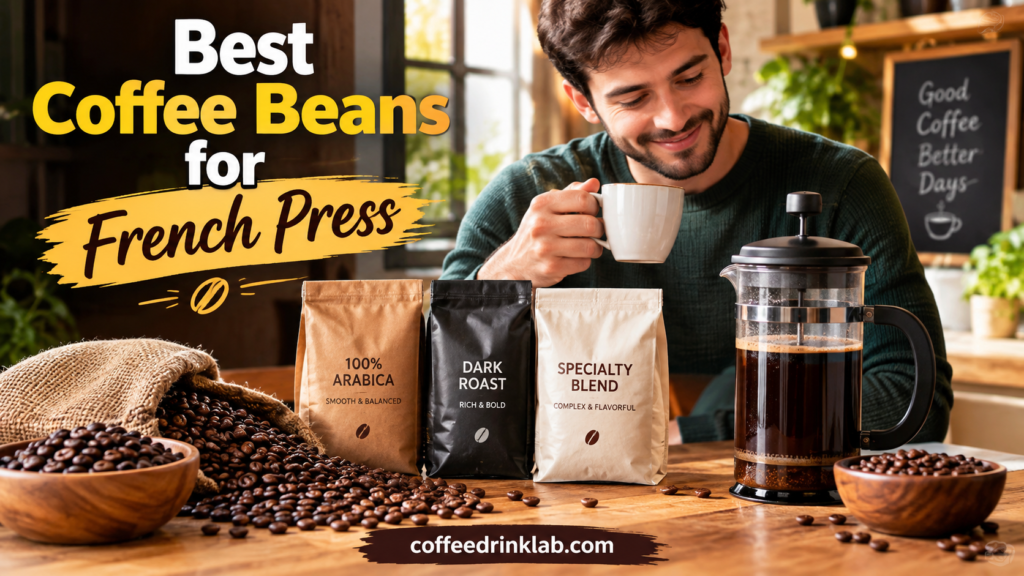
When choosing the best coffee beans for this coffee maker, freshness matters more than an impressive label. Look for a roast date, buy reasonably sized bags, and store the beans in an airtight container away from heat and sunlight.
Here are the main choices to consider:
Medium Roast Coffee Beans
Medium roast is one of the easiest options for French press brewing. It generally offers a balance between acidity, sweetness, and body, making it suitable for drinking black or with a small amount of milk.
It is especially useful if you want to taste the coffee’s origin without giving up the rich mouthfeel that French press brewing provides.
Medium-Dark Roast Coffee Beans
If you prefer a stronger and more traditional coffee flavor, medium-dark roast is an excellent choice. You can expect deeper chocolate, caramel, nutty, and toasted notes.
Moreover, this roast works particularly well with the French press because the longer immersion time can create a rich, heavy-bodied cup.
Light Roast Coffee Beans
Light roast coffee can also make excellent French press coffee, although it produces a different experience. These beans often emphasize fruit, citrus, floral, or tea-like characteristics.
If your coffee tastes sharp or overly acidic, try slightly hotter water, a longer brew, or switch to a medium roast.
Best Coffee Grinder for French Press
A burr grinder is generally the best coffee grinder for immersion brewing because it produces more consistent particles than a basic blade grinder. Consistency matters because very fine particles can make the cup muddy or bitter, while large uneven pieces may produce weak coffee.
For French press brewing, choose a grinder with a reliable coarse setting. A manual burr grinder can be a practical budget option, while an electric burr grinder is more convenient if you brew several cups every day.
Most importantly, grind immediately before brewing. Freshly ground coffee normally gives you a more aromatic and flavorful cup than coffee that has been sitting in a grinder or opened package.
Best Coffee for French Press: What Grind Size Works?
A coarse grind is the safest starting point for French press coffee. The particles should look somewhat like coarse sea salt rather than fine table salt.
A coarse grind helps the metal filter separate the grounds from the brewed coffee while reducing the amount of fine sediment in your cup.
If your coffee tastes bitter, harsh, or overly strong, try grinding a little coarser. On the other hand, if the coffee tastes thin or sour, a slightly finer grind or longer extraction may help.
Best Coffee to Use for French Press at Home
For everyday brewing, choose whole-bean Arabica coffee with a medium or medium-dark roast and grind it immediately before brewing. That combination gives you a reliable starting point without making the process complicated.
A simple French press setup can use:
- Fresh whole-bean coffee
- A burr grinder
- Coarse grind size
- Filtered water
- A French press
- A kitchen scale or measuring spoon
- A kettle with temperature control, if available
Additionally, filtered water can make a noticeable difference because water makes up most of the finished drink. If your tap water has a strong taste or odor, filtered water is usually a better choice.
Best Ground Coffee for French Press
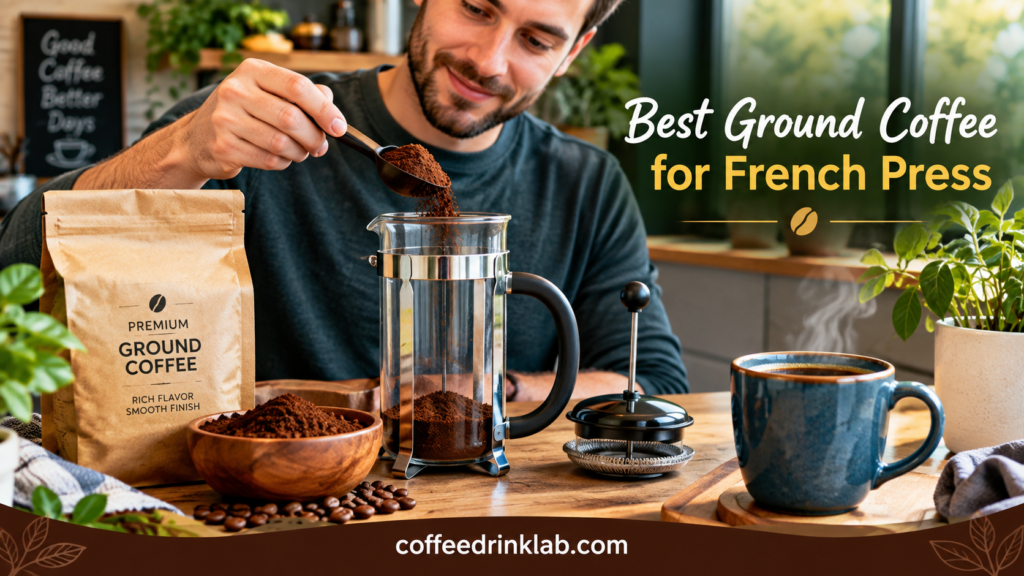
You do not have to own a grinder to make French press coffee. Best ground coffee for French press should be labeled coarse or the brewer grind whenever possible.
Pre-ground coffee can be convenient, particularly for beginners, camping, or office brewing. However, it generally loses freshness faster than whole beans, so check the packaging date and keep the bag tightly sealed after opening.
If you buy supermarket coffee, look for a bag that provides a coarse-grind option or choose whole beans and ask the coffee shop to grind them specifically for the press brewing.
Best Coffee for French Press India and Blue Tokai Options
Coffee preferences vary by country, and the Indian coffee market has many interesting choices for French press brewing. If you are searching for the best coffee for this coffee maker India, look for freshly roasted beans from Indian growing regions or blends designed for immersion brewing.
Blue Tokai is another name frequently searched by coffee drinkers looking for immersion brewing options. When choosing the best Blue Tokai coffee for the press, focus on the roast level and tasting notes rather than choosing a bag simply because it is popular.
For a smoother, balanced cup, a medium roast can be a good starting point. Meanwhile, people who enjoy a bold and chocolate-forward cup may prefer a medium-dark option.
Best Temp for French Press Coffee
The best temp for French press coffee is generally around 195°F to 205°F (90°C to 96°C). Water that is too cool can produce under-extracted coffee, while excessively hot water can make some coffees taste harsh or bitter.
You do not necessarily need an expensive temperature-controlled kettle. If your kettle boils the water, letting it sit briefly before pouring can bring the temperature down.
For a repeatable recipe, start around 200°F and adjust according to the coffee you are using.
French Press Coffee Ratio and Best Time
A good starting ratio is about 1 gram of coffee for every 15–16 grams of water. For example, 30 grams of coffee with approximately 450–480 grams of water makes a useful starting point for a larger French press.
The best time for French press coffee is usually around 4 minutes of total steeping time. Nevertheless, you can adjust this depending on your beans and personal taste.
For a straightforward method:
- Add coarse coffee grounds to the French press.
- Pour in hot water around 200°F.
- Make sure all the grounds are saturated.
- Let the coffee steep for about 4 minutes.
- Gently press the plunger.
- Pour the coffee into your cup immediately.
If the coffee tastes weak, increase the brewing time slightly or use a little more coffee. If it tastes bitter, try reducing the steeping time or using a coarser grind.
Best Coffee for French Press Coffee Pot
A French press coffee pot works best with coffee that can handle immersion brewing without becoming excessively bitter or muddy. Medium and medium-dark whole beans are reliable choices, especially when freshly ground coarse.
Furthermore, the size of your coffee pot affects how much coffee you should prepare. Avoid making a large batch and leaving it in the press for a long time because the grounds remain in contact with the coffee.
Instead, brew the amount you expect to drink and transfer any extra coffee to a separate thermal container.
Supermarket, Store-Bought, Organic, and Starbucks Coffee
You can absolutely make good French press coffee with supermarket coffee. The key is finding a fresh bag with a suitable roast and coarse grind rather than assuming expensive specialty coffee is automatically better.
For store-bought coffee for this setup, medium roast, medium-dark roast, and French roast can all work, although French roast tends to produce a much darker flavor.
Organic coffee is another option if that certification matters to you. However, organic certification itself does not determine whether coffee will taste good in a French press. Freshness, roast quality, grind size, and brewing technique still matter.
Starbucks coffee can also be brewed in a French press. If you prefer Starbucks, select whole beans and grind them coarse rather than automatically using a fine pre-ground coffee designed for another brewing method.
Where to Buy Coarse Ground Coffee for French Press

You can find coarse-ground coffee at many supermarkets, specialty coffee shops, local roasters, and online coffee retailers. When shopping, search specifically for French press grind or coarse ground coffee.
Local roasters are particularly useful because you can often choose the beans and ask for the correct grind size. Additionally, buying whole beans gives you greater control if you already own a burr grinder.
If you are shopping online, check the roast date, origin, roast level, grind options, and storage recommendations before purchasing.
Which Coffee Is Best for French Press? A Quick Comparison
The right choice ultimately depends on how you like your coffee to taste.
| Coffee type | Flavor profile | Body | Best for |
|---|---|---|---|
| Light roast | Fruity, floral, bright | Light-medium | Complex flavors |
| Medium roast | Balanced, sweet, nutty | Medium | Most beginners |
| Medium-dark roast | Chocolate, caramel, bold | Full | Rich everyday coffee |
| Dark roast | Smoky, roasted, intense | Full | Strong coffee lovers |
| Single-origin | Distinct regional notes | Varies | Exploring origins |
| Blend | Balanced and consistent | Varies | Everyday brewing |
For most people, medium or medium-dark roast is the easiest place to start. However, experimenting with different origins and roast levels is part of the fun of French press brewing.
The Final Talk
The best coffee for french press is ultimately the one that matches your taste, but freshly roasted medium or medium-dark beans with a coarse grind are the easiest place to begin. Start with a reliable Arabica coffee, use water around 195–205°F, and aim for roughly four minutes of brewing time. From there, adjust the grind, ratio, and steeping time until the cup tastes right to you.
Remember, you do not need the most expensive beans or the fanciest equipment to make excellent French press coffee. A good burr grinder, fresh beans, filtered water, and a little attention to temperature can make a surprisingly big difference.
Most importantly, experiment. Try a supermarket blend, a single-origin coffee, a medium roast, or a darker option and notice how each one changes in the French press. That simple experimentation is what makes brewing coffee at home so enjoyable.
FAQs
Medium and medium-dark Arabica coffees are among the most versatile choices for French press brewing. They provide enough body for the immersion method while still allowing sweetness and origin flavors to come through.
The biggest differences come from roast level, origin, processing method, freshness, and grind size. A light roast can taste brighter and fruitier, while a darker roast generally tastes richer, smokier, and more intense.
A freshly roasted medium-roast Arabica coffee with a coarse grind is an excellent starting point. It is balanced enough to make brewing adjustments easy without overwhelming you with intense flavors.
Start with a fresh medium or medium-dark roast, then choose whole beans if possible. After that, use a coarse grind, water around 200°F, and approximately a 1:15 to 1:16 coffee-to-water ratio.
Absolutely. French press is one of the simplest ways to make flavorful coffee at home. You only need coffee, hot water, a French press, and a few minutes of brewing time.
Discover More Blends
Yuban Coffee: Reviews, Roasts, History & Availability
Tram Coffee: Complete Guide to Vietnam’s Café Culture
Mobile Coffee Cart: Complete Guide for Beginners in 2026







3 Comments