
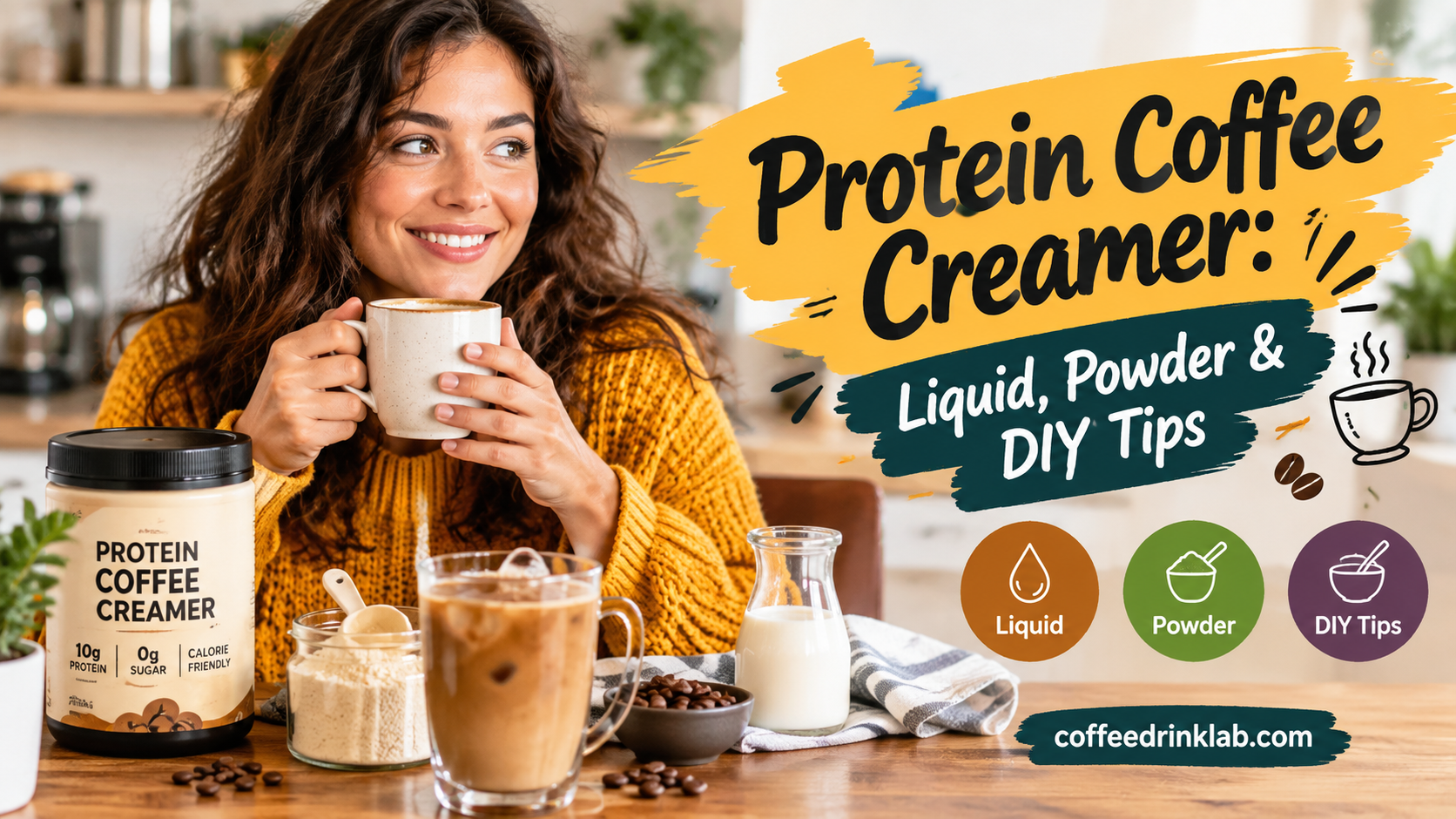
Protein Coffee Creamer: Liquid, Powder & DIY Tips
If you love coffee but want something more filling than a splash of ordinary creamer, protein coffee creamer can be an interesting option. It combines the creamy texture people expect from coffee creamer with added protein, making it useful for morning coffee, iced coffee, and homemade café-style drinks.
In this guide, we’ll look at high-protein options, liquid and powdered creamers, ingredients, homemade recipes, and practical ways to use them without overpowering your coffee.
1. What Is Protein Coffee Creamer?
Protein coffee creamer is a coffee-friendly product or mixture designed to add creaminess and protein to a cup of coffee. Depending on the formula, it may contain dairy, milk proteins, plant-based protein, or a combination of ingredients that create a smooth texture.
Unlike traditional creamer, which is primarily used for flavor and texture, a protein-focused option is formulated to contribute protein as well. However, the amount can vary considerably from one product or homemade recipe to another, so checking the nutrition label is always worthwhile.
1. High Protein Coffee Creamer vs. Regular Creamer
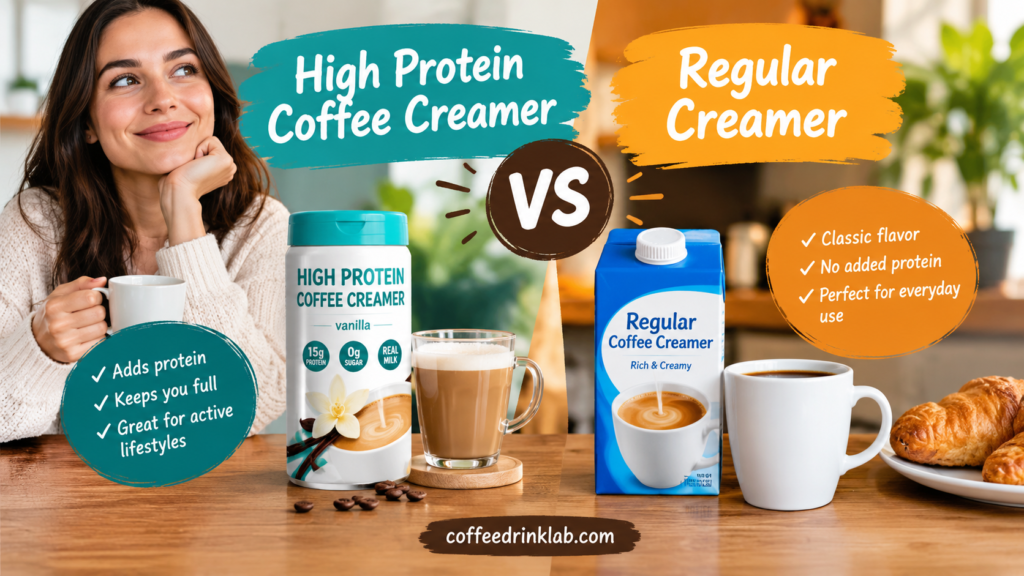
The biggest difference is the nutritional purpose. Regular creamer is generally chosen for sweetness, richness, and flavor, while a high protein coffee creamer is designed to provide those coffee-friendly qualities while also contributing protein.
For example, someone who enjoys vanilla coffee might choose a vanilla protein creamer rather than a conventional vanilla creamer. Similarly, chocolate, caramel, hazelnut, and unflavored varieties can change the taste of coffee without requiring several separate ingredients.
How Does Protein Coffee Creamer Work in Coffee?
The basic idea is simple: add the creamer to brewed coffee and stir or froth until it is evenly incorporated. However, temperature and mixing technique can make a noticeable difference, especially when the creamer contains protein powder.
Very hot coffee can sometimes cause certain protein mixtures to clump. Therefore, allowing freshly brewed coffee to cool for a minute or two and mixing the protein component gradually can help create a smoother drink.
For the best texture:
- Start with a small amount of creamer.
- Stir thoroughly before adding more.
- Use a handheld frother for a café-style texture.
- For iced coffee, dissolve the protein mixture before adding ice.
Protein Creamer for Coffee: Liquid or Powder?
Choosing between liquid and powdered options mostly comes down to convenience, texture, storage, and personal taste. A protein creamer for coffee can work well in either format, but each behaves slightly differently when mixed into hot coffee.
Liquid varieties are convenient because they can be poured directly into a cup. Powdered options, meanwhile, are often easier to store and can be measured according to the amount of protein and creaminess you want.
| Feature | Liquid Creamer | Powdered Creamer |
|---|---|---|
| Mixing | Usually quick | Needs thorough stirring |
| Storage | Often requires refrigeration after opening | Usually easier to store |
| Texture | Naturally creamy | Depends on formulation |
| Convenience | Pour and stir | Scoop and mix |
| Best for | Quick morning coffee | Custom portions and travel |
Ultimately, liquid is convenient for everyday use, while powder can be useful when you want more control over the amount you add.
1. Liquid Protein Coffee Creamer: What to Look For
A liquid protein coffee creamer is particularly convenient for people who prefer a ready-to-use ingredient. Instead of mixing protein powder separately, you can simply measure the creamer into your coffee and stir.
When comparing liquid options, look beyond the large protein number on the front of the package. Check the serving size, protein source, sweetness, added sugars, flavorings, and ingredients to see whether the product matches your preferences.
1. Protein Coffee Creamer Ingredients
Ingredients vary widely, but common components can include milk, cream, milk proteins, whey protein, casein, plant proteins, oils, natural or artificial flavors, sweeteners, and stabilizers.
Some products are designed to taste like traditional flavored creamers, while others have a more neutral profile so they can be combined with different coffee styles.
If you prefer plant-based coffee, look for formulas made with ingredients such as oat, almond, coconut, or other plant-derived components. Just remember that plant-based does not automatically mean higher in protein, so the nutrition panel is the better guide.
1. Protein Powder as Coffee Creamer: Does It Work?
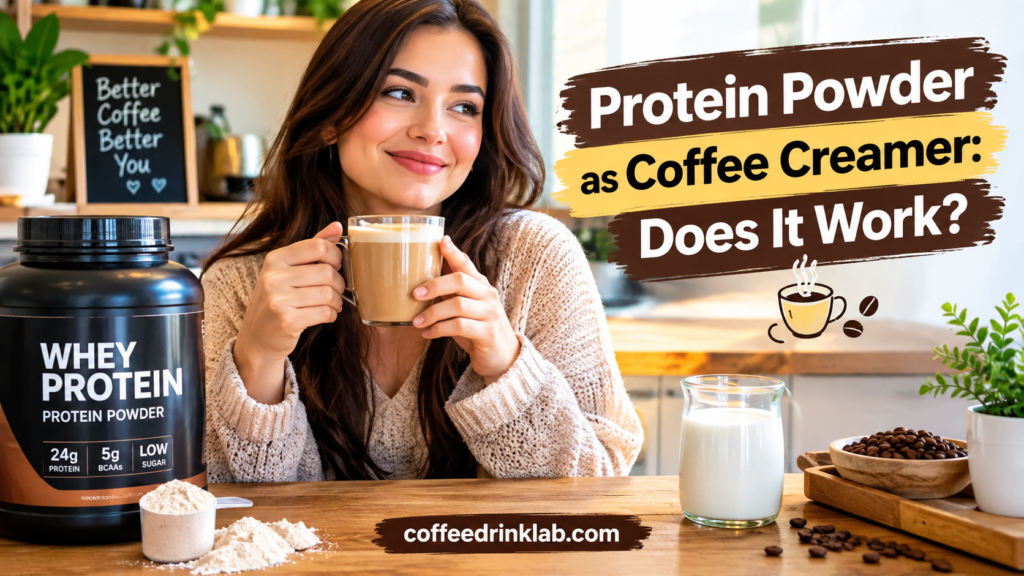
Yes, protein powder as coffee creamer can work, although the technique matters. Protein powder is not technically the same thing as a traditional creamer, but it can add creaminess, flavor, and protein when mixed properly.
Instead of dumping a scoop directly into extremely hot coffee, try mixing the powder with a small amount of cool or room-temperature milk first. Then gradually add the mixture to your coffee while stirring.
This approach can reduce clumping and create a smoother drink. A milk frother or shaker can also help, although you should use appropriate care when handling hot liquids.
1. Best Coffee Styles for Protein Powder
Protein mixtures tend to work particularly well with coffee that already contains some body and sweetness.
Good choices include:
- Medium-roast drip coffee
- Iced coffee
- Cold brew
- Latte-style drinks
- Café au lait
- Mild espresso-based drinks
Very delicate single-origin coffees may taste different once flavored protein ingredients are added. Therefore, if you want to appreciate subtle floral or fruity notes, plain coffee may be the better choice.
1. Homemade Protein Coffee Creamer Recipe
Making homemade protein coffee creamer gives you control over sweetness, flavor, texture, and ingredients. It can also be a simple way to use ingredients you already have in the kitchen.
A basic homemade version can be made with milk or a suitable plant-based alternative, protein powder, and a flavoring such as vanilla or cocoa. Start with a modest amount of protein powder and adjust the mixture until it reaches the texture you enjoy.
1. Simple Homemade Protein Coffee Creamer
Ingredients:
- 1 cup milk or unsweetened plant-based milk
- 2–4 tablespoons protein powder
- 1 teaspoon vanilla extract
- Optional cinnamon or unsweetened cocoa
- Optional sweetener, according to taste
Method:
- Add the milk to a blender or mixing container.
- Add the protein powder gradually.
- Blend or whisk until smooth.
- Add vanilla and any optional flavorings.
- Refrigerate the mixture in a covered container.
- Shake or stir before adding it to coffee.
For food safety, refrigerate homemade creamer and use it within a reasonable period based on the freshness and storage instructions for the ingredients you used.
Protein Coffee Creamer Powder: How to Mix It Properly
Powdered creamers and protein powders can be convenient, but they sometimes become lumpy when introduced directly into very hot coffee. Fortunately, there is an easy workaround.
First, combine the powder with a small amount of cool milk or water to make a smooth paste. Then add that mixture to your coffee and stir thoroughly. This method distributes the protein more evenly.
For iced coffee, you can also shake the powder with milk before combining it with cold brew or chilled coffee. As a result, the finished drink can have a much smoother texture.
How to Choose the Best Protein Coffee Creamer
The best option depends on what you want from your coffee. There is no single creamer that is perfect for every coffee drinker because taste, dietary preferences, texture, and nutritional needs differ.
When comparing products, consider these factors:
Protein source: Look for a protein source that fits your preferences, such as dairy or plant-based protein.
Flavor: Vanilla and chocolate are versatile, while caramel, hazelnut, and seasonal flavors can make coffee taste more dessert-like.
Sweetness: Some people prefer sweetened creamers, while others want an unsweetened option that lets the coffee flavor remain prominent.
Texture: A good creamer should blend smoothly without leaving excessive powderiness or separation.
Serving size: Always compare nutrition information using the stated serving size rather than judging products by the front-label numbers alone.
Is Protein Coffee Creamer Good for Everyday Coffee?

For many people, a protein-containing creamer can simply be another way to customize coffee. Whether it belongs in your daily routine depends on the specific ingredients, serving size, overall eating pattern, and personal preferences.
It is also important not to treat a protein creamer as a replacement for a balanced meal. Protein can be part of a varied diet, but coffee with creamer does not automatically provide all the nutrients you need from breakfast or another meal.
Additionally, people with food allergies or dietary restrictions should check ingredients carefully, especially for milk, whey, soy, nuts, and other common allergens.
Sugar-Free Protein Coffee Creamer: Is It Better?
A sugar-free protein coffee creamer can be useful for someone who prefers less sweetness or wants to avoid added sugar. However, “sugar-free” does not automatically mean that a product is nutritionally superior.
Some sugar-free products use alternative sweeteners or sugar alcohols, which can affect taste and may not suit everyone. Therefore, compare the full nutrition label and ingredient list rather than relying on one front-of-package claim.
If you enjoy the natural taste of coffee, an unsweetened protein creamer may be an even simpler choice.
Can Protein Coffee Creamer Help With Weight Loss?
Protein coffee creamer should not be viewed as a magic weight-loss ingredient. While protein can contribute to a satisfying meal or snack, your overall eating pattern and energy needs matter much more than one ingredient added to coffee.
If you are choosing a creamer for general nutrition, focus on what you enjoy and what fits comfortably into your normal meals. A lower-sugar or appropriately portioned creamer may be useful for some people, but there is no need to choose a product solely because it is marketed for weight loss.
The Final Talk
Choosing the right protein coffee creamer comes down to your taste, coffee routine, and what you want from your cup. High-protein options can add creaminess and protein, while regular creamers focus mainly on flavor and texture. Whether you prefer a convenient liquid creamer, a powdered option, or a simple homemade protein coffee creamer, there are plenty of ways to customize your morning coffee.
Most importantly, check the ingredients, serving size, sweetness, and protein content before choosing a product. You can also experiment with vanilla, chocolate, cinnamon, or plant-based ingredients to find a combination you genuinely enjoy. In the end, the best creamer is one that blends smoothly, tastes great, and fits naturally into your coffee routine. So, grab your favorite brew, try a new combination, and enjoy a creamier cup with confidence.
FAQs:
Popular choices generally include vanilla, chocolate, caramel, hazelnut, and unflavored varieties. Liquid creamers are convenient, while powdered protein creamers can offer more flexibility in portion size. The best option ultimately depends on the coffee flavor and texture you prefer.
A simple vanilla liquid creamer is often an easy starting point because it blends conveniently and works with many coffee styles. If you prefer less sweetness, an unflavored or lightly sweetened option can let the coffee remain the star.
Start by deciding whether you prefer liquid or powder, dairy or plant-based ingredients, and sweetened or unsweetened flavors. Then compare the protein amount, serving size, ingredients, texture, and flavor before choosing one.
Absolutely. You can use ready-made liquid creamers, powdered products, or make your own mixture with milk and protein powder. A home version also lets you adjust the flavor and creaminess to suit your preferred coffee.
The main differences are protein source, texture, sweetness, flavor, ingredients, and whether the creamer is liquid or powdered. Some are designed to taste like traditional creamers, while others are closer to protein powder mixed with milk.
Discover More Blends
Kazumi Coffee Maker Review: Price, Reviews & How to Use
Meemaw Fuel Coffee: Owner, Review & Where to Buy
Top 9 Fall Coffee Drinks: Best Cozy Autumn Favorites in 2026






3 Comments