

Clean Coffee: How to Make Cleaner-Tasting Coffee
When people search for clean coffee, they may mean coffee that tastes fresh and free from stale oils, residue, or unwanted flavors or they may be looking for clean coffee brands and ingredients. In everyday brewing, the biggest difference often starts with clean equipment. Learning how to clean a coffee maker with vinegar, maintaining your grinder, and keeping your coffee pot fresh can make an ordinary cup taste noticeably better.
However, clean coffee is not only about washing a machine. Fresh beans, good water, properly stored grounds, and a clean brewing system all work together. Whether you use a drip brewer, Keurig, Cuisinart, Ninja, French press, or grinder, a simple maintenance routine can help every cup taste fresher.
3. How to Clean a Coffee Maker
If you want cleaner-tasting coffee, start with the machine that brews it. Coffee oils and mineral deposits can gradually build up inside a coffee maker, especially when it is used frequently. As a result, your coffee may taste bitter, flat, or slightly stale even when you are using good beans.
The easiest routine is to follow the manufacturer’s cleaning instructions and regularly wash removable parts. For many traditional brewers, a descaling solution or an appropriate vinegar-cleaning cycle can help remove mineral buildup.
1. How to Clean a Coffee Maker With Vinegar

Knowing how to clean a coffee maker with vinegar is useful because vinegar is commonly used as a household descaling ingredient. However, always check your machine’s instructions first because some manufacturers recommend a specific descaling product instead.
For a basic vinegar cleaning routine, remove old coffee and grounds, wash the removable parts, and prepare the cleaning solution according to the manufacturer’s guidance. Run the appropriate cleaning cycle, then follow it with fresh-water cycles until the vinegar smell and taste are gone.
Never mix vinegar with bleach or other cleaning chemicals. Most importantly, do not assume that more vinegar means better cleaning.
2. How to Clean a Cuisinart Coffee Maker
If you are wondering how to clean a Cuisinart coffee maker, begin by emptying the carafe and removing used grounds. Wash the removable basket, carafe, and other dishwasher-safe components according to the model’s instructions.
Many Cuisinart machines also have a cleaning indicator or Cuisinart coffee maker clean light. When that light appears, use the cleaning procedure recommended for your specific model. After descaling, run fresh water through the machine before brewing coffee again.
3. How to Clean a Keurig Coffee Maker
Learning how to clean a Keurig coffee maker involves more than wiping the outside. The removable reservoir, drip tray, pod holder, and other accessible parts should be cleaned regularly according to the model’s instructions.
For a deeper cleaning, follow the manufacturer’s descaling process. If you have been asking, “How do you clean a Keurig coffee maker?” the safest answer is to use the official cleaning instructions for your exact model rather than relying on one universal recipe.
How to Clean a Coffee Grinder
A grinder can have a surprisingly large effect on clean coffee. Coffee oils and small particles can remain around the burrs or grinding chamber, and old residue can mix with fresh beans during your next brew.
Before cleaning, unplug the grinder if applicable and follow its manufacturer’s instructions. Remove accessible coffee particles with the recommended brush or cleaning method, and avoid putting water into areas that are not designed to get wet.
A clean grinder can also help preserve the flavor distinction between different beans. This matters particularly when switching from a dark roast to a lighter single-origin coffee because leftover oils can influence the next batch.
How to Clean a Coffee Pot With Vinegar
A coffee pot can collect coffee oils and mineral residue over time. If your glass carafe or thermal pot smells stale even after normal washing, it may need a more thorough cleaning.
When using vinegar, follow the manufacturer’s care instructions and rinse thoroughly afterward. For stubborn residue, use a suitable non-abrasive cleaning method rather than aggressively scrubbing the surface.
Regularly cleaning a coffee pot is especially important if coffee sits in it for several hours. Freshly brewed coffee deserves a clean serving vessel, too.
How to Clean a Ninja Coffee Maker
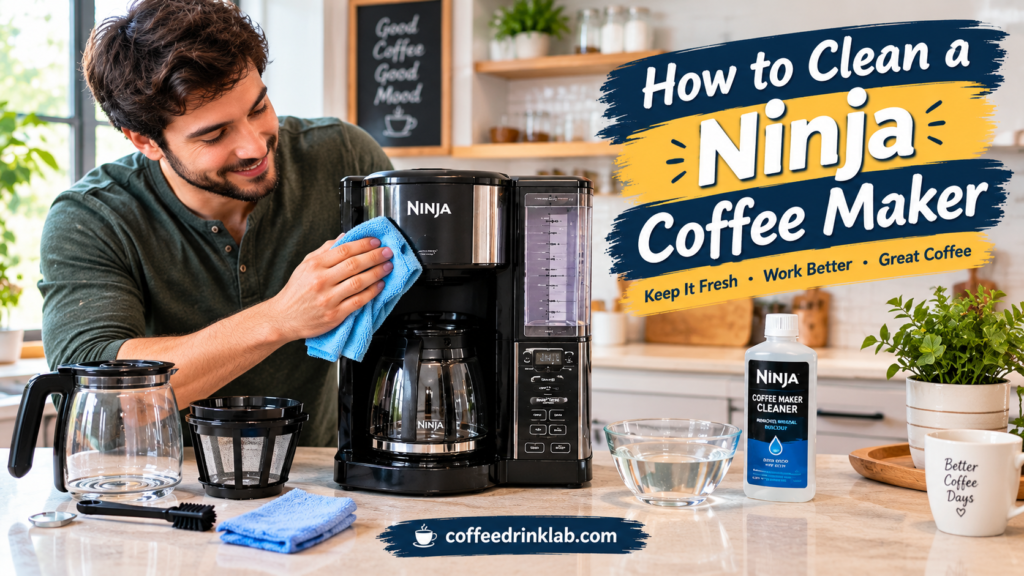
If you are searching for how to clean my Ninja coffee maker, the first step is identifying the exact model because cleaning procedures can vary. Remove and wash the parts that the manufacturer identifies as removable and cleanable.
Many Ninja brewers provide a dedicated cleaning or descaling cycle. Follow the instructions for that cycle, then run the required fresh-water rinse before preparing another pot.
In contrast, simply wiping the exterior does not remove internal mineral buildup. Regular maintenance is therefore much more useful than waiting until the coffee develops an unusual taste.
Clean Coffee Starts With Fresh Beans
A clean machine cannot completely fix stale beans. Coffee beans gradually lose freshness after roasting, and their flavor can become less vibrant as they age.
For better-tasting coffee, store beans in an airtight container away from excessive heat, moisture, and direct sunlight. Buy an amount you can reasonably use while the beans still taste fresh.
Light, medium, and dark roasts can all produce excellent coffee, but they offer different flavor profiles. Furthermore, grinding beans shortly before brewing can help preserve their aroma.
What Makes Clean Coffee Taste Better?
The phrase clean coffee can describe a cup with clear, pleasant flavors rather than one dominated by stale oils or residue. Water quality, bean freshness, grind size, brewing temperature, and equipment cleanliness all influence that experience.
For example, a freshly cleaned drip machine using old grounds may still produce disappointing coffee. Likewise, premium beans brewed through a dirty machine can pick up unwanted flavors.
For consistently better results, pay attention to these areas:
- Fresh whole beans or properly stored grounds
- Clean brewing equipment
- Appropriate grind size
- Fresh, good-quality water
- Correct brewing ratio
- Proper storage
- Regular descaling and maintenance
Clean Coffee Brands and Creamers
Some shoppers use clean coffee brands to describe products that emphasize simple ingredients, particular sourcing standards, or fewer additives. However, there is no single universal definition of “clean coffee,” so it is important to read the ingredient list and understand what a brand means by the term.
The same applies to clean coffee creamer. A creamer marketed as simple or clean can still contain ingredients you may not personally want. Compare labels, added sugars, dairy or plant-based ingredients, and serving sizes rather than relying on marketing language alone.
If you are specifically researching Natural Force Clean Coffee, evaluate the product according to its current ingredient list, nutrition information, sourcing claims, and your own preferences. Product formulas and availability can change, so the package label is the best final reference.
A Simple Clean Coffee Routine
Keeping your coffee equipment clean does not need to become a complicated chore. Instead, build a small routine around the equipment you use most.
After brewing, empty used grounds and rinse removable parts. Regularly wash the carafe, basket, reservoir, and other manufacturer-approved components. Then, periodically descale the machine when its instructions recommend it.
Your grinder also deserves attention. Remove accumulated particles regularly, especially when you change beans frequently. As a result, your brewing setup stays fresher and your coffee flavors remain easier to distinguish.
Clean Coffee vs. Regular Coffee: What Really Changes?
The biggest difference is usually not a special category of bean. Instead, clean coffee is often about the complete brewing environment: fresh ingredients, clean equipment, suitable water, and careful preparation.
| Factor | Cleaner-tasting coffee | Neglected brewing setup |
|---|---|---|
| Beans | Fresh and properly stored | Stale or poorly stored |
| Grinder | Low residue | Old coffee buildup |
| Brewer | Clean and descaled | Mineral or coffee-oil buildup |
| Water | Fresh and suitable for brewing | Stale or poor-tasting |
| Flavor | Clearer and more balanced | Flat, bitter, or inconsistent |
| Maintenance | Regular | Occasional or neglected |
Therefore, you do not necessarily need an expensive coffee machine to make better coffee. A basic brewer that is properly maintained can produce a much more enjoyable cup.
Can You Make Clean Coffee at Home?

Absolutely. Home brewing gives you control over the beans, grind, water, equipment, and cleaning routine. Even a simple drip coffee maker can produce excellent results when those fundamentals are handled properly.
Start with fresh beans, clean your brewing equipment regularly, and descale according to the manufacturer’s recommendations. Additionally, taste your coffee after making small adjustments to grind size and brewing ratio rather than changing everything at once.
The Final Talk
Clean coffee is less about chasing a trendy label and more about creating better habits around every cup. Fresh beans, clean equipment, good water, and proper storage can make a noticeable difference without requiring an expensive setup. If your coffee suddenly tastes bitter, flat, or unusual, cleaning the grinder, brewer, or coffee pot may be one of the simplest places to start.
Whether you need to learn how to clean a coffee maker, maintain a Keurig or Cuisinart, clean a Ninja brewer, or simply keep your grinder fresh, consistency matters most. Likewise, if you are exploring clean coffee brands or creamers, read the ingredients and decide what “clean” means for your own preferences. Ultimately, the best routine is one you can maintain easily. Keep your equipment fresh, use quality ingredients, and give your coffee the attention it deserves.
FAQs:
For beginners, a freshly roasted medium-roast coffee brewed in a clean drip machine is a straightforward choice. It offers a balanced starting point while allowing you to learn how grind size, water, and brewing ratio affect flavor.
First, decide whether you care most about bean freshness, ingredients, sourcing, flavor, or equipment cleanliness. Then compare the product label, roast profile, ingredient list, and brewing requirements rather than choosing a product solely because it uses the word “clean.”
Yes. You can make cleaner-tasting coffee at home with almost any suitable brewing method. Keep the machine and grinder clean, use fresh coffee, store beans properly, and follow the manufacturer’s maintenance instructions.
The most popular clean coffee options generally include freshly brewed whole-bean coffee, single-origin beans, simple ingredient coffee products, and coffees marketed around specific sourcing or ingredient standards. However, “clean” does not have one universal definition, so checking ingredients and sourcing information is important.
The phrase can refer to differences in ingredients, sourcing, processing, or simply the taste of a well-maintained brewing setup. In everyday coffee discussions, a cleaner-tasting cup usually has fewer unwanted flavors from stale beans, dirty equipment, or old coffee residue.
Discover More Blends
Honduras Coffee Beans: Taste, Regions & Buying Guide
Dame Fine Coffee: Menu, Locations & Best Drinks
Vanilla Coffee Beans: Types, Flavor & Buying Guide







One Comment